Pages

Showing posts with label Brazil. Show all posts

Saturday, February 14, 2026

G4 Should Be Formalized


๐Ÿง  What the G4 Is

The G4 is an informal diplomatic coalition of Brazil, Germany, India, and Japan, created to support each other’s bids for permanent seats on the United Nations Security Council (UNSC). They coordinate diplomatically and lobby for reform of the UNSC toward broader representation of the geopolitical realities of the 21st century. (Wikipedia)

However:

  • It is not a formal international organization with institutions, defined budget, or regular summit structure.

  • Its cooperation is ad hoc and limited to UNSC reform objectives, not broader geopolitical or economic cooperation. (Wikipedia)


๐ŸŒ What BRICS Shows (and Why It Worked)

The BRICS grouping (Brazil, Russia, India, China, South Africa) started as a concept metric and then evolved into a cooperative bloc with:

  • Regular summits and rotating chairmanship.

  • Institutional components like the New Development Bank.

  • An expanding agenda that includes multilateral trade reform, climate action, and global governance. (Council on Foreign Relations)

Although BRICS remains a loose coalition, its institutionalization over time has allowed it to project influence — for example, coordinating on WTO reform and pushing discussions about global governance that include the Global South’s interests. (brics.br)


๐Ÿ“Œ Why the G4 Should Be Formalized Like BRICS

Here’s the core of the argument:

1. Represent More of the World’s Power and Population

The G4 nations together represent a huge share of economic output, population, and diplomatic weight. Yet global governance structures like the UNSC still reflect a post–World War II order that doesn’t match current realities. Formalizing the G4 into a structured bloc could strengthen calls for UNSC reform and give voice to emerging powers proportionate to their global contributions. (Wikipedia)

2. Provide a Consistent, Structured Platform

As the BRICS example shows, informal cooperation can only go so far. Formalization would allow:

  • Regular summits, working groups, and secretariat support;

  • Joint policy statements on global issues beyond just UNSC reform;

  • A mechanism to coordinate positions in other forums (e.g., WTO, climate negotiations, IMF/World Bank governance).
    This mirrors how BRICS evolved from an idea into a structured cooperation platform. (Council on Foreign Relations)

3. Enhance Strategic Coordination

Right now the G4 largely functions as a mutual assurance pact on Security Council seats. But global challenges — climate change, economic governance, technological standards — are interconnected. A formal G4 could:

  • Align strategic goals over a broader agenda;

  • Act as a counterweight to both G7 and BRICS where appropriate;

  • Offer a third pole in global multipolar governance.
    BRICS’s coordinated declarations on trade, climate, and governance illustrate the power of even a loosely structured bloc. (brics.br)

4. Legitimate Representation for Global South and Middle-Income Powers

Formalizing the G4 is not about opposing existing powers; it’s about legitimacy and representation. Many nations see global governance structures as outdated and skewed. A structurally formal G4, backed by a transparent mechanism, can strengthen calls for reform and demonstrate that global governance should account for 21st-century realities — much like the expanding BRICS framework emphasizes multilateralism and inclusion. (Council on Foreign Relations)


๐Ÿ In Summary

BRICS shows that informal coalitions can become influential if given structure, institutions, and continuity. The G4 has the ambition and geopolitical heft to be more than just a slogan for UNSC reform — but it needs formalization to:

  • institutionalize cooperation,

  • project coordinated positions across global governance arenas,

  • and represent a balanced multipolar vision for global order.

This isn’t about creating an alternative bloc against others; it’s about updating global governance to reflect realities of the 21st century.


๐Ÿง  G4 เค•्เคฏा เคนै?

G4 เคเค• เค…เคจौเคชเคšाเคฐिเค• เค•ूเคŸเคจीเคคिเค• เคธเคฎूเคน เคนै เคœिเคธเคฎें เคฌ्เคฐाเคœ़ीเคฒ, เคœเคฐ्เคฎเคจी, เคญाเคฐเคค เค”เคฐ เคœाเคชाเคจ เคถाเคฎिเคฒ เคนैं।
เคฏเคน เคธเคฎूเคน เคธंเคฏुเค•्เคค เคฐाเคท्เคŸ्เคฐ เคธुเคฐเค•्เคทा เคชเคฐिเคทเคฆ (UNSC) เคฎें เคธ्เคฅाเคฏी เคธเคฆเคธ्เคฏเคคा เค•े เคฒिเค เคเค•-เคฆूเคธเคฐे เค•े เคฆाเคตों เค•ा เคธเคฎเคฐ्เคฅเคจ เค•เคฐเคคा เคนै เค”เคฐ เคธुเคฐเค•्เคทा เคชเคฐिเคทเคฆ เคฎें เคธुเคงाเคฐ เค•ी เคตเค•ाเคฒเคค เค•เคฐเคคा เคนै, เคคाเค•ि 21เคตीं เคธเคฆी เค•ी เคญू-เคฐाเคœเคจीเคคिเค• เคตाเคธ्เคคเคตिเค•เคคाเค“ं เค•ो เคฌेเคนเคคเคฐ เคขंเค— เคธे เคช्เคฐเคคिเคฌिंเคฌिเคค เค•िเคฏा เคœा เคธเค•े।

เคนाเคฒाँเค•ि:

  • เคฏเคน เค•ोเคˆ เค”เคชเคšाเคฐिเค• เค…ंเคคเคฐเคฐाเคท्เคŸ्เคฐीเคฏ เคธंเค—เค เคจ เคจเคนीं เคนै।

  • เค‡เคธเค•ा เค•ोเคˆ เคธ्เคฅाเคฏी เคธเคšिเคตाเคฒเคฏ, เคฌเคœเคŸ เคฏा เคจिเคฏเคฎिเคค เคถिเค–เคฐ เคธเคฎ्เคฎेเคฒเคจ เคธंเคฐเคšเคจा เคจเคนीं เคนै।

  • เค‡เคธเค•ा เคธเคนเคฏोเค— เคฎुเค–्เคฏเคคः UNSC เคธुเคงाเคฐ เคคเค• เคธीเคฎिเคค เคนै।


๐ŸŒ BRICS เคธे เค•्เคฏा เคธीเค– เคฎिเคฒเคคी เคนै?

BRICS (เคฌ्เคฐाเคœ़ीเคฒ, เคฐूเคธ, เคญाเคฐเคค, เคšीเคจ, เคฆเค•्เคทिเคฃ เค…เคซ्เคฐीเค•ा) เคเค• เค…เคตเคงाเคฐเคฃा เค•े เคฐूเคช เคฎें เคถुเคฐू เคนुเค† เคฅा, เคฒेเค•िเคจ เคธเคฎเคฏ เค•े เคธाเคฅ เคฏเคน เคเค• เคธंเคฐเคšिเคค เคตैเคถ्เคตिเค• เคฎंเคš เคฌเคจ เค—เคฏा। เค‡เคธเค•े เคชाเคธ:

  • เคจिเคฏเคฎिเคค เคถिเค–เคฐ เคธเคฎ्เคฎेเคฒเคจ เค”เคฐ เค˜ूเคฐ्เคฃเคจ เค…เคง्เคฏเค•्เคทเคคा,

  • เคจ्เคฏू เคกेเคตเคฒเคชเคฎेंเคŸ เคฌैंเค• เคœैเคธी เคธंเคธ्เคฅाเค—เคค เคธंเคฐเคšเคจा,

  • เคต्เคฏाเคชाเคฐ, เคœเคฒเคตाเคฏु เค”เคฐ เคตैเคถ्เคตिเค• เคถाเคธเคจ เคœैเคธे เคต्เคฏाเคชเค• เคเคœेंเคกा เคชเคฐ เคธเคฎเคจ्เคตिเคค เคจीเคคिเคฏाँ เคนैं।

เคฏเคฆ्เคฏเคชि BRICS เคชूเคฐी เคคเคฐเคน เค”เคชเคšाเคฐिเค• เคธंเค—เค เคจ เคจเคนीं เคนै, เคซिเคฐ เคญी เค‡เคธเค•ी เคธंเคธ्เคฅाเค—เคค เคธंเคฐเคšเคจा เคจे เค‡เคธे เคตैเคถ्เคตिเค• เคช्เคฐเคญाเคต เคช्เคฐเคฆाเคจ เค•िเคฏा เคนै।


๐Ÿ“Œ G4 เค•ो BRICS เค•ी เคคเคฐเคน เค”เคชเคšाเคฐिเค• เค•्เคฏों เคฌเคจाเคฏा เคœाเคจा เคšाเคนिเค?

1. เคตैเคถ्เคตिเค• เคถเค•्เคคि เค”เคฐ เคœเคจเคธंเค–्เคฏा เค•ा เคตाเคธ्เคคเคตिเค• เคช्เคฐเคคिเคจिเคงिเคค्เคต

G4 เคฆेเคถ เคตिเคถ्เคต เค•ी เค…เคฐ्เคฅเคต्เคฏเคตเคธ्เคฅा, เคœเคจเคธंเค–्เคฏा เค”เคฐ เค•ूเคŸเคจीเคคिเค• เคช्เคฐเคญाเคต เค•ा เคฌเคก़ा เคนिเคธ्เคธा เคช्เคฐเคคिเคจिเคงिเคค्เคต เค•เคฐเคคे เคนैं।
เคซिเคฐ เคญी, UNSC เค…เคญी เคญी เคฆ्เคตिเคคीเคฏ เคตिเคถ्เคต เคฏुเคฆ्เคง เค•े เคฌाเคฆ เค•ी เคถเค•्เคคि-เคธंเคฐเคšเคจा เค•ो เคฆเคฐ्เคถाเคคा เคนै।

เคฏเคฆि G4 เค”เคชเคšाเคฐिเค• เคฐूเคช เคฒेเคคा เคนै, เคคो เคฏเคน เคธुเคฐเค•्เคทा เคชเคฐिเคทเคฆ เคธुเคงाเคฐ เค•ी เคฎाँเค— เค•ो เค…เคงिเค• เคฎเคœเคฌूเคคी เค”เคฐ เคตैเคงเคคा เคช्เคฐเคฆाเคจ เค•เคฐ เคธเค•เคคा เคนै।


2. เคธ्เคฅाเคฏी เค”เคฐ เคธंเคฐเคšिเคค เคฎंเคš เค•ी เค†เคตเคถ्เคฏเค•เคคा

เค…เคญी G4 เค•ा เคธเคนเคฏोเค— เคธीเคฎिเคค เค”เคฐ เค…เคจौเคชเคšाเคฐिเค• เคนै।
เค”เคชเคšाเคฐिเค• เคธंเคฐเคšเคจा เคธे:

  • เคจिเคฏเคฎिเคค เคถिเค–เคฐ เคธเคฎ्เคฎेเคฒเคจ เคธंเคญเคต เคนोंเค—े,

  • เค•ाเคฐ्เคฏ เคธเคฎूเคน เค”เคฐ เคธเคšिเคตाเคฒเคฏ เคธ्เคฅाเคชिเคค เคนो เคธเค•เคคे เคนैं,

  • เคธंเคฏुเค•्เคค เคจीเคคि เคตเค•्เคคเคต्เคฏ เคœाเคฐी เค•िเค เคœा เคธเค•เคคे เคนैं,

  • WTO, IMF, เคตिเคถ्เคต เคฌैंเค• เค”เคฐ เคœเคฒเคตाเคฏु เคตाเคฐ्เคคाเค“ं เคฎें เคธเคฎเคจ्เคตिเคค เคฐुเค– เค…เคชเคจाเคฏा เคœा เคธเค•เคคा เคนै।

BRICS เค•ा เค‰เคฆाเคนเคฐเคฃ เคฆिเค–ाเคคा เคนै เค•ि เคธंเคธ्เคฅाเค—เคค เคขाँเคšा เคช्เคฐเคญाเคต เค•ो เค•เคˆ เค—ुเคจा เคฌเคข़ा เคฆेเคคा เคนै।


3. เคฐเคฃเคจीเคคिเค• เคธเคฎเคจ्เคตเคฏ เค•ो เคฎเคœเคฌूเคคी

เค†เคœ G4 เคฎुเค–्เคฏเคคः UNSC เคธीเคŸों เค•े เคธเคฎเคฐ्เคฅเคจ เคคเค• เคธीเคฎिเคค เคนै।
เคฒेเค•िเคจ เคตैเคถ्เคตिเค• เคšुเคจौเคคिเคฏाँ — เคœเคฒเคตाเคฏु เคชเคฐिเคตเคฐ्เคคเคจ, เคช्เคฐौเคฆ्เคฏोเค—िเค•ी เคถाเคธเคจ, เค†เคฐ्เคฅिเค• เค…เคธเคฎाเคจเคคा — เคชเคฐเคธ्เคชเคฐ เคœुเคก़ी เคนुเคˆ เคนैं।

เคเค• เค”เคชเคšाเคฐिเค• G4:

  • G7 เค”เคฐ BRICS เค•े เคฌीเคš เคธंเคคुเคฒเคจเค•ाเคฐी เคญूเคฎिเค•ा เคจिเคญा เคธเค•เคคा เคนै,

  • เคตैเคถ्เคตिเค• เคถाเคธเคจ เคฎें “เคคीเคธเคฐे เคง्เคฐुเคต” เค•े เคฐूเคช เคฎें เค‰เคญเคฐ เคธเค•เคคा เคนै,

  • เคฒोเค•เคคांเคค्เคฐिเค•, เคตिเค•ाเคธเคถीเคฒ เค”เคฐ เค”เคฆ्เคฏोเค—िเค• เคถเค•्เคคिเคฏों เค•ा เคธंเคฏुเค•्เคค เคฎंเคš เคฌเคจ เคธเค•เคคा เคนै।


4. 21เคตीं เคธเคฆी เค•े เคฒिเค เคตैเคง เคตैเคถ्เคตिเค• เคช्เคฐเคคिเคจिเคงिเคค्เคต

G4 เค•ो เค”เคชเคšाเคฐिเค• เคฌเคจाเคจा เค•िเคธी เค•े เคตिเคฐुเคฆ्เคง เค•เคฆเคฎ เคจเคนीं เคนै।
เคฏเคน เคตैเคถ्เคตिเค• เคถाเคธเคจ เค•ो เค…เคงिเค• เคธเคฎाเคตेเคถी, เคจ्เคฏाเคฏเคธंเค—เคค เค”เคฐ เคช्เคฐเคคिเคจिเคงिเค• เคฌเคจाเคจे เค•ी เคฆिเคถा เคฎें เค•เคฆเคฎ เคนोเค—ा।

เค†เคœ เค•ी เคฆुเคจिเคฏा เคฌเคนुเคง्เคฐुเคตीเคฏ เคนै।
เคธंเคธ्เคฅाเคँ เคญी เคฌเคนुเคง्เคฐुเคตीเคฏ เคนोเคจी เคšाเคนिเค।


๐Ÿ เคจिเคท्เค•เคฐ्เคท

BRICS เคจे เคฆिเค–ाเคฏा เคนै เค•ि เค…เคจौเคชเคšाเคฐिเค• เคธเคฎूเคน เคญी เคฏเคฆि เคธंเคธ्เคฅाเค—เคค เคขाँเคšा เค…เคชเคจा เคฒें เคคो เคตे เคตैเคถ्เคตिเค• เคช्เคฐเคญाเคตเคถाเคฒी เคฎंเคš เคฌเคจ เคธเค•เคคे เคนैं।

G4 เค•े เคชाเคธ เคœเคจเคธंเค–्เคฏा, เค…เคฐ्เคฅเคต्เคฏเคตเคธ्เคฅा เค”เคฐ เค•ूเคŸเคจीเคคिเค• เคตเคœเคจ — เคคीเคจों เคนैं।
เค…เคฌ เค†เคตเคถ्เคฏเค•เคคा เคนै เคธंเคฐเคšเคจा, เคจिเคฐंเคคเคฐเคคा เค”เคฐ เคธंเคธ्เคฅाเค—เคค เคชเคนเคšाเคจ เค•ी।

เคฏเคฆि G4 เค”เคชเคšाเคฐिเค• เคฐूเคช เคฒेเคคा เคนै, เคคो เคฏเคน เค•ेเคตเคฒ UNSC เคธुเคงाเคฐ เค•ा เคฎंเคš เคจเคนीं เคฐเคนेเค—ा — เคฌเคฒ्เค•ि 21เคตीं เคธเคฆी เค•ी เคตैเคถ्เคตिเค• เคถाเคธเคจ เคช्เคฐเคฃाเคฒी เค•ो เคธंเคคुเคฒिเคค เค”เคฐ เค†เคงुเคจिเค• เคฌเคจाเคจे เค•ा เคเค• เคถเค•्เคคिเคถाเคฒी เคธ्เคคंเคญ เคฌเคจ เคธเค•เคคा เคนै।


Sunday, June 01, 2025

The $50 Trillion Unlock: Why GovTech, Not the BRI, Will Transform the Global South


The $50 Trillion Unlock: Why GovTech, Not the BRI, Will Transform the Global South

In recent years, the world has watched China’s Belt and Road Initiative (BRI) reshape infrastructure development across continents. Roads, railways, ports, and pipelines have sprung up across Asia, Africa, and Latin America—symbols of Beijing’s growing global influence. In response, the US and EU have tried to offer counter-narratives and limited investments. But none of these efforts, impressive as they may seem, have come close to truly meeting the infrastructure needs of the Global South.

That’s because they’re all still playing an old game.

The real revolution won’t be in who builds the most roads or who lends the most money—it will be in who unleashes the latent wealth already buried in the soil of the Global South. The key? GovTech-powered land digitization. The act of precisely mapping, recording, and registering land ownership for every plot of land in every village, town, and city. Not just on paper, but on secure digital platforms tied to national ID systems and satellite imagery.

Why This Changes Everything

The vast majority of land in the developing world today—rural and urban alike—is informally held. Families live on it. Farmers farm it. But they can’t leverage it. Without legal recognition or digitized proof of ownership, land can’t serve as collateral for loans. That locks out hundreds of millions from credit markets and entrepreneurship. It traps the economy in an informal loop of low productivity and high poverty.

Now imagine this:

  • Every parcel of land is satellite-mapped.

  • Ownership is clearly established through digital title deeds.

  • Disputes are resolved via mobile courts or blockchain-backed records.

  • This digitized land becomes bankable collateral.

Suddenly, we’re not talking about aid or debt diplomacy—we’re talking about unlocking $50 trillion in dead capital, as Hernando de Soto famously argued. That’s money that local people could borrow from local banks to build homes, start businesses, or invest in community infrastructure. It’s money that doesn’t need to come from Beijing, Washington, Brussels, or the IMF. It’s already there.

A GovTech Revolution in the Making

This is what GovTech—government technology—makes possible.

GovTech is more than digitizing services or putting tax forms online. It is about re-engineering the very operating system of a country. Think:

  • Satellite-based land mapping.

  • Mobile-first property registries.

  • Blockchain land ledgers.

  • Integration with digital ID systems like India’s Aadhaar.

  • Interoperable databases between banks, courts, and land records.

This isn’t hypothetical. India has begun this journey. Rwanda has made progress. Estonia is already operating like a fully digitized state. But these are early experiments. The massive rollout—across Africa, South Asia, Latin America, and small island nations—is still ahead.

Why the BRI and the West Can’t Compete

The BRI builds things for governments. GovTech builds capabilities within governments. The former creates dependence. The latter builds sovereignty.

Western infrastructure programs, when they do exist, tend to focus on financing mega-projects, which often take years to execute and don’t always address the foundational needs of rural populations.

By contrast, land digitization is scalable, inclusive, and locally empowering. You don’t need to borrow billions from a superpower to do it. You just need satellites, software, and political will. You can map a country in months, not decades.

The Multiplier Effect

Once land is digitized, its value is activated:

  • Credit expansion: Farmers and micro-entrepreneurs gain access to capital.

  • Tax efficiency: Governments can collect more accurate property taxes to fund local projects.

  • Corruption reduction: Transparent ownership records end elite land grabs.

  • Urban development: Slums can be upgraded with real titles and services.

  • Foreign investment: Investors trust a land market that’s digitally verifiable.

This is the most inclusive form of economic stimulus the world has never tried.

The Call to Action

If you want to help the Global South rise, don’t build another port. Build digital infrastructure for governance. Build systems that turn land into leverage. Build GovTech.

With the right vision and partnerships, a coalition of tech firms, philanthropists, and forward-thinking governments could roll out a global LandTech initiative in the next five years. The returns would dwarf the BRI. They would permanently alter the economic trajectory of billions.

Infrastructure starts beneath your feet. It’s time we recognized that the most valuable resource in the Global South isn’t foreign capital. It’s local land, waiting to be unlocked.

Let’s do it—with satellites, software, and sovereignty.


Thursday, July 22, 2021

In The News: July 22

Why People Are So Awful Online Online is where I found a community beyond my graduate school peers. I followed and met other emerging writers, many of whom remain my truest friends. ....... and partake in the collective effervescence of watching awards shows with thousands of strangers. .......... online engagement is fueled by the hopelessness many people feel when we consider the state of the world and the challenges we deal with in our day-to-day lives ........ Online spaces offer the hopeful fiction of a tangible cause and effect — an injustice answered by an immediate consequence. On Twitter, we can wield a small measure of power, avenge wrongs, punish villains, exalt the pure of heart. .......... we have lost all sense of proportion and scale. We hold in equal contempt a war criminal and a fiction writer who too transparently borrows details from someone else’s life. It’s hard to calibrate how we engage or argue. ........... In real life, we are fearful Davids staring down seemingly omnipotent Goliaths: a Supreme Court poised to undermine abortion and civil rights; a patch of sea on fire from a gas leak; an incoherent but surprisingly effective attack on teaching children America’s real history; the dismantling of the Voting Rights Act; a man whom dozens of women have accused of sexual assault walking free on a technicality.

At least online, we can tell ourselves that the power imbalances between us flatten. Suddenly, we are all Goliaths in the Valley of Elah.

.............. My online following came slowly, and then all at once......... Then I wrote a couple of books, and blinked, and suddenly hundreds of thousands of people were seeing my tweets. ......... there are those who harass me for all kinds of reasons — some aspect of my identity or my work or my presence in the world troubles their emotional waters. .......... After being on the receiving end of enough aggression, everything starts to feel like an attack. Your skin thins until you have no defenses left. .......... It becomes harder and harder to distinguish good-faith criticism from pettiness or cruelty. It becomes harder to disinvest from pointless arguments that have nothing at all to do with you. An experience that was once charming and fun becomes stressful and largely unpleasant. .........

We have all become hammers in search of nails.

.......... There is another category entirely of racists, homophobes, transphobes, xenophobes and other bigots who target the subjects of their ire relentlessly and are largely unchecked by the platforms enabling them. And then, of course, there are the straight-up trolls, gleefully wreaking havoc. ............ Lately, I’ve been thinking that what drives so much of the anger and antagonism online is our helplessness offline. Online we want to be good, to do good, but despite these lofty moral aspirations, there is little generosity or patience, let alone human kindness. There is a desperate yearning for emotional safety. There is a desperate hope that if we all become perfect enough and demand the same perfection from others, there will be no more harm or suffering. ................

Some days, as I am reading the news, I feel as if I am drowning.

......... I have a wife, a busy career, aging parents and a large family. I have more physical mobility and, in turn, more interest in being active and out in the world. I now spend most of my time with people who are not Very Online.


The Legacy of Toni Morrison There is a blossoming of black women writers who are following in her footsteps and making their own impact. ....... She said she appreciated her ability to “say more and write less,” and her “desire to give the reader space.” ......... Everything I am and ever will be as a black woman who writes begins with the work of Toni Morrison. .......... When I read each of Ms. Morrison’s novels for the first time, I saw far more than a reflection of what it means to live in a black woman’s body. I saw majesty and infinite possibility. I saw a writer wielding her craft masterfully, being bold and audacious, avoiding the facile choices despite the risks in doing so. ......... “I can accept the labels because being a black woman writer is not a shallow place but a rich place to write from. It doesn’t limit my imagination; it expands it. It’s richer than being a white male writer because I know more and I’ve experienced more.” ..........

Ms. Morrison taught me and an entire generation of black writers to recognize that we are rich places to write from. She showed us that we must matter first to ourselves if we hope to matter to anyone else. She demonstrated that there is no shame in writing that is both work and a necessary political act.

.......... She was of us and wrote for us nuanced, complicated, authentic and honest representations of our culture, our lives, our triumphs, our sufferings, our failures. She demonstrated the importance of raising our voices and challenging power structures that harm vulnerable peoples. ......... She wrote impeccable sentences. She imparted wisdom in ways that seemed effortless. She commanded attention and demanded respect. She told incredible, passionate, resonant stories. .............

the very real life she lived, how hard she worked and how often she had to break through glass ceilings so that others could follow.

.......

how Morrison wrote her debut novel, “The Bluest Eye,” in stolen moments, while working full-time as an editor and raising her two sons as a single mother.

.......... she actively put in the work of being a writer, even in circumstances that would have stifled lesser people


A 5-year-old with COVID-19 died in an extremely rare case in Georgia Wyatt Gibson, who died Friday, had no underlying conditions before he got get sick ...... He had been diagnosed with COVID-19 as well as strep throat and a staph infection ....... Six percent of COVID-19 cases in Georgia have been reported in children under 11, and just five children have died with the virus ....... Wyatt had "barely had more than the sniffle" before getting COVID-19........ "No appetite, a little vomiting, a bit lethargic," Mitchell said. "He'd barely had more than the sniffle or two as prior illnesses go. Then the white tongue. Alarmed, he was hustled off to the local hospital." ...... Wyatt's father and baby sister have also tested positive for COVID-19 ....... Several US states have reported a slight rise in hospitalizations of children with COVID-19, highlighting the importance of adults getting vaccinated to protect them .........

"the most important thing to realize is that while children may be at low risk, they are not at no risk."


‘I’m sorry, but it’s too late’: Alabama doctor talks about treating unvaccinated COVID patients, says they ‘beg’ for vaccine The state, like the rest of the US, is seeing a surge in cases and hospitalizations due to rise of the more contagious Delta variant, which is attacking more aggressively in younger age groups compared to previous virus strains. ........ State officials in Alabama reported that 94 percent COVID hospital patients that have died from the virus since April were unvaccinated. ........ Both the Pfizer and Moderna vaccines have proven effective in preventing against the Delta variant, while the Johnson & Johnson vaccine has proven less effective ...... “What we saw in December 2020, and January 2021, that was the absolute peak, the height of the pandemic, where I was signing 10 death certificates a day,” she said. “Now, it’s certainly not like that, but it’s very reminiscent of probably October, November of 2020, where we know there’s a lot of big things coming up.” .......... Cobia worries the upcoming school year will bring about a similar surge. ...... “All these kids are about to go back to school. No mask mandates are in place at all, 70% of Alabama is unvaccinated. Of course, no kids are vaccinated for the most part because they can’t be,” Cobia said. “So it feels like impending doom, basically.” ...... “And the one question that I always ask them is, did you make an appointment with your primary care doctor and ask them for their opinion on whether or not you should receive the vaccine? And so far, nobody has answered yes to that question.”


Why NYC is still No. 1

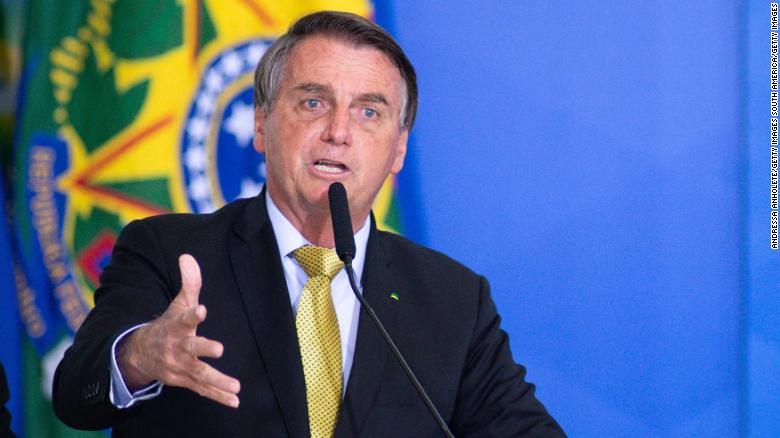
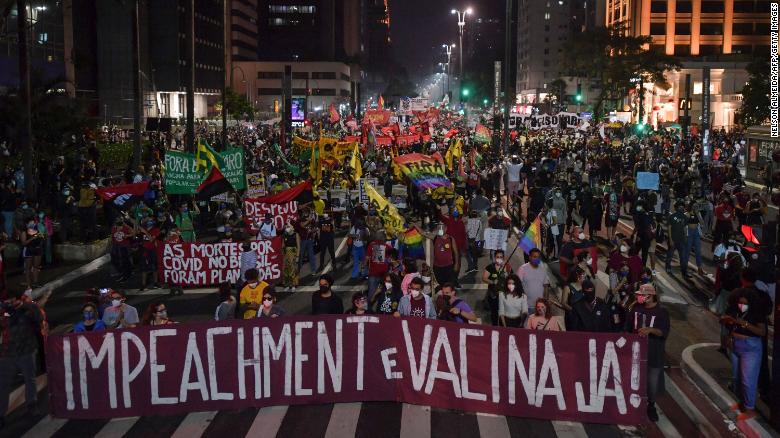
Brazil's scandal-plagued President may face a reckoning as lawmakers consider impeachment The President said he's now feeling "100% well" after his recent health scare, a consequence he says of a failed assassination attempt in 2018 ........ 54% of Brazilians support a proposed move by lawmakers to open impeachment proceedings against Bolsonaro. The July poll also found 51% of Brazilians considered the Bolsonaro presidency "bad" or "awful." ....... Bolsonaro has been at the center of the storm, having downplayed the gravity of the virus from the beginning. This week, the President criticized governors for taking restrictive measures to contain the spread......... "Many governors have closed everything. They have destroyed jobs, especially informal ones. We have around 38 million people in Brazil who live from day to day, who work in the morning to eat at night," he said. "They have lost everything. If there wasn't emergency aid by the federal government, these people would be condemned to starvation." .....

"Trump of the tropics"

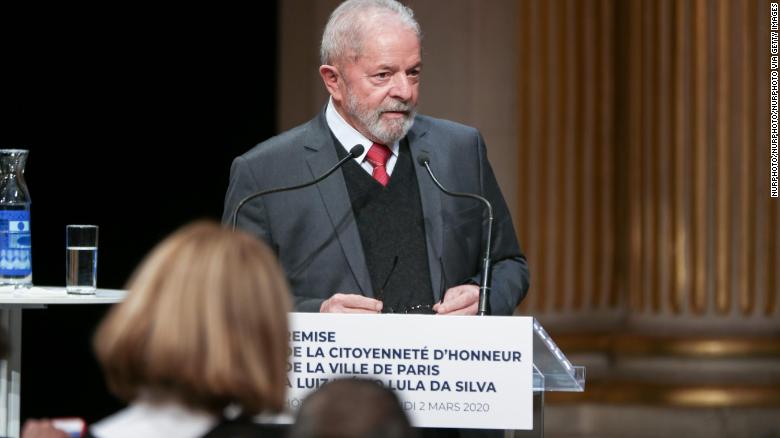
........ "They want to accuse me of genocide. Now, tell me in what country people have not died? This CPI has no credibility," Bolsonaro said. The President added he is "sorry about the dead, but people who were healthy had little chance of dying." ......... a "difficult scenario" for Bolsonaro in the run-up to the October 2022 presidential election, with Datafolha polling showing him trailing likely rival and former President Luiz Inacio Lula da Silva. ....... Da Silva has hinted at a presidential run in 2022 after his convictions for corruption and money laundering were annulled in March, effectively restoring his right to run for office. .............. Bolsonaro's eldest son, Sen. Flรกvio Bolsonaro, tweeted about his father's recent hospital stay, "President @jairbolsonaro evolved for the better, he woke up in a good mood and, if he continues like this, he won't need to undergo surgery! Thank you all for your prayers! #WhoOrderedTheBolsonaroAssassination." ........... "May God bless us and continue to enlighten our nation. A big hug! -- Brazil above all; God above all!"


Sunday, May 10, 2020

The Most Irresponsible Head Of State On The Planet


Bolsonaro called 'biggest threat' to Brazil's coronavirus response as cases spike Bolsonaro came out in support of a small protest Sunday that defended military intervention, infringing his own ministry's recommendations to maintain social distancing and prompting fierce critics. ...... Bolsonaro has repeatedly downplayed the spread of the virus -- which has killed more than 270,000 people worldwide. Recently, a journalist asked him about the rapid spread of coronavirus in Brazil, to which the far-right president responded: "So what? What do you want me to do?" ....... Bolsonaro’s history of budget cuts to health and science services, and “a more general demolition of social security and public services.” ........ “Such disarray at the heart of the administration is a deadly distraction in the middle of a public health emergency and is also a stark sign that Brazil's leadership has lost its moral compass, if it ever had one” .......

Brazil has fast become a global hotspot for the virus, confirming 10,611 new cases on Saturday, bringing the reported total to 156,061 with more than 10,000 deaths..... Bolsonaro has exacerbated the crisis by openly ignoring the lockdown measures introduced by mayors and governors around the country.

........ Bolsonaro, a retired army captain, has come under heavy criticism for repeatedly breaking social distancing rules. On April 20, he joined a protest calling to end social distancing and revive military dictatorship-era decrees. ....... On Friday, Bolsonaro said he planned to “commit a crime” by hosting a barbecue for friends, cabinet members and other public servants ........ He joked that he wouldn’t serve alcohol and that guests would have to chip in to cover the costs of the party. ......... “Brazil as a country must come together to give a clear answer to the “So what?” by its President. He needs to drastically change course or must be the next to go.”


Wednesday, April 01, 2020

The Virus And The Politicians


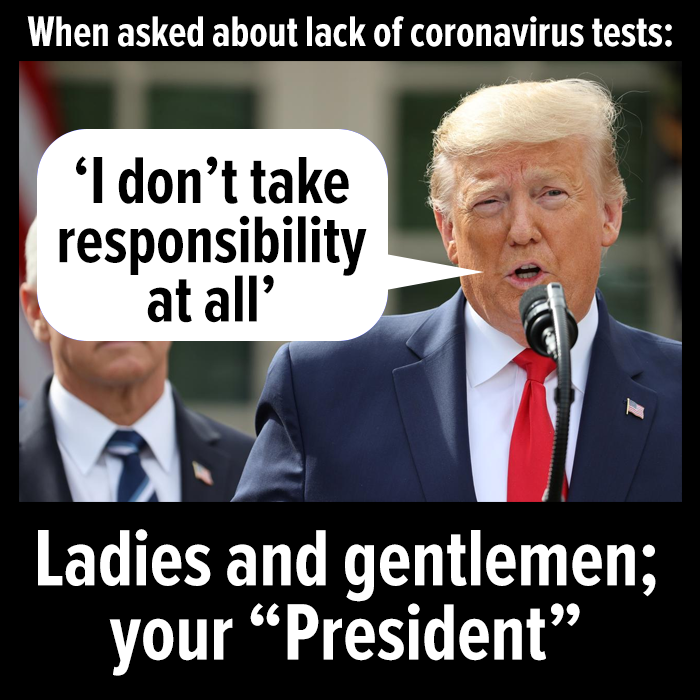
Something that is the Great Depression and World War II combined is going to be a tall task for anybody, let alone mediocre politicians elected to high office, but the scale and rapidity of the spread of this pandemic, now virtually gone to all countries and spreading fast still has particularly exposed deficiencies in leadership, both of individuals and political systems. This is no argument against democracy, for South Korea seems to have done pretty well so far. It is said the genius of the US constitution is that even an idiot can run the country. I never fully bought into that.

But those who doubted Trump's ability to deliver from the get-go now find themselves uncomfortably with front seats to the unfolding tragedy. And Trump is not alone. There is this guy in Brazil basically inciting riots. He is a Trump clone. Modi's three weeks closing down of the country was not a bad idea, but the implementation was so shoddy, there was no implementation, there was just an announcement; as if the demonetization disaster was not enough. India finds itself with crowds of people moving around reminding many of a similar phenomenon during partition. Instead of being inside homes, people are clogging the roads.

The NYC Mayor has been missing in action while he takes to the cameras like he were some opposition leader demanding action. NYC has become Italy and it still is not seeing lockdown.

It is always easier when you are not actually running a country. Former British Prime Minister Gordon Brown went on record asking to set up a world government from scratch. That is the most sense any politician has made during this pandemic so far. Gordon Brown should rally as many former heads of state as possible to the idea and make it happen.

Angela Merkel is a chemist by training. And it showed.

Both China and South Korea, and also Hong Kong and Singapore, all with diverse political systems, have done a pretty good job.

Coronavirus News (22)
Coronavirus News (21)
Working Remotely Permanently To Solve Global Warming
The Police: Don't Stand So Close To Me
AOC Is Joshua?
Coronavirus News (20)
Make Believe
Coronavirus News (19)
Imagine FDR Delegating World War II To Governors

Saturday, June 13, 2015

India: A 15% Growth Rate Is Possible

India decadal growth rate map
India decadal growth rate map (Photo credit: Wikipedia)
Countries like America and Britain and France and Germany and Japan ended up becoming an awe to China because they grew at something like 5% for decades, for centuries. Not 10%.

China grew at 10% for 30 years. Maybe 25.

If Modi does things right, as I think he will, as I think he is, India should hit 10% in a year or two. And it can stay there for 20-30 years. Maybe longer. But my point is, India could achieve a 15% growth rate. It is possible.

India's Goal: $50 Trillion

Main economic growth rate ki baat kar raha hoon, population growth rate ki nahin. Koi confusion na ho jaye.