Operation Absolute Resolve:
The Night the United States Reached into Caracas
January 3, 2026, may come to be remembered as the night the post–Cold War rules of sovereignty bent—if not broke.
In the early hours of that morning, under cover of darkness and a citywide blackout, U.S. special operations forces descended on Caracas in a meticulously choreographed raid codenamed Operation Absolute Resolve. The target was not a terrorist cell or rogue warlord, but a sitting head of state: Venezuelan President Nicolás Maduro, along with his wife, Cilia Flores.
By dawn, both were gone—extracted, blindfolded, and en route to New York to face long-standing U.S. federal indictments for drug trafficking and narco-terrorism. No American personnel were killed. Venezuelan casualties, according to local and independent reports, ranged between 80 and 115, including soldiers and civilians.
The operation was a tactical success, a strategic earthquake, and a legal and moral stress test for the international system.
A Mission Years in the Making
Though the world learned of Operation Absolute Resolve on January 3, its roots stretched back months—and in some respects, years.
Planning reportedly began in mid-2025, involving a dense web of coordination across the CIA, Department of Justice, FBI, DEA, and multiple branches of the U.S. military. Analysts reconstructed Maduro’s “pattern of life” with forensic precision: his daily movements, residences, travel habits, diet, clothing preferences, pets, and security protocols. Nothing was too small. In modern special operations, even a leader’s coffee habits can become a vulnerability.
This level of insight was made possible, according to U.S. sources, by human intelligence inside the Venezuelan regime itself—a reminder that authoritarian systems often rot from within long before they collapse from without.
The Road Not Taken: A Failed Defection Plot
Before the raid, the U.S. explored quieter options. Beginning in early 2024, the CIA reportedly pursued a 16-month effort to recruit Maduro’s chief pilot, General Bitner Villegas, offering millions of dollars and guaranteed protection in exchange for diverting the presidential aircraft to a U.S.-controlled jurisdiction.
The plot failed. Villegas refused and publicly reaffirmed his loyalty on Venezuelan state television. The message was clear: extraction by persuasion had reached a dead end.
From that point forward, the logic shifted from defection to disruption.
Law Enforcement or Act of War?
One of the most consequential—and controversial—aspects of Operation Absolute Resolve was how it was framed.
The U.S. government characterized the raid not as an act of war or regime change, but as a law enforcement action enforcing sealed indictments issued in 2020 and unsealed in 2026, accusing Maduro of leading a narco-terrorist network flooding the United States with cocaine.
Under this interpretation, the operation fell within the scope of the VALOR Act and existing counter-narcotics authorities, allowing the executive branch to proceed without explicit congressional authorization.
Critics argue this represents a dangerous precedent: the unilateral seizure of a foreign head of state under domestic criminal law. Supporters counter that sovereignty cannot serve as a shield for transnational criminal enterprises operating at state scale.
At its core, the debate asks a profound question:
When does a government cease to be a government and become a cartel with a flag?
The Night Caracas Went Dark
At approximately 1:00 a.m. local time, Caracas plunged into darkness.
U.S. cyber and electronic warfare units triggered a coordinated blackout, crippling power grids and severing communications. Venezuelan radar systems were jammed or blinded. Advanced surface-to-air missile platforms, including Buk-M2E systems, were destroyed in precision strikes across Caracas, La Guaira, Miranda, and Aragua states.
More than 150 aircraft, launched from roughly 20 bases across the continental United States and the Caribbean, participated in the operation. Fighter jets established air superiority. Drones loitered overhead, feeding real-time intelligence. Transport aircraft created a secure aerial corridor—an invisible highway through hostile airspace.
Not a single U.S. aircraft was lost.
The Insertion
At 2:01 a.m., approximately 20 helicopters, likely Black Hawks, lifted off—some reportedly from the USS Iwo Jima amphibious assault ship positioned offshore.
Elite U.S. Army Delta Force operators, accompanied by DEA personnel, inserted directly into Fuerte Tiuna, Caracas’s most heavily fortified military complex and the seat of Maduro’s power.
The compound was designed as a fortress, complete with steel-reinforced safe rooms. Maduro reportedly reached a final steel door but was unable to secure it before U.S. forces breached the area. A brief firefight followed. Much of his security detail was killed or surrendered.
Within minutes, the mission’s primary objective was complete.
Extraction and Transit
Maduro and Flores were restrained, blindfolded, and formally taken into custody by DOJ officials on-site—a symbolic but legally significant detail reinforcing the operation’s law-enforcement framing.
They were flown by helicopter to the USS Iwo Jima, then transferred to a fixed-wing aircraft bound for Stewart Air National Guard Base in New York, roughly 60 miles north of Manhattan. By mid-morning, Maduro was on U.S. soil, reportedly destined for the Metropolitan Detention Center in Brooklyn.
President Donald Trump announced the capture from Mar-a-Lago, later posting an image of the blindfolded Maduro on social media—an act critics described as triumphalist and supporters hailed as deterrence by spectacle.
Casualties, Shockwaves, and the Morning After
While U.S. officials emphasized the absence of American fatalities, Venezuelan communities paid a heavy price. Reports from areas such as Catia La Mar described damaged homes and civilian deaths linked to airstrikes and secondary explosions.
Vice President Delcy Rodríguez assumed interim authority, though U.S. officials warned of further consequences should the transitional leadership resist cooperation.
International reaction was swift and divided:
Russia condemned the operation as illegal and destabilizing.
Some Latin American governments decried it as a return to Cold War–era interventionism.
Others quietly welcomed the removal of a leader long associated with repression, corruption, and regional instability.
A New Precedent for Power?
Operation Absolute Resolve inevitably invites comparison to the 1989 U.S. invasion of Panama and the capture of Manuel Noriega. Yet this operation was different—leaner, faster, more surgical, and executed under a legal theory that merges counterterrorism, counter-narcotics, and criminal justice.
If Panama was a hammer, Absolute Resolve was a scalpel.
Still, the implications are enormous. The operation suggests a future in which:
Cyber warfare replaces mass bombardment
Intelligence penetration matters more than troop numbers
Sovereignty erodes when states behave like criminal syndicates
Law enforcement and warfare blur into a single continuum of force
Whether this becomes an exception—or a template—remains to be seen.
Conclusion: The Long Shadow of a Short Night
Operation Absolute Resolve lasted only hours. Its consequences may unfold for decades.
It demonstrated unrivaled American operational capability. It also reopened old wounds in Latin America and raised unsettling questions about who gets to enforce global order—and how.
Like a lightning strike, the raid illuminated the landscape of modern power for a brief moment. What remains, once the thunder fades, is a world still arguing over whether justice was served—or merely imposed.
One thing is certain:
The night Caracas went dark, the rules of the game shifted.

Operation Midnight Hammer:
The Night the Earth Shook Beneath Iran’s Nuclear Mountains
Some wars are fought in deserts and cities. Others are fought in silence, beneath mountains, where physics—not armies—decides the outcome.
On the night of June 21–22, 2025, the United States executed one of the most consequential air operations of the 21st century. Codenamed Operation Midnight Hammer, the mission struck at the geological heart of Iran’s nuclear program—its deeply buried enrichment facilities at Fordow and Natanz, and the nuclear research complex at Isfahan.
This was not a war of attrition. It was a demonstration of reach, patience, and technological supremacy—an operation that fused 15 years of intelligence, cutting-edge stealth aviation, and the first-ever combat use of the 30,000-pound GBU-57 Massive Ordnance Penetrator (MOP).
When the last aircraft touched down 37 hours after takeoff, Iran’s nuclear timeline had been violently reset. The mountain had been struck.
Strategic Context: A War Within a War
Operation Midnight Hammer unfolded against the backdrop of the Iran–Israel war, a conflict increasingly defined not by massed armies but by escalatory thresholds—missiles, proxies, cyber operations, and nuclear brinkmanship.
U.S. officials framed the strikes as defensive and stabilizing, aimed at preventing Iran from crossing an irreversible nuclear threshold. The logic was stark: diplomacy had stalled, inspections were hollowed out, and Iran’s most sensitive facilities were now buried so deep that only a handful of weapons on Earth could reach them.
This was not a warning shot. It was a structural intervention.
Fifteen Years to One Night: The Long Road to Midnight
The success of Midnight Hammer was built on extraordinary institutional patience.
Intelligence as Bedrock
U.S. intelligence agencies began mapping Iran’s hardened nuclear architecture more than 15 years earlier, when facilities like Fordow were first uncovered—designed explicitly to survive conventional airstrikes. Every meter of rock, every layer of reinforced concrete, every tunnel bend was studied.
Engineering the Impossible
At the center of this effort was the Defense Threat Reduction Agency (DTRA), which spent years modeling how to defeat deeply buried targets. The result was the GBU-57 MOP—a weapon less like a bomb and more like a supersonic chisel, relying on kinetic energy, precision guidance, and sheer mass to burrow through bedrock before detonating.
Midnight Hammer was not improvised. It was inevitable, once the decision to act was made.
The Deception: Misdirection on a Global Scale
Surprise was essential—and surprise at this level requires theater.
To mask the real strike package, two B-2 Spirit bombers were deliberately sent westward toward Guam, conducting visible refueling stops in Oklahoma, California, and Hawaii. Analysts tracking open-source flight data took the bait.
Meanwhile, the true strike force moved east in near silence.
It was a classic sleight of hand: make the world watch one horizon while the hammer falls from another.
The Strike Force: A Symphony of Stealth
At the core of Operation Midnight Hammer was one of the most complex air packages ever assembled.
The Numbers That Matter
Over 125 aircraft participated
7 B-2 Spirit stealth bombers, flying nonstop from Whiteman Air Force Base, Missouri
F-35A Lightning II fighters from the 388th Fighter Wing to suppress air defenses
Fourth- and fifth-generation fighters providing layered protection
Dozens of aerial refueling tankers enabling global reach
One guided-missile submarine, launching Tomahawk cruise missiles
This was not just airpower—it was air dominance, extended across continents.
Weapons That Rewrite Geography
The Massive Ordnance Penetrator
For the first time in combat, the GBU-57 MOP was unleashed.
14 MOPs were dropped on Fordow and Natanz
Each bomb weighed 30,000 pounds
Designed to penetrate deep underground before detonation
If conventional bombs knock on the door, the MOP punches through the foundation.
Precision at Isfahan
Simultaneously, more than 24 Tomahawk cruise missiles struck the Isfahan nuclear research complex, targeting surface and semi-buried infrastructure critical to Iran’s nuclear fuel cycle.
In total, roughly 75 precision-guided munitions were employed.
Not a single U.S. aircraft was lost.
Timeline: Thirty-Seven Hours That Reshaped the Board
Pre-Operation (Years to Months Prior): Intelligence fusion, DTRA simulations, global asset positioning
June 21, 2025: Seven B-2s depart Whiteman AFB eastward; decoy bombers head west
Night of June 21–22:
B-2s penetrate Iranian airspace undetected
F-35s suppress radars and air defenses
MOPs strike Fordow and Natanz
Submarine-launched Tomahawks hit Isfahan
June 22: All aircraft return safely after ~37 hours airborne
As Gen. Dan Caine, Chairman of the Joint Chiefs of Staff, later described it:
“A complex, precise mission—executed exactly as designed.”
Damage and Aftermath: Tactical Clarity, Strategic Ambiguity
Immediate Impact
Post-strike assessments indicated severe structural damage to Iran’s most critical nuclear facilities, particularly those designed to withstand earlier generations of bunker-busting weapons. While Iran acknowledged significant damage, it released limited details on casualties.
Strategic Questions
Yet the deeper debate began only after the dust settled:
Did the strikes permanently cripple Iran’s program—or merely delay it?
Did deterrence increase, or did escalation become inevitable?
Does demonstrating such capability stabilize the region—or make future conflict more likely?
Supporters argue Midnight Hammer restored credibility to red lines long seen as rhetorical. Critics warn it may accelerate Iran’s determination to rebuild—harder, deeper, and faster.
Legacy: Power, Precision, and the New Grammar of War
Operation Midnight Hammer will be studied for decades.
It demonstrated:
The viability of global, nonstop stealth strike operations
The effectiveness of kinetic solutions against hardened nuclear targets
The decisive advantage of integration—intelligence, engineering, cyber, air, and naval power acting as one
Most of all, it marked a shift in how wars are fought and prevented. This was not conquest. It was surgical deterrence, delivered from halfway around the world.
Conclusion: When Mountains Are No Longer Safe
For years, Iran believed its nuclear ambitions were protected by geology—that mountains could serve as shields.
Operation Midnight Hammer shattered that assumption.
In an age where power is measured not in divisions but in depth, precision, and persistence, the message was unmistakable:
There are no longer any safe depths—only thresholds that, once crossed, invite the hammer.
Whether Midnight Hammer becomes a footnote in preventing nuclear proliferation—or a chapter in a longer, darker story—will depend not on bombs or bombers, but on what comes next.

Operation Spider’s Web:
How Ukraine Turned Trucks into Aircraft Carriers—and Rewrote the Rules of War
Some battles are won with tanks. Others with satellites. And then there are moments when war is won with plywood, patience, and imagination.
On June 1, 2025, Ukraine’s Security Service (SSU) executed one of the most audacious asymmetric attacks of the modern era. Codenamed Operation Spider’s Web, the operation used 117 small, low-cost first-person-view (FPV) kamikaze drones, smuggled deep into Russian territory and launched from ordinary cargo trucks, to cripple Russia’s strategic aviation fleet.
By the time the dust settled, more than 40 high-value Russian aircraft lay destroyed or severely damaged—including Tu-95MS and Tu-22M3 strategic bombers and A-50 airborne early-warning aircraft. The estimated cost: roughly $7 billion, or nearly one-third of Russia’s strategic bomber force.
Ukraine lost no personnel.
In one night, the balance between cost and consequence in warfare tilted sharply—and permanently.
Strategic Context: War in the Age of Disproportion
Since Russia’s full-scale invasion of Ukraine, the conflict has increasingly become a contest between industrial mass and adaptive ingenuity. Russia wielded manpower, legacy arsenals, and long-range aviation. Ukraine countered with speed, intelligence, and technological improvisation.
Operation Spider’s Web was the purest expression yet of that philosophy.
Rather than intercept Russian bombers after launch—or strike them with expensive long-range missiles—Ukraine went upstream, targeting the platforms themselves, on the ground, thousands of kilometers from the front lines.
This was not defense. It was preemption by asymmetry.
Eighteen Months of Silence: Planning the Impossible
The operation was not spontaneous brilliance; it was methodical patience.
Covert Logistics
Over 18 months, Ukrainian operatives reportedly smuggled:
~150 FPV drones
Modular launch cabins
~300 explosive payloads
These components were moved through undisclosed routes into Russia, piece by piece, beneath the noise floor of routine commerce.
The brilliance was not concealment alone—it was banality. Nothing attracts less suspicion than a cargo truck parked at a fuel station.
Intelligence Fusion
Western intelligence—particularly U.S. support—helped Ukraine map vulnerabilities in Russia’s rear-area air defenses and base security. The operation exploited a long-standing assumption in Russian doctrine: that depth equals safety.
Spider’s Web proved the opposite.
The Innovation: Turning Trucks into Launch Platforms
At the heart of the operation was a deceptively simple idea: bring the battlefield to the target.
The Launch System
Drones were concealed in wooden modular cabins mounted on standard cargo trucks
Retractable roofs opened remotely
Drones launched from laybys, fuel stations, and roadside pull-offs near airbases
In effect, Ukraine turned trucks into disposable, mobile aircraft carriers.
Once the drones launched, many of the trucks reportedly self-destructed, erasing forensic evidence and complicating Russian counterintelligence efforts.
The Weapons: Cheap, Precise, Relentless
The drones themselves were unremarkable by traditional standards:
Cost per unit: ~$200–$500
Type: Short-range FPV/kamikaze drones
Payload: Explosives sufficient to destroy exposed aircraft
Some analysts suggest limited AI-assisted targeting or terminal guidance, though the real advantage lay elsewhere: launch proximity.
By starting mere kilometers from their targets, the drones:
Bypassed long-range air defenses (S-300, Pantsir systems)
Reduced reaction time to seconds
Overwhelmed base-level security designed for perimeter threats, not internal ambush
This was not swarm warfare from afar. It was ambush warfare at scale.
Targets: Striking the Crown Jewels
The drones hit airfields up to 2,000 kilometers inside Russia, including bases in the Irkutsk region, such as Belaya Air Base.
Aircraft destroyed or damaged included:
Tu-95MS strategic bombers (key to cruise missile attacks on Ukrainian cities)
Tu-22M3 long-range bombers
A-50 airborne early-warning and control aircraft—among the rarest and most valuable assets in the Russian arsenal
The loss of A-50s was particularly devastating, degrading Russia’s situational awareness and command-and-control across multiple theaters.
Timing as Psychological Warfare
The strike was carried out on Russia’s Military Transport Aviation Day.
This was not coincidence.
Military operations speak in explosions; strategic operations speak in symbols. By choosing that date, Ukraine transformed a logistical blow into a narrative humiliation, undermining morale and prestige simultaneously.
The message was unmistakable:
Your depth is no defense. Your calendar is no sanctuary.
Execution: A Web Tightens
On June 1, 2025, drones launched nearly simultaneously from multiple trucks across Russia.
The operation unfolded over hours, not minutes:
Real-time remote piloting
Coordinated waves of strikes
Confirmation via satellite imagery and social media footage
Russian authorities initially downplayed the damage. Then admissions followed.
The web had closed.
Aftermath: Damage Beyond Numbers
Military Impact
~34% reduction in Russia’s strategic bomber fleet
Significant degradation of long-range missile strike capacity
Increased strain on maintenance, replacement, and airbase security
Economic Impact
~$7 billion in direct losses
Far greater indirect costs in hardened defenses, dispersal, and operational inefficiency
Psychological Impact
Perhaps the most enduring damage was psychological. Every Russian base commander, logistics officer, and security planner now had to ask a new question:
Which truck is the threat?
Global Shockwaves: A Precedent Set
Operation Spider’s Web sent ripples far beyond Ukraine and Russia.
Military planners worldwide took notice. The operation demonstrated that:
Critical infrastructure is vulnerable to pre-deployed, low-cost systems
Defense budgets can be defeated by creativity, not just capital
The line between civilian logistics and military platforms is increasingly blurred
Analysts quickly drew parallels to other potential theaters, including scenarios involving China, Taiwan, and U.S. bases abroad.
The uncomfortable conclusion:
Modern militaries may be over-optimized for expensive threats and under-prepared for cheap ones.
Legacy: When the Small Learned to Hunt the Large
Operation Spider’s Web will be remembered as a turning point—not because it used new technology, but because it used old assumptions against themselves.
In classical warfare, power flowed from mass.
In modern warfare, power flows from placement, patience, and precision.
Ukraine did not outspend Russia.
It outthought it.
The spider does not defeat the fly by force. It waits, it positions, and then—when the moment comes—it strikes with inevitability.
On June 1, 2025, the web held.
Operation Sindoor:
India’s First Non-Contact War and the Redefinition of Deterrence in South Asia
Some wars are fought across borders. Others are fought across thresholds.
In early May 2025, South Asia stood once again at the edge of escalation—but did not fall over it. Instead, India launched Operation Sindoor, a tightly calibrated military campaign designed to punish terrorism, deter future attacks, and redefine the grammar of conflict with Pakistan—without triggering a full-scale war between two nuclear-armed states.
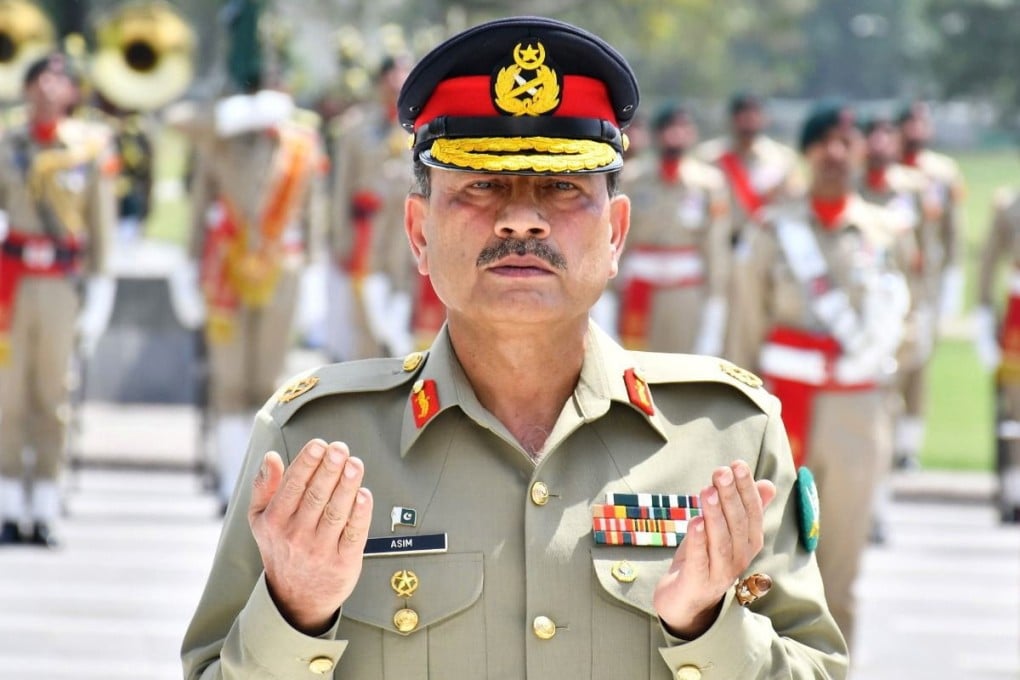
The operation was triggered by a terrorist attack in Pahalgam, Indian-administered Kashmir, on April 22, 2025, in which 26 civilians—primarily tourists—were killed. Indian authorities attributed the attack to Pakistan-sponsored terrorist groups, alleging incitement through inflammatory rhetoric from Pakistan’s Army Chief, General Asim Munir.
What followed was not a ground invasion or mass mobilization, but something new for the subcontinent: a technology-driven, stand-off campaign conducted almost entirely without physical border crossings. From May 6 to May 10, India applied force like a scalpel—precise, distant, and deliberately limited.
This was India’s first true “non-contact war.”
Strategic Context: Retaliation Without Rupture
India has long walked a strategic tightrope with Pakistan. Every major terrorist attack risks escalation, yet restraint has often been interpreted—especially domestically—as weakness.
Operation Sindoor represented a doctrinal shift.
Rather than absorb the attack or respond symbolically, India sought to:
Raise the cost of cross-border terrorism
Signal assured retaliation
Avoid triggering conventional or nuclear escalation
This was deterrence not by denial, but by precision punishment.
As one analyst put it, Sindoor was less about vengeance than recalibration—resetting expectations about what Pakistan could do without consequence.
Why “Sindoor”?
The operation’s name carried cultural and symbolic weight.
Sindoor—the vermilion traditionally worn by married Hindu women—has long been associated with life, continuity, and honor. In the wake of an attack that targeted civilians based on religion, the name served as a message: this was a response framed not only in military terms, but in civilizational and moral language.
It also signaled domestic resolve. India was not acting impulsively—but it was acting decisively.
Planning the Strike: Speed, Intelligence, Restraint
Preparations reportedly began almost immediately after the April 22 Pahalgam attack.
Intelligence Fusion
Indian agencies, including the Research and Analysis Wing (RAW), worked to identify:
Terrorist infrastructure in Pakistan-administered Kashmir (PoK)
Support nodes in mainland Pakistan, particularly in Punjab
Military facilities suspected of enabling or shielding terror groups
Target selection emphasized precision and discrimination—a necessity in a nuclearized environment where miscalculation can cascade.
Strategic Constraints
From the outset, Indian planners imposed strict limits:
No ground troop incursions
No territorial occupation
Use of stand-off weapons to avoid deep airspace penetration
Avoidance of civilian infrastructure where possible
The objective was not regime change or battlefield dominance, but deterrent clarity.
The Campaign: Fire Without Footsteps
Launch: May 7, 2025
India initiated Operation Sindoor with precision missile strikes, drone attacks, and air sorties against nine identified targets:
Five in PoK, linked to terrorist training and logistics
Four in mainland Pakistan, including Bahawalpur, Muridke, Shakar Garh, and areas near Sialkot
These locations were not chosen at random. Muridke and Bahawalpur, in particular, have long been associated in Indian assessments with extremist networks.
The Tools of a Non-Contact War
The operation relied on a blend of modern capabilities:
Stand-off precision-guided munitions (including BrahMos-class systems or equivalents)
Unmanned aerial systems for targeting and battle damage assessment
Rafale fighter aircraft, providing air dominance and launch capability
Artillery exchanges across the Line of Control (LoC) in response to Pakistani fire
Crucially, Indian aircraft largely avoided sustained penetration of Pakistani airspace, relying instead on range, speed, and accuracy.
This was warfare by geometry, not proximity.
Airpower and Contestation: Claims and Counterclaims
As expected, Pakistan retaliated.
The period from May 7 to May 10 saw:
High-tempo air activity
Electronic warfare
Reported dogfights between Indian Rafales and Pakistani J-10s
Pakistan claimed it shot down multiple Indian aircraft, including Rafales—claims India strongly disputed. As in many modern conflicts, the truth became obscured by fog, propaganda, and information warfare.
What mattered more than the scorecard was the ceiling both sides respected. Neither escalated beyond calibrated thresholds.
Damage and Effectiveness: Measuring Success
Indian Assessment
India declared that:
Terrorist infrastructure had been destroyed or degraded
Key Pakistani airbases and military assets were temporarily crippled
Objectives were achieved with minimal confirmed losses
Gallantry awards were later conferred on Indian personnel involved in the operation, reinforcing the narrative of controlled success.
Pakistani Impact
While Pakistan did not release full casualty or damage figures, assessments suggested:
Significant economic costs, running into billions
Disruption to air operations and base readiness
Increased strain on already fragile economic conditions
More subtly, Sindoor forced Pakistan to confront a new reality: India’s response window had shortened dramatically.
International Reaction: Applause, Anxiety, and Analysis
Global reactions were mixed.
Some observers framed Operation Sindoor as a technology-driven showdown—French Rafales versus Chinese-supplied J-10s—a proxy narrative for great-power competition.
Others focused on the risk: yet another near-crisis between nuclear rivals.
India, for its part, emphasized:
Restraint
Proportionality
Compliance with international norms
Behind closed doors, many capitals quietly acknowledged what Sindoor demonstrated: escalation can be managed—not eliminated, but shaped.
Legacy: A Doctrine Takes Form
Operation Sindoor did not redraw borders. It redrew expectations.
It established:
A doctrine of assured retaliation
Acceptance of technology-centric, stand-off warfare
A preference for non-contact kinetics over ground escalation
A higher cost threshold for Pakistan-backed terrorism
In doing so, it joined earlier milestones—like the 2016 surgical strikes and the 2019 Balakot airstrike—but went further in scale, sophistication, and restraint.
Conclusion: Power Without Occupation
Operation Sindoor may be remembered less for what it destroyed than for what it avoided.
No ground war.
No territorial seizure.
No uncontrolled escalation.
Instead, India demonstrated a model of force suited to the nuclear age: decisive yet delimited, technologically sharp yet politically conscious.
In South Asia, where history is heavy and thresholds are thin, Sindoor showed that retaliation need not be reckless—and restraint need not be passive.
It was a war fought at a distance—but felt up close, on both sides of the border.
Israel’s Eight-Front War:
From October 7 to the Age of Permanent Conflict
Some wars have fronts. Others have borders. Israel’s war after October 7 has neither. It has vectors.
On October 7, 2023, Israel awoke to its gravest national trauma since the state’s founding. A Hamas-led assault, coordinated across land, air, and sea, killed approximately 1,200 Israelis and foreign nationals and resulted in 251 hostages taken into Gaza. The massacre at the Nova music festival and the destruction of communities such as Be’eri kibbutz shattered assumptions about deterrence, intelligence supremacy, and border control.
What followed was not a single war, but a cascade.
By late 2023, Israel found itself engaged in what analysts increasingly described as an “eight-front war”—a sprawling conflict stretching from Gaza to Lebanon, Syria, Iraq, Yemen, Iran itself, the West Bank, and far beyond the Middle East into a global ideological battlefield marked by rising antisemitism.
This was not merely escalation. It was systemic exposure.
The Architecture of an Eight-Front War
Traditional wars expand horizontally. Israel’s post–October 7 war expanded radially—like shockwaves from an epicenter—activating pre-positioned proxy networks, dormant grievances, and ideological fault lines worldwide.
The eight fronts are commonly defined as:
Gaza – Hamas
West Bank – Palestinian militants and settler violence
Lebanon – Hezbollah
Yemen – Houthis
Syria – Iranian and Hezbollah infrastructure
Iraq – Iran-aligned militias
Iran – Direct confrontation
Global antisemitism – An ideological and civilizational front
Seven are kinetic. The eighth is cultural, psychological, and transnational.
Together, they represent what may be the first modern example of a fully integrated proxy war fused with ideological mass mobilization.
Strategic Context: From Operation Iron Swords to “Forever Wars”
Israel’s initial response—Operation Iron Swords—was conceived as a decisive campaign to destroy Hamas’s military and governing capacity in Gaza. But Hamas was not an isolated actor; it was one node in a network long cultivated by Iran, which had supplied weapons, funding, and training—though not direct foreknowledge of October 7.
The war metastasized because the system activated.
Hezbollah opened fire from Lebanon within 24 hours. Houthis launched missiles from Yemen. Militias in Iraq and Syria escalated attacks. Iran itself crossed thresholds previously avoided.
What emerged was not coordination in the classical sense, but synchronization—a model of warfare where independent actors move to a shared rhythm without central command.
Front One: Gaza — Total War Without Total Victory
Gaza remains the war’s gravitational center.
Following the October 7 attacks—marked by mass civilian killings and hostage-taking—the IDF launched one of the most intense bombing campaigns of the 21st century, followed by successive ground offensives in Gaza City, Khan Younis, Rafah, and North Gaza.
Key facts:
66,600+ fatalities in Gaza by 2026
800,000 displaced in early phases alone
Repeated sieges, aid restrictions, and urban combat
A January 2025 ceasefire collapsed by March
Hamas was severely degraded but not eliminated. Its command structure was damaged, tunnels destroyed, leaders killed—including Yahya Sinwar—yet guerrilla warfare persisted.
Strategically, Gaza became a paradox: maximum destruction without strategic closure.
Front Two: The West Bank — Pressure Cooker Without Release
In the West Bank, violence surged to levels unseen in over 15 years:
Daily IDF raids
Large-scale operations displacing 40,000 people
Settler violence often unchecked
Militant attacks and reprisals
While militant activity eventually declined, the political vacuum deepened. The Palestinian Authority weakened further, settlement expansion accelerated, and the risk of a third intifada lingered—contained by force, unresolved by politics.
Front Three: Lebanon — Hezbollah Exposed but Unbroken
Hezbollah launched over 8,000 rockets and artillery rounds from southern Lebanon by 2024.
Israel escalated in September 2024 with a ground incursion. A ceasefire followed in November, but it was brittle. Israel maintained freedom of action through:
Targeted assassinations
Persistent airstrikes
Forward outposts inside Lebanese territory
Hezbollah emerged weakened but intact, its aura of invincibility cracked—but its arsenal largely preserved.
Front Four: Yemen — Missiles from the Margins
From Yemen, the Houthis fired drones and missiles toward Israel and disrupted Red Sea shipping.
Israel responded with long-range strikes on:
Sanaa
al-Hudaydah port
Houthi leadership (Operation Lucky Drop, August 2025)
Despite civilian casualties and global shipping disruptions, the Houthis remained undeterred—demonstrating how low-cost actors can impose high strategic friction.
Front Five: Syria — Strategic Depth Through Collapse
The fall of Bashar al-Assad in December 2024 radically altered Syria’s strategic landscape.
Israel moved swiftly:
330+ airstrikes, destroying up to 80% of Syrian air defenses
Occupation of the UN buffer zone
Expansion toward Daraa and Damascus
Protection and leverage via Druze communities
This was not defensive action—it was geopolitical entrenchment, securing high ground, water resources, and strategic corridors.
Front Six: Iraq — Shadowboxing the Militias
In Iraq, Israeli actions remained limited but deliberate, targeting Iranian-backed militias through covert or regional strikes.
The objective was degradation, not escalation—keeping the Iraqi front noisy but contained.
Front Seven: Iran — The Unthinkable Becomes Thinkable
Direct confrontation crossed long-standing red lines.
Israeli assassinations of commanders and scientists
Iranian missile salvos in 2024
A 12-day Israel–Iran war in June 2025, targeting nuclear and military sites
Iran’s missile stockpiles were depleted, its nuclear program damaged—but not destroyed. The taboo against direct war cracked, and with it, the regional order.
Front Eight: Global Antisemitism — The Oldest Front Reopened
Beyond the Middle East, a different war unfolded.
Jews worldwide faced:
Physical attacks
Campus exclusion
Pogrom-like violence (e.g., Amsterdam, 2024)
Convergence of far-left and far-right extremism
Often framed as “anti-Zionism,” this front blurred protest into persecution. For many Jews, October 7 did not end—it spread.
This front has no ceasefire.
Domestic Israel: A Nation at War with Itself
Inside Israel, the war fractured society.
2,600+ anti-government protests
Disputes over hostages versus military objectives
Accusations of strategic drift
Erosion of trust in leadership
Israel fought enemies abroad while arguing over its soul at home.
Humanitarian and Legal Reckoning
By 2025, UN bodies accused Israel of genocide in Gaza, citing:
Collective punishment
Weaponization of aid
Civilian targeting
Israel rejected the claims, citing Hamas’s embedded warfare. The legal battle became another front—one fought in courts, universities, and public opinion.
Legacy: The Age of Permanent Conflict
By 2026, no front had fully closed.
Israel emerged:
Militarily dominant
Strategically extended
Politically isolated in parts of the world
Locked into low-intensity, perpetual conflict
October 7 did not begin a war. It revealed a system already primed for ignition.
Conclusion: A War Without an Ending
Israel’s eight-front war is not a campaign—it is a condition.
It has rewritten how terrorism is studied, how proxy wars function, and how ideology weaponizes identity across borders. It has shown that victory is no longer territorial, defeat no longer decisive, and peace no longer binary.
This is war as atmosphere, not event.
And like the air itself, it is everywhere—whether acknowledged or not.

Operation Grim Beeper: When the Supply Chain Became the Battlefield
How Israel Turned Everyday Electronics into a Trojan Horse—and Redefined Asymmetric Warfare
On September 17, 2024, Lebanon experienced a moment that felt less like war and more like a glitch in reality itself. Across homes, offices, checkpoints, cafés, and frontlines, thousands of pagers suddenly exploded—simultaneously. The following day, hundreds of walkie-talkies detonated as well. What initially appeared as mass device malfunction quickly revealed itself as something far more chilling: a meticulously planned covert operation attributed to Israel’s intelligence service, Mossad.
Dubbed “Operation Grim Beeper” by analysts and media outlets, the attack injured more than 3,000 people and killed between 12 and 37, including Hezbollah operatives, civilians, and two children. Beyond the immediate human toll, the operation sent shockwaves through the global security community. It was not merely an attack—it was a proof of concept. The supply chain itself had been weaponized.
If traditional warfare is fought with tanks and missiles, Operation Grim Beeper demonstrated that modern conflict can be waged with invoices, shell companies, YouTube ads, and lithium batteries. The battlefield had shifted—from geography to logistics, from borders to procurement spreadsheets.
Strategic Context: A War Without Front Lines
The operation unfolded against the backdrop of escalating regional conflict following Hamas’s October 7, 2023 attacks on Israel. As Israel launched its campaign in Gaza, Hezbollah intensified cross-border fire from southern Lebanon, threatening to open a full northern front. Israel responded with airstrikes, assassinations, and covert actions designed to weaken Hezbollah without triggering all-out war.
Hezbollah, for its part, had adapted. In February 2024, its leader Hassan Nasrallah publicly warned members to avoid smartphones, citing Israeli cyber and signals-intelligence penetration. The group reverted to older, low-tech communication tools—pagers and walkie-talkies—believing them to be safer precisely because they were obsolete.
That decision proved catastrophic.
Operation Grim Beeper exploited a classic asymmetric vulnerability: the belief that simplicity equals security. Hezbollah had armored itself against cyberwarfare, only to leave its logistical bloodstream exposed.
The Long Con: A Decade in the Making
Unlike conventional military operations measured in weeks or months, Operation Grim Beeper unfolded over more than a decade.
Phase One: The Walkie-Talkies (circa 2014)
According to post-operation disclosures by retired Mossad officers, Israel began infiltrating Hezbollah’s procurement channels as early as the mid-2010s. Walkie-talkies—used extensively by Hezbollah field units—were quietly modified with small quantities of high explosives embedded inside battery compartments. These devices were sold through intermediaries and front companies at attractive prices.
By the time Hezbollah realized the danger in 2024, more than 16,000 rigged walkie-talkies were reportedly in circulation.
Phase Two: The Pager Trap (2022–2024)
The pager phase represented a leap in both scale and theatrical deception.
When Mossad learned that Hezbollah was sourcing pagers modeled on devices from Taiwan’s Gold Apollo, Israeli intelligence reportedly created a constellation of shell companies that mimicked legitimate manufacturers. These firms marketed “enhanced” pagers—dustproof, waterproof, long battery life—using professional branding and even fake YouTube advertisements.
The brilliance of the scheme lay in its restraint. The pagers worked. They beeped. They conveyed messages. Nothing appeared suspicious. Like the Trojan Horse of legend, the danger lay dormant inside something familiar and trusted.
Execution: The Day the Beepers Rang
At approximately 3:30 p.m. local time on September 17, 2024, encrypted messages were sent simultaneously to thousands of pagers across Lebanon and parts of Syria. The message prompted users to press two buttons to “acknowledge” receipt—a routine action ingrained through habit.
Whether acknowledged or ignored, the result was the same.
Explosives—believed to include PETN—detonated inside the devices. In homes, pagers exploded in hands or on belts. In offices, they shattered desks. On the battlefield, they detonated inches from hearts and arteries. Hospitals were flooded with casualties suffering eye loss, amputations, and shrapnel wounds.
The following day, hundreds of walkie-talkies detonated as well, compounding confusion and fear. Hezbollah’s internal communications collapsed overnight.
Tactical Impact: Silence as a Weapon
The immediate military effect was profound:
Command-and-control paralysis: Hezbollah units lost trust in their own equipment.
Operational hesitation: Fighters abandoned devices entirely, reverting to runners and face-to-face communication.
Psychological shock: Every beep became a threat; every battery a suspected bomb.
In asymmetric warfare, morale is a force multiplier. Operation Grim Beeper inverted that principle, turning Hezbollah’s logistical confidence into existential dread.
This disruption reportedly paved the way for subsequent Israeli assassinations and strikes, including later operations targeting senior Hezbollah figures.
Civilian Harm and Ethical Controversy
Yet the operation also ignited fierce ethical debate.
Unlike a missile strike on a military base, detonating communication devices in civilian environments blurred the line between combatant and non-combatant. Pagers exploded in markets, homes, and ambulances. Medical workers were injured. Children were killed.
Critics argued that the operation constituted indiscriminate violence and set a dangerous precedent. Supporters countered that Hezbollah’s systematic embedding within civilian society made such distinctions unavoidable—and that the alternative would have been far bloodier conventional warfare.
The question lingers:
When war hides inside daily life, can attacks ever remain clean?
A New Grammar of War
Operation Grim Beeper may ultimately be remembered less for its casualties than for its implications.
It demonstrated that:
Supply chains are now strategic terrain.
Trust can be weaponized more effectively than firepower.
Low-tech systems are not immune to high-concept warfare.
In this sense, the operation was not merely Israeli—it was prophetic. It foreshadowed a future where wars are won not by destroying armies, but by corrupting the invisible systems that sustain them.
Factories become front lines. Advertisements become camouflage. Batteries become bombs.
Conclusion: The Beep Heard Around the World
Operation Grim Beeper was a masterclass in intelligence tradecraft and a warning to every armed group, corporation, and government on Earth. In an age of globalized manufacturing and opaque supply chains, the deadliest weapon may already be in your pocket.
Like a modern Trojan Horse, the pagers did not break down the gates. They were welcomed inside—charged, trusted, and carried close to the heart.
And when they finally spoke, they did not beep. They exploded.
Operation Neptune Spear: The Night the Long Hunt Ended
How a 40-Minute Raid Closed a Decade-Long Manhunt—and Redefined Modern Counterterrorism
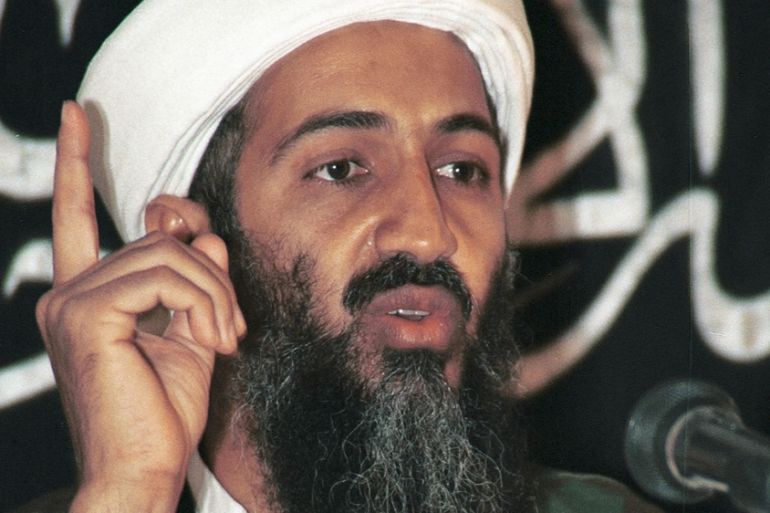
In the early hours of May 2, 2011, in the quiet garrison town of Abbottabad, Pakistan, two helicopters slipped through the darkness like ghosts skimming the earth. Within 40 minutes, the world’s most wanted man—Osama bin Laden—was dead. The operation that killed him, Operation Neptune Spear, marked the culmination of a nearly ten-year global manhunt triggered by the September 11, 2001 attacks, which bin Laden had masterminded, killing nearly 3,000 people.
More than a tactical success, Neptune Spear was a defining moment in 21st-century warfare—a fusion of intelligence patience, political risk, technological stealth, and human skill. It demonstrated how modern counterterrorism is less about armies clashing and more about shadows converging: analysts, couriers, satellites, and operators, all moving toward a single point in space and time.
Strategic Context: Justice, Deterrence, and Credibility
By 2011, the United States had been at war with al-Qaeda for nearly a decade. Bin Laden had become both a strategic target and a symbolic one—a living embodiment of jihadist terrorism and a rallying myth for extremist movements worldwide. His continued survival undermined U.S. credibility and sustained the narrative of American vulnerability.
Yet killing bin Laden posed immense risks. He was hiding deep inside Pakistan, a nominal U.S. ally, near a major military academy. Any overt operation risked a diplomatic crisis, military confrontation, or catastrophic failure. The choice to act unilaterally reflected a grim calculation: the cost of inaction had begun to exceed the cost of sovereignty violation.
President Barack Obama would later describe the decision as one of the most difficult of his presidency.
Intelligence Buildup: Following the Thread
Unlike Hollywood portrayals of instant breakthroughs, the hunt for bin Laden was a slow unraveling of human networks.
The decisive thread emerged through Abu Ahmad al-Kuwaiti, bin Laden’s trusted courier. Years of detainee interrogations—some controversial—produced fragments of information that, when cross-referenced and patiently analyzed, began to converge. By mid-2010, CIA analysts tracked al-Kuwaiti to a mysterious compound in Abbottabad.
The compound itself raised alarms:
No telephone or internet connections
Exceptionally high walls topped with barbed wire
Residents burned their trash rather than leaving it outside
The tallest structure in the neighborhood, yet worth far less than its security suggested
There was no photograph of bin Laden, no intercepted voice, no direct confirmation. But intelligence is rarely about certainty. It is about probability. The CIA assessed a 50–80% likelihood that bin Laden was inside.
In intelligence work, that is often as good as it gets.
Choices on the Table: Bomb or Boots
The Obama administration debated multiple options:
Airstrike (B-2 bombers or drones): Lower risk to U.S. personnel, but no body, no proof, and massive civilian casualties.
Pakistani cooperation: Rejected due to high risk of leaks.
Special operations raid: Highest risk, highest reward.
The raid option prevailed because it allowed for positive identification, intelligence recovery, and narrative closure. Bin Laden could not simply disappear into rubble. He had to be found, confirmed, and finished.
The Strike Force: Precision Over Power
The mission was assigned to Naval Special Warfare Development Group (DEVGRU)—commonly known as SEAL Team Six—specifically Red Squadron, under the Joint Special Operations Command (JSOC).
The Assault Package:
23 Navy SEALs
1 interpreter
1 combat dog, Cairo (Belgian Malinois), trained in tracking and detection
CIA and JSOC planners
Army aviators from the 160th Special Operations Aviation Regiment (Night Stalkers)
Two stealth-modified MH-60 Black Hawk helicopters, designed to evade radar and reduce acoustic signatures, carried the assault force. Two MH-47 Chinooks loitered nearby as backup.
This was not brute force. It was surgical intrusion.
Execution: Forty Minutes in Abbottabad
The helicopters lifted off from Jalalabad, Afghanistan, flying low through mountainous terrain to avoid Pakistani radar. Ninety minutes later, as the SEALs descended into the compound, the unexpected happened: one Black Hawk encountered unstable air caused by the compound’s high walls and crash-landed.
The contingency plans kicked in seamlessly.
The raid unfolded with brutal efficiency:
Guesthouse: Al-Kuwaiti killed in initial contact.
Main building: SEALs moved floor by floor.
Stairwell: Bin Laden’s son Khalid was killed while charging.
Third floor: Osama bin Laden was shot and killed—unarmed but moving toward a weapon.
In warfare, seconds matter. In special operations, milliseconds do.
The team collected hard drives, documents, computers, and videos—an intelligence trove that would fuel counterterrorism operations for years.
Before departing, the SEALs destroyed the downed helicopter with explosives to prevent technology compromise.
Verification and Burial: Closing the Symbol
Bin Laden’s body was flown to the USS Carl Vinson in the North Arabian Sea. DNA testing confirmed his identity with near certainty. Within 24 hours, he was buried at sea according to Islamic rites.
The decision was deliberate: no grave, no shrine, no pilgrimage. The myth would not be allowed a monument.
Aftermath: Shockwaves and Silence
U.S. Impact
President Obama announced the operation to the world on May 1, 2011. Across the United States, crowds gathered spontaneously—celebrating, reflecting, grieving. Intelligence recovered from the compound disrupted al-Qaeda networks and confirmed bin Laden’s continued operational role.
Pakistan
Islamabad protested the violation of sovereignty, even as uncomfortable questions arose about how the world’s most wanted terrorist had lived undetected near a military academy.
Trust between the U.S. and Pakistan suffered lasting damage.
Al-Qaeda
The organization confirmed bin Laden’s death and vowed revenge. While the group weakened, it did not disappear. Affiliates—from Yemen to North Africa—continued to evolve, proving that killing a leader does not kill an ideology.
Legal and Ethical Debate
Under international humanitarian law, bin Laden was deemed a lawful military target as the leader of a non-state armed group engaged in ongoing hostilities. Still, debates persist:
Should capture have been attempted?
Did sovereignty matter more than justice?
Does targeted killing set dangerous precedents?
These questions remain unresolved—not because the operation failed, but because modern warfare itself defies clean answers.
Legacy: A New Template for War
Operation Neptune Spear became a benchmark for:
Intelligence-driven warfare
Interagency coordination
Presidential risk-taking
Precision over mass force
It inspired books, films (Zero Dark Thirty), and doctrine. More importantly, it signaled a shift: wars against networks are won not on battlefields, but in bedrooms, stairwells, and data caches.
The operation did not end terrorism. But it ended an era.
For nearly ten years, Osama bin Laden had been a shadow cast over global politics. On that night in Abbottabad, the shadow finally found a wall—and disappeared.
Nepal’s Gen Z Revolution of 2025
How a Smartphone Generation Toppled a Government in 48 Hours
On September 8, 2025, Nepal witnessed one of the fastest political collapses in modern democratic history. What began as a protest against a government ban on social media metastasized—within forty-eight hours—into a full-blown youth uprising that forced Prime Minister K.P. Sharma Oli to resign, shattered a long-entrenched political order, and ushered in an unprecedented experiment in digital democracy.
By September 9, the government had fallen. By September 12, Nepal had an interim prime minister—former Chief Justice Sushila Karki—selected not by parliament or party elders, but through an online Discord vote. For a brief, electrifying moment, power flowed upward from screens, streets, and slogans rather than downward from party headquarters.
The event quickly earned a name: the Gen Z Revolution.
A Spark in a Dry Forest
The immediate trigger was deceptively narrow. On September 4, 2025, the Oli government announced a sweeping ban on 26 social media platforms, including Facebook, YouTube, X, Discord, and TikTok. Officially, the move was framed as an attempt to regulate digital commerce and tax evasion. Unofficially, it was widely perceived as an attempt to silence dissent, expose critics, and reassert elite control over narrative space.
For Nepal’s Generation Z—young people under 30 who comprise roughly 56% of the population—the ban was not merely inconvenient. It felt existential. Social media was not entertainment; it was infrastructure. It was how they organized work, protested corruption, documented abuse, and stayed connected in an economy that had already pushed millions abroad.
The ban struck like a match thrown into tinder that had been drying for years.
The Deeper Grievance: A Rotating Syndicate of Power
Beneath the outrage lay a far more corrosive frustration: political stagnation masquerading as democracy.
Since Nepal became a republic in 2008, three men—K.P. Sharma Oli, Pushpa Kamal Dahal (“Prachanda”), and Sher Bahadur Deuba—had rotated through the prime minister’s office more than 18 times via fragile coalitions. To many young Nepalis, this revolving door resembled a cartel rather than a choice: elections changed faces, not outcomes.
Two major parties—the CPN-UML and the Nepali Congress—were accused of entrenching elite families, distributing patronage, and blocking generational renewal. Viral campaigns like #NepoKids exposed the luxury lifestyles of politicians’ children against a backdrop of 20% youth unemployment, mass emigration, and an economy propped up by remittances (about 33% of GDP).
Critics increasingly described Nepal’s system as procedurally democratic but substantively autocratic—a republic run like a private syndicate.
From Protest to Conflagration
Day One: September 8, 2025
Protests erupted across Kathmandu—Maitighar Mandala, New Baneshwor, and outside Parliament—organized almost entirely online through Discord servers, VPNs, QR-code flyers, and encrypted messaging apps.
The tone was initially creative and defiant rather than violent. Protesters danced, skateboarded, waved Jolly Roger flags (borrowed from One Piece as a symbol of rebellion against tyranny), and chanted anti-corruption slogans. It was carnivalesque dissent—until it wasn’t.
Police responded with tear gas, water cannons, rubber bullets, and eventually live ammunition. By nightfall, 19 protesters—mostly youth—were dead, and hundreds injured.
The killings changed everything.
Grief curdled into rage. What had been a protest became an uprising.
Day Two: September 9, 2025
Kathmandu burned.
Crowds stormed and torched government buildings, party offices, and politicians’ homes. Prisons were breached, releasing more than 13,500 inmates. Police stations were overrun; weapons and ammunition were seized. Three police officers were killed amid the chaos.
The violence was not monolithic. Alongside organized youth activists were opportunistic mobs, criminal elements, and long-simmering local grievances. The state’s authority collapsed faster than it could respond.
By evening, Prime Minister Oli resigned.
Nepal’s government—once fortified by coalition arithmetic and inertia—fell like a house whose beams had rotted unnoticed.
Digital Revolution Without a Vanguard
Unlike classic revolutions, Nepal’s Gen Z uprising had:
No single leader
No central committee
No manifesto drafted in advance
Instead, it had servers, polls, channels, and moderators.
The largest Discord group—often referred to as Youths Against Corruption—grew to over 100,000 members, coordinating logistics, safety updates, and strategy in real time. Decisions were made horizontally, through votes and consensus rather than command.
In a historic first, thousands of participants voted online to select Sushila Karki—a respected former Chief Justice with a reputation for integrity—as interim prime minister. Parliament was dissolved, and elections were scheduled for March 5, 2026.
The metaphor was unavoidable: a nation briefly governed like an open-source project.
Casualties, Costs, and Consequences
The price of speed was steep.
76 people killed, including protesters, police, prisoners, and bystanders
2,113 injured
Estimated $21.2 billion in damage—nearly half of Nepal’s GDP
Tourism and investment collapsed overnight
Human rights groups condemned excessive force by security services, including firing live rounds and tear gas in hospitals. At the same time, the scale of arson, looting, and prison breaks raised fears of lawlessness and counterrevolution.
Families of victims received compensation. Investigations were announced. Trust, however, proved harder to restore.
A Regional and Global Echo
The Nepal uprising did not occur in isolation. Protesters openly cited:
Sri Lanka (2022)
Bangladesh (2024)
Indonesia’s youth movements
Within months, analysts drew connections between Nepal’s events and Gen Z–driven protests in Madagascar, Kenya, Togo, Morocco, and beyond. The common threads were unmistakable: corruption, gerontocracy, digital repression, and youth exclusion.
If the Arab Spring was powered by Facebook and Twitter, Nepal’s Gen Z Revolution was powered by Discord, VPNs, and meme culture—less hierarchical, more improvisational, and faster than institutions could process.
Legacy: A Warning and a Blueprint
Nepal’s Gen Z Revolution redefined what political power can look like in the digital age. It demonstrated that:
Governments can fall faster than constitutions can respond
Digital natives can organize at scale without formal leadership
Legitimacy now flows through networks as much as ballots
But it also exposed risks:
How quickly protests can spiral into violence
How fragile state capacity becomes once fear replaces consent
How revolutions without institutions struggle to consolidate gains
The uprising cracked open Nepal’s political system. Whether it leads to renewal, relapse, or regression remains uncertain.
What is clear is this: a generation that grew up swiping screens discovered it could swipe away a government.
The old guard learned—too late—that when you shut down the internet on a restless youth, you do not silence them.
You only teach them how powerful they already are.

