Pages

Saturday, May 31, 2025

Fentanyl, Firearms, and Foreign Policy: Unraveling a Complex Crisis


Fentanyl, Firearms, and Foreign Policy: Unraveling a Complex Crisis

The United States is grappling with two overlapping epidemics: the synthetic opioid crisis, dominated by fentanyl, and the enduring scourge of gun violence. Both are devastating, deadly, and politically explosive. But when you zoom out, these aren’t just isolated American problems—they’re deeply embedded in global supply chains, cross-border politics, and international perceptions of American influence and vulnerability.

This blog post dives into the fentanyl crisis, draws comparisons to gun violence, traces supply chains, examines the role of China and Mexico, and confronts the haunting question: Are these problems too big to solve without US-China cooperation? We’ll also explore the argument that American guns are Mexico’s fentanyl—and whether either nation is truly ready for the level of collaboration required to turn the tide.


I. How Bad Is the Fentanyl Crisis?

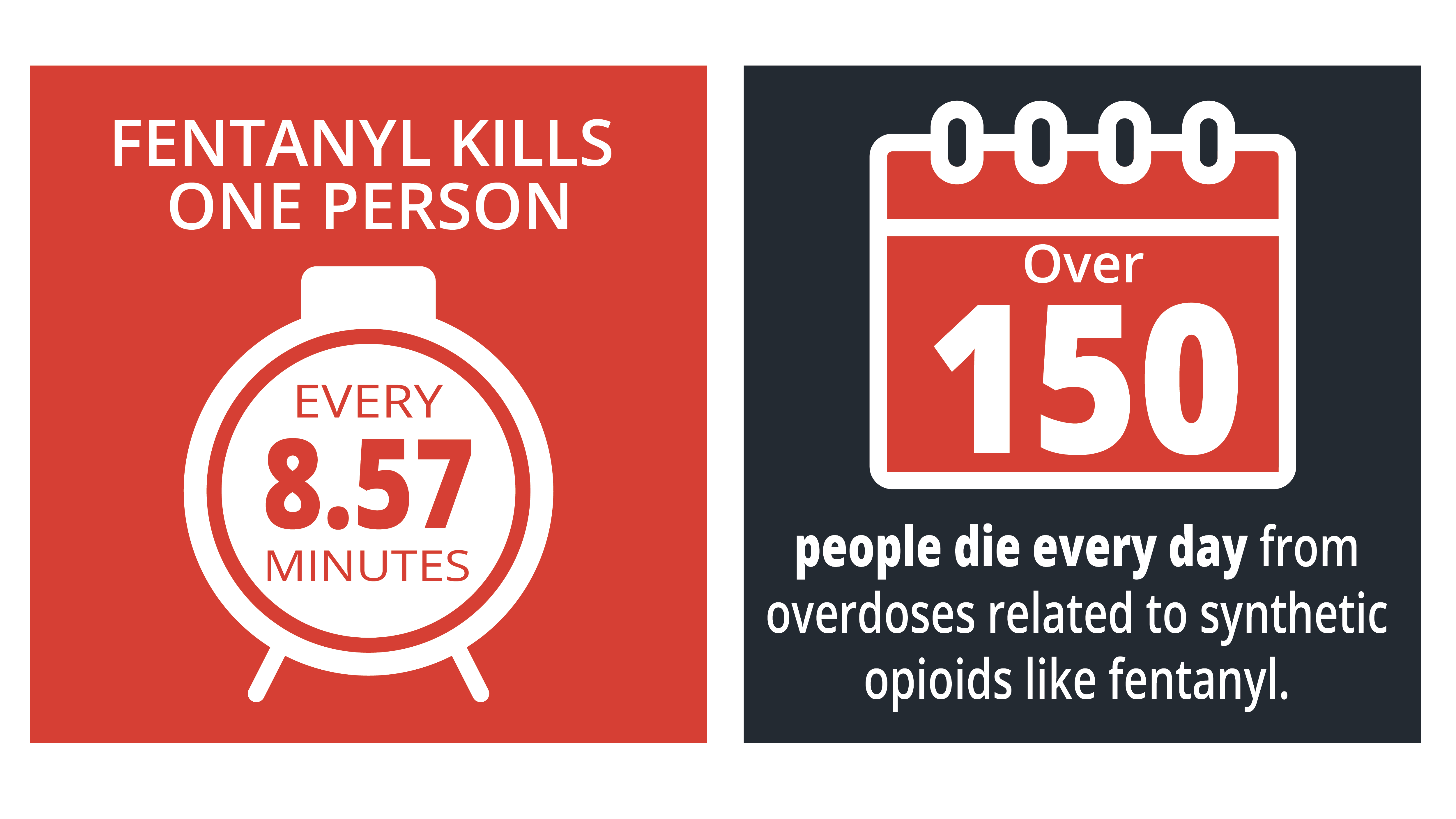
Fentanyl is a synthetic opioid up to 50 times more powerful than heroin and 100 times more potent than morphine. The U.S. Centers for Disease Control and Prevention (CDC) reports over 70,000 fentanyl-related overdose deaths in 2023 alone, making it the leading cause of death for Americans aged 18 to 49. To put that in perspective:

  • In 2023, total gun-related deaths (including homicide, suicide, and accidental shootings) were around 48,000, according to the Gun Violence Archive.

  • Fentanyl deaths have overtaken car crashes, gun violence, and even COVID-19 (as of 2023) as the leading accidental killer in the U.S.

It is not an exaggeration to say fentanyl is America’s deadliest drug crisis ever—far eclipsing the crack epidemic of the 1980s or the heroin wave of the 1970s.


II. Global Scope: Is Fentanyl Only an American Crisis?

While America is the epicenter, fentanyl and other synthetic opioids are emerging threats in Canada, Australia, and parts of Europe. However, the crisis has not reached the same level in other countries for key reasons:

  1. Different prescribing practices and healthcare systems have meant less over-prescription of opioids elsewhere.

  2. Tighter border controls and more centralized drug enforcement (such as in Japan and Singapore) have delayed or suppressed synthetic opioid inflows.

  3. Stronger social safety nets in some nations may reduce demand for escape through drugs.

That said, Canada is seeing a sharp rise in fentanyl deaths, especially in British Columbia, and the UK has reported increasing fentanyl-laced heroin overdoses.


III. The Fentanyl Supply Chain: A Transnational Hydra

The supply chain of fentanyl is fragmented, decentralized, and global. Here's a simplified breakdown:

  1. Precursor Chemicals:
    Mostly sourced from China and India. These chemicals—some of which have legitimate industrial uses—are difficult to regulate.

  2. Synthesis:
    Often done in Mexico, where cartels like the Sinaloa and Jalisco New Generation Cartel (CJNG) operate clandestine labs.

  3. Smuggling into the U.S.:
    Smuggled across the southern border, often in small but potent amounts—just two milligrams of fentanyl can be fatal.

  4. Domestic Distribution:
    Spread through online black markets, street dealers, and increasingly through counterfeit prescription pills made to look like Xanax, Percocet, or Adderall.


IV. Is This Chemical Warfare? A Geopolitical Flashpoint

Some have called the fentanyl crisis a form of “chemical warfare” against the United States, pointing fingers at China—either explicitly or through tacit state complicity.

What’s the Basis of the Claim?

  • China was historically the primary source of finished fentanyl shipped directly to the U.S. via mail and dark web networks until 2019.

  • After U.S. pressure, China cracked down on fentanyl exports but loopholes remain, especially around precursor chemicals, which are harder to track and regulate.

  • Critics argue that China’s enforcement is lackluster or selective, possibly using fentanyl as a form of asymmetric retaliation in the broader U.S.-China rivalry.

What’s the Counterpoint?

  • Chinese officials deny any intent to harm and claim they’ve made good-faith efforts to curtail illegal exports.

  • They often highlight U.S. demand as the core issue—arguing that without it, the supply chain would wither.

  • Beijing has also pushed back against naming specific companies or cities involved, saying it lacks the legal basis for preemptive enforcement without international cooperation.

Verdict:

The "chemical warfare" label is alarmist if taken literally, but there is truth in the geopolitical negligence. Chinese actors are part of the supply chain, and lack of enforcement could be seen as passive complicity. But to call it state-sponsored war would be an overstatement—though one increasingly used in U.S. political discourse.


V. What Role Do Mexican Cartels and American Guns Play?

The Cartel Side:

  • Mexican cartels have pivoted from cocaine and marijuana to fentanyl because of high profits, low risk, and compact logistics.

  • Labs can operate with modest setups, producing enough fentanyl to supply entire U.S. cities.

The Gun Loop:

The Mexican government points the finger back: “You send us guns, we send you drugs.”

  • Roughly 70% of guns recovered at Mexican crime scenes are traced back to the U.S.

  • These firearms fuel cartel wars, killings of journalists and civilians, and undermine the Mexican state’s law-and-order efforts.

  • American gun stores and loopholes (e.g., gun shows, straw purchases) enable this flow.

It’s a vicious cycle: U.S. demand and lax gun laws fuel both the fentanyl epidemic at home and the violence in Mexico.


VI. Comparative International Perspective on Gun Policy

In countries like China and Japan, gun ownership is virtually non-existent outside of law enforcement:

  • Japan averages less than 10 gun deaths per year in a population of 125 million.

  • China has strict penalties for illegal gun possession and a cultural absence of civilian gun ownership.

How are U.S. gun laws perceived?

  • In much of Asia and Europe, American gun culture is viewed as incomprehensible, dangerous, and tragic.

  • The frequency of mass shootings, school shootings, and accidental deaths is seen as a failure of governance.

  • International observers often ask: “If America can’t solve this, what can it solve?”


VII. Is the Fentanyl Crisis an Origin Problem or a Demand Problem?

The truth is: it’s both.

  • Origin-side enforcement matters, but it’s not a silver bullet.

  • Without tackling American demand, the market will find new sources—just as heroin replaced oxycontin, and fentanyl is now replacing heroin.

  • Addiction is fueled by social despair, economic hopelessness, trauma, and mental illness.

This is not just a law enforcement issue. It’s a public health, mental health, and economic dignity issue.


VIII. Is There a Country That Has Handled It Well?

There is no perfect model, but some best practices stand out:

  1. Portugal:
    Decriminalized all drugs in 2001 and invested in treatment, not punishment. Results include lower overdose rates and fewer drug-related deaths.

  2. Switzerland:
    Offers medically supervised heroin programs, effectively removing street-level drug crime and greatly reducing overdose deaths.

  3. Canada:
    Experimenting with safe supply and supervised injection sites in cities like Vancouver.

These models show that harm reduction, treatment access, and social reintegration work better than mass incarceration or border crackdowns alone.


IX. Can This Be Solved Without U.S.-China Cooperation?

No. Not entirely.

  • Chemical supply chains run through Chinese manufacturers.

  • Global financial regulation, including cryptocurrency monitoring, requires joint enforcement.

  • Standardizing precursor tracking, labeling, and real-time customs data will require real diplomatic coordination—not just press releases.

Just as climate change and AI safety require global cooperation, fentanyl control is a systems-level problem.


X. What Now? A Path Forward

  1. Demand Reduction:
    Massive investment in mental health, social services, housing, and job programs.

  2. Supply Chain Intelligence:
    Real-time tracking of chemical precursors, and coordinated enforcement with China, India, and Mexico.

  3. Gun Control and Export Laws:
    Tighten domestic gun laws and enforce international traceability for arms exports.

  4. Bilateral Agreements:
    Launch a U.S.-China-Mexico opioid diplomacy track, akin to climate talks.

  5. Harm Reduction in the U.S.:
    Expand safe injection sites, naloxone distribution, and access to medication-assisted treatment.


Final Thought: A Mirror and a Window

Fentanyl and guns may seem like separate crises. But they reflect a deeper American dilemma: how do we confront the consequences of our own consumption, culture, and capitalism, while holding other nations accountable for their contributions?

These are mirror problems. They reflect who we are.

And they are window problems. They show us who we could become—if we dare to change course.


What do you think? Can fentanyl and firearms be tackled with policy? Or is it cultural? Global? Psychological? Leave your thoughts below.







View on Threads
View on Threads
View on Threads
View on Threads

Trump says China 'violated' agreement on trade talks and he'll stop being 'nice'

The 20% Growth Revolution: Nepal’s Path to Prosperity Through Kalkiism
Rethinking Trade: A Blueprint for a Just and Thriving Global Economy
The $500 Billion Pivot: How the India-US Alliance Can Reshape Global Trade
Trump’s Trade War
Peace For Taiwan Is Possible
Formula For Peace In Ukraine
The Last Age of War, The First Age of Peace: Lord Kalki, Prophecies, and the Path to Global Redemption
AOC 2028: : The Future of American Progressivism

Velocity Money: Crypto, Karma, and the End of Traditional Economics
The Next Decade of Biotech: Convergence, Innovation, and Transformation
Beyond Motion: How Robots Will Redefine The Art Of Movement
ChatGPT For Business: A Workbook
Becoming an AI-First Organization
Quantum Computing: Applications And Implications
Challenges In AI Safety
AI-Era Social Network: Reimagined for Truth, Trust & Transformation

Remote Work Productivity Hacks
How to Make Money with AI Tools
AI for Beginners

Friday, May 30, 2025

Narendra Modi: Number 1 Policy Innovator On The Planet


Here’s a curated list of 10 of the most influential policy innovators on the planet today — those reshaping governance, economies, and social contracts with bold, scalable ideas. While no single figure today fully embodies Lee Kuan Yew’s unique blend of visionary pragmatism, discipline, and long-term impact, several are pioneering in their own right — in democracies, autocracies, and everywhere in between.


1. Narendra Modi (India)

Why on the list: Modi has transformed India’s policy landscape by scaling up digital infrastructure (Aadhaar, UPI), welfare delivery, sanitation, and manufacturing while projecting India as a geopolitical heavyweight. His governance is often criticized as authoritarian, but few can match the scale and speed of India’s policy execution under him.
Innovation: Digital public goods at scale — now being exported to the Global South.


2. Mohamed bin Zayed Al Nahyan (UAE)

Why on the list: The de facto ruler of the UAE has turned a small desert state into a futuristic testbed of policy innovation, from AI strategy to clean energy to space exploration, all while maintaining a strong state.
Innovation: “State capitalism meets futurism.” He’s engineered a post-oil vision with diversification, free zones, and green cities like Masdar.


3. Mette Frederiksen (Denmark)

Why on the list: Under her leadership, Denmark has excelled in combining economic competitiveness with social equity and climate responsibility. She's part of the new wave of pragmatic, digitally literate, and sustainability-focused leadership.
Innovation: Green public-private industrial policy and proactive welfare reforms.


4. Paul Kagame (Rwanda)

Why on the list: Kagame has been both praised and criticized for his authoritarian tendencies, but Rwanda under him has become a model of African governance reform: low corruption, tech-friendly policies, and rising economic mobility.
Innovation: Post-conflict nation-building through disciplined governance and tech partnerships (e.g., Zipline drones for medical delivery).


5. Jacinda Ardern (New Zealand) (Recently stepped down but still influential)

Why on the list: Redefined leadership by centering compassion, communication, and trust. During her tenure, New Zealand’s COVID response, gun reform, and well-being budgeting made global headlines.
Innovation: “Wellbeing Budget” — measuring policy success by social impact, not GDP alone.


6. Macky Sall (Senegal)

Why on the list: A low-key technocrat reformer, Sall is driving a major transformation in West Africa by investing in infrastructure, natural gas development, and regional cooperation while maintaining democratic credentials.
Innovation: Balanced economic modernization with relative political stability in a volatile region.


7. Ursula von der Leyen (European Commission)

Why on the list: As head of the EU Commission, she has navigated Brexit, COVID recovery, and climate transformation via the EU Green Deal. She blends bureaucracy and vision — not often a European strength.
Innovation: Orchestrating transnational policy coordination on climate, digital markets, and defense.


8. Gabriel Boric (Chile)

Why on the list: Represents a new generation of progressive reformers in Latin America. He has pursued constitutional reforms, wealth redistribution, and gender equity, though not without political backlash.
Innovation: Attempting to craft a post-neoliberal policy framework rooted in dignity and sustainability.


9. William Ruto (Kenya)

Why on the list: Ruto is leading a digital financial revolution in Kenya by supporting mobile money innovation, digital ID systems, and energy investments.
Innovation: Championing “hustler economy” policies, including access to cheap digital credit for informal workers.


10. Mia Mottley (Barbados)

Why on the list: She has emerged as a global voice for climate justice, small-state diplomacy, and innovative economic ideas like debt-for-climate swaps.
Innovation: She is reshaping how small island nations leverage moral authority and financial tools in international diplomacy.


Honorable Mentions

  • Xi Jinping (China): Centralized control, long-term industrial planning — but with high repression.

  • Giorgia Meloni (Italy): Testing nationalist conservatism within the EU framework.

  • Joe Biden (USA): CHIPS Act, Inflation Reduction Act — industrial policy revival.

  • Volodymyr Zelenskyy (Ukraine): Policy innovation under wartime conditions, digital diplomacy.


Final Thought

No single leader today has both the strategic patience and executional efficiency of Lee Kuan Yew — a man who turned a fishing village into a First World city-state. But collectively, these ten are pushing the boundaries of what's possible in governance, from AI and climate to economic redesign and digital transformation.

View on Threads

San Francisco at a Crossroads: From Capital of Tech to Capital of Urban Renaissance


San Francisco at a Crossroads: From Capital of Tech to Capital of Urban Renaissance

San Francisco has long been hailed as the world’s innovation capital. Yet, paradoxically, it is now also viewed as a cautionary tale of urban mismanagement. But it doesn’t have to remain that way. The city stands at a defining moment—either spiral further into urban decay or become a global model for a futuristic, equitable, and resilient metropolis.

THE CORE CHALLENGES:

  1. Homelessness and Addiction

  2. Public Safety and Perception

  3. Downtown Economic Collapse

  4. Fiscal Deficit and Budget Bloat

  5. Decline in Quality of Life (Cleanliness, Transit, Cost of Living)

Let’s go beyond just "balancing budgets" and look at how other cities—from Helsinki to Seoul, Medellín to Singapore—have tackled similar problems and what San Francisco must do to lead the future of urban living.


🔧 A FUTURISTIC, ROBUST SET OF SOLUTIONS

1. 🏠 Radical Housing First + Treatment Model

Best-In-Class Example: Finland's Housing First Model

  • What to Do:

    • Guarantee permanent housing first, then offer wraparound mental health, addiction, and workforce services.

    • Build modular micro-housing units using 3D-printed technology (e.g., ICON in Austin).

    • Implement a “shelter and treat” mandate: no open-air drug use tolerated, but treatment and shelter always offered.

  • Funding Mechanism: Land value tax reform + public-private co-development + unlock idle public lands.

2. 🚨 Tech-Enhanced Public Safety

Best-In-Class Example: Singapore’s Smart Policing; London’s CCTV Integration with AI Analytics

  • What to Do:

    • Roll out AI-powered incident detection in real-time (e.g., using ShotSpotter + open camera networks).

    • Implement community co-policing apps like in Taiwan, where residents can report issues + track resolution.

    • Incentivize restorative justice and neighborhood conflict mediation.

  • Futuristic Angle: Use drone patrols for under-resourced areas (already tested in Dubai and China).

3. 💊 Synthetic Drug Crisis Response

Best-In-Class Example: Portugal’s Decriminalization + Treatment Model

  • What to Do:

    • Create rapid triage centers for fentanyl overdose response, integrated with safe-use education and supervised injection sites.

    • Use real-time wastewater analysis (used in Tempe, AZ and Europe) to target hotspot neighborhoods for mobile health units.

    • Fund AI-based telepsychiatry kiosks in public spaces to offer instant mental health support.


4. 🚧 Clean Streets = Healthy Communities

Best-In-Class Example: Tokyo’s Cleanliness Culture + Zurich’s Smart Waste Systems

  • What to Do:

    • Install smart trash cans with compression and pickup alerts (e.g., Bigbelly).

    • Launch public shaming gamification apps that reward citizens for reporting or cleaning trash (modeled after South Korea’s illegal dumping tracker).

    • Partner with robotic startups (e.g., Enway in Germany) to pilot AI-powered street cleaners.

  • Incentive Model: Provide $500/month for formerly homeless or low-income residents to be part of “clean and green” city brigades.


5. 📈 Downtown Reinvention

Best-In-Class Example: Melbourne’s Nighttime Economy Planning; Seoul’s Co-Working Urban Core

  • What to Do:

    • Convert unused downtown office space into mixed-use affordable housing, live-work units, and vertical farms.

    • Implement a 24-hour permit zone to revive nighttime economies with clubs, galleries, and night markets (as seen in Amsterdam and Bangkok).

    • Offer 3-month free rent subsidies for small businesses, artists, and tech incubators to reanimate storefronts.

  • Tech Angle: Allow AR/VR urban overlays to provide immersive history, art, and commerce experiences on the street.


6. 🚌 Public Transit Reimagined

Best-In-Class Example: Paris’ 15-Minute City; Bogotá’s BRT Network; Copenhagen’s Bike-First Urbanism

  • What to Do:

    • Make Muni and BART free for all residents and tourists, funded via a congestion charge + downtown land value capture.

    • Introduce AI-optimized bus routing (as tested in Helsinki and Shenzhen) for flexible transit routes.

    • Build a unified micro-mobility subscription (bikes, scooters, buses) for $1/day.

  • Big Vision: Pilot autonomous electric shuttle loops in high-density neighborhoods.


7. 📊 Budget Reform and Performance-Linked Spending

Best-In-Class Example: New York’s Open Budget Visualization; Toronto’s Outcome-Based Budgeting

  • What to Do:

    • Mandate public dashboard tracking of every dollar spent with impact metrics (crime reduction, housing exits, clean streets).

    • Launch “Participatory Budgeting” platform (as in Barcelona and Porto Alegre) allowing citizens to vote on allocations.

    • Set KPIs for every city department, and tie bonuses to achieving them.

  • Futuristic Idea: Use blockchain-based smart contracts for city contracts that release funds only when milestones are met.


8. 🌳 Resilient, Green Urban Infrastructure

Best-In-Class Example: Singapore’s City-in-a-Garden; Medellín’s Green Corridors

  • What to Do:

    • Greenify streets with tree corridors, rooftop gardens, and vertical farms on public housing and municipal buildings.

    • Incentivize climate-resilient architecture and building retrofits with carbon credit trading.

    • Pilot rainwater capture and graywater systems for public buildings.


🛠️ TECH CAPITAL DESERVES A TECH-POWERED CITY

San Francisco must act as a living lab for urban transformation. The city can partner with startups and major VCs to:

  • Launch a “Civic Tech Accelerator” to solve homelessness, mobility, safety, and governance problems.

  • Make San Francisco the first U.S. city to trial AI-driven urban operating systems (already tested in Saudi Arabia’s NEOM and Alphabet’s Sidewalk Labs).

  • Attract global entrepreneurs with streamlined permits, regulatory sandboxes, and visa fast tracks for urban tech founders.


🧠 Final Word: San Francisco as the Global Beacon

If San Francisco can invent the internet browser, the iPhone, and generative AI, surely it can reinvent itself.

This isn’t just about fixing potholes or cutting budgets. It’s about creating the world’s first fully integrated smart, safe, equitable, and joyful city. It’s about turning a crisis into a canvas.

The tech capital of the world deserves to be the gold standard of the 21st-century city.

Let’s get to work.


The 20% Growth Revolution: Nepal’s Path to Prosperity Through Kalkiism
Rethinking Trade: A Blueprint for a Just and Thriving Global Economy
The $500 Billion Pivot: How the India-US Alliance Can Reshape Global Trade
Trump’s Trade War
Peace For Taiwan Is Possible
Formula For Peace In Ukraine
The Last Age of War, The First Age of Peace: Lord Kalki, Prophecies, and the Path to Global Redemption
AOC 2028: : The Future of American Progressivism

Velocity Money: Crypto, Karma, and the End of Traditional Economics
The Next Decade of Biotech: Convergence, Innovation, and Transformation
Beyond Motion: How Robots Will Redefine The Art Of Movement
ChatGPT For Business: A Workbook
Becoming an AI-First Organization
Quantum Computing: Applications And Implications
Challenges In AI Safety
AI-Era Social Network: Reimagined for Truth, Trust & Transformation

Remote Work Productivity Hacks
How to Make Money with AI Tools
AI for Beginners

Building a Car Before You Can Drive It: The Illusion of Reindustrialization

Trump's Expansion of Surveillance Powers And Palantir


Building a Car Before You Can Drive It: The Illusion of Reindustrialization 

There’s a popular slogan echoing through America’s political halls: “Bring the jobs back. Reindustrialize. Make it here again.” It sounds patriotic. It evokes images of bustling factories, union jobs, and thriving small towns. But it’s also a deeply flawed diagnosis of what really went wrong — and a dangerously misguided prescription for how to fix it.

Reindustrialization, in many ways, is like building a car before you know how to drive. It assumes that merely producing things again, in America, will somehow reverse decades of inequality, community decay, and wage stagnation. But it won’t. Because manufacturing didn’t leave America — prosperity did.

What Really Happened

Global trade absolutely boosted American productivity. It lowered prices, expanded consumer choices, and allowed American companies to focus on high-value industries. The problem wasn’t globalization. The problem was that the top 1% vacuumed up nearly all the gains.

If those productivity surges had been equitably shared, the average American worker today would be making significantly more. Service jobs wouldn’t be “low-wage” by default. Small towns wouldn’t be ghost towns. And millions wouldn’t be working two jobs just to scrape by. The issue wasn’t offshoring alone — it was inequality.

The Blame Game

Instead of confronting the real villain — a broken economic model that rewards capital over labor — the narrative has been hijacked by cultural scapegoats. Immigrants are blamed. Foreigners are blamed. China is blamed. But here’s what the data says:

  • Crime rates among immigrants are lower than among native-born Americans.

  • Immigration grows the economy and supports job creation.

  • Foreign trade lowered costs for millions of American families, especially those living paycheck to paycheck.

But these facts don’t make headlines. Politicians prefer sensational stories — the one tragic murder by an undocumented immigrant rather than the 10,000 stories of honest, hardworking immigrant families contributing to the fabric of America.

The Fiscal Mirage

If America is serious about rebuilding, it needs to stop burning holes in its own budget. Massive tax cuts for billionaires are not free. They are federally-funded giveaways paid for by borrowing — often from the very countries the same politicians claim to fear.

So let’s get this straight:

  • Importing cars from China is bad.

  • But importing billions in loans from China to finance billionaire tax cuts is fine?

That’s not economic patriotism. That’s fiscal hypocrisy.

What the Real Problem Is: Wages, Not Jobs

When the unemployment rate is under 5%, it’s not a jobs crisis — it’s a wage crisis. Americans are working. They’re just not getting paid enough. And the “bring back manufacturing” myth doesn’t fix that, because modern factories don’t need armies of workers — they need machines.

Automation, AI, and robotics are redefining manufacturing. Even if every factory returned to U.S. soil tomorrow, the jobs wouldn’t come back with them. The machines would. That’s why higher wages across all sectors — especially services — are the real frontier.

Want to Compete With China? Team Up With India

If America truly wants to outcompete China in the 21st century, the answer isn’t to retreat inward. It’s to form smart strategic alliances — starting with India. With its massive, educated workforce, growing digital infrastructure, and democratic values, India is the natural counterbalance to China’s authoritarian economic rise.

Invest in trade, technology sharing, education, and co-manufacturing. Build partnerships, not walls.

A Smarter Vision

We don’t need to rewind the clock to the 1950s. We need to build a forward-looking economy where:

  • Productivity gains are shared.

  • Tax policies reward innovation and fairness.

  • Immigrants are seen as assets, not threats.

  • Global partnerships are leveraged, not demonized.

Because building a car — or a factory — means nothing if the economic system behind it still drives the working class off a cliff.

It’s time to stop romanticizing a past that never existed for everyone — and start building a future where prosperity is real, inclusive, and sustainable.


Why Tesla's Only Path to Survival Runs Through India

View on Threads
View on Threads
View on Threads

Trump's Expansion of Surveillance Powers And Palantir

Trump appears to be building an unprecedented spy machine that could track Americans
Data firm is building 'detailed portraits of Americans' on Trump's order: report

The 20% Growth Revolution: Nepal’s Path to Prosperity Through Kalkiism
Rethinking Trade: A Blueprint for a Just and Thriving Global Economy
The $500 Billion Pivot: How the India-US Alliance Can Reshape Global Trade
Trump’s Trade War
Peace For Taiwan Is Possible
Formula For Peace In Ukraine
The Last Age of War, The First Age of Peace: Lord Kalki, Prophecies, and the Path to Global Redemption
AOC 2028: : The Future of American Progressivism


Recent reports indicate that the Trump administration has enlisted Palantir Technologies to develop a comprehensive database compiling extensive personal information on American citizens. This initiative raises significant concerns about privacy, civil liberties, and the potential for governmental overreach.


Palantir's Role in Data Collection

Palantir Technologies, co-founded by Peter Thiel, has been tasked with creating a "master list" of personal information on Americans. This database aims to consolidate various data points, potentially including financial records, social media activity, and other personal details. The objective is to provide the government with an unprecedented level of insight into the lives of its citizens.(Facebook)


Expansion of Surveillance Powers

The development of this database coincides with legislative changes that have expanded the government's surveillance capabilities. Notably, the reauthorization of Section 702 of the Foreign Intelligence Surveillance Act (FISA) allows for the warrantless collection of communications between Americans and foreign nationals. This expansion has raised alarms among privacy advocates and legal experts, who warn of potential abuses and the erosion of constitutional protections.(WIRED)


Historical Context and Concerns

This initiative is reminiscent of past controversies involving data collection and surveillance. For instance, the Cambridge Analytica scandal highlighted the dangers of aggregating personal data for political purposes. Similarly, previous administrations have faced criticism for surveillance programs that infringed upon individual privacy rights.(Wikipedia)


Implications for Civil Liberties

The creation of such a comprehensive database poses significant risks to civil liberties. There is concern that the information could be used to target political opponents, suppress dissent, or engage in discriminatory practices. The lack of transparency and oversight further exacerbates these fears, as citizens may have little recourse to challenge or correct inaccuracies in the data collected about them.(WIRED)


Conclusion

The collaboration between the Trump administration and Palantir Technologies to build an extensive database on American citizens represents a profound shift in the relationship between the government and its people. While proponents argue that such measures are necessary for national security, the potential for misuse and the infringement on individual rights cannot be overlooked. It is imperative that robust safeguards, transparency, and oversight mechanisms are put in place to protect the privacy and freedoms of all Americans.(Yahoo)


The 20% Growth Revolution: Nepal’s Path to Prosperity Through Kalkiism
Rethinking Trade: A Blueprint for a Just and Thriving Global Economy
The $500 Billion Pivot: How the India-US Alliance Can Reshape Global Trade
Trump’s Trade War
Peace For Taiwan Is Possible
Formula For Peace In Ukraine
The Last Age of War, The First Age of Peace: Lord Kalki, Prophecies, and the Path to Global Redemption
AOC 2028: : The Future of American Progressivism

The Trump administration and Palantir Technologies have articulated several reasons for developing a comprehensive database that compiles extensive personal information on American citizens. While the initiative is presented as a means to enhance national security and government efficiency, it has sparked significant concerns regarding privacy and civil liberties.


Stated Objectives of the Trump Administration

  1. National Security and Fraud Prevention:
    The administration asserts that consolidating data across federal agencies will bolster efforts to detect and prevent fraud, as well as identify potential security threats. By integrating information from sources such as the IRS, Social Security Administration, and immigration databases, the government aims to create a more robust system for safeguarding national interests.

  2. Streamlining Immigration Enforcement:
    A significant component of the initiative focuses on immigration control. The centralized database is intended to facilitate the identification, detention, and deportation of undocumented immigrants by providing Immigration and Customs Enforcement (ICE) with rapid access to comprehensive personal data.

  3. Enhancing Government Efficiency:
    Under the Department of Government Efficiency (DOGE), led by Elon Musk, the administration emphasizes the need to modernize and streamline government operations. By breaking down data silos and enabling inter-agency data sharing, the initiative seeks to improve decision-making processes and reduce bureaucratic redundancies.


Palantir Technologies' Perspective

  1. Leveraging Advanced Analytics for Public Good:
    Palantir positions its involvement as a means to apply its data integration and analysis capabilities to serve national interests. The company highlights its software platforms, such as Gotham and Foundry, as tools that can provide real-time insights to government agencies, thereby enhancing their operational effectiveness.

  2. Combatting Financial Crimes:
    In collaboration with entities like Fannie Mae, Palantir is deploying its technology to detect and prevent mortgage fraud. This partnership exemplifies the company's commitment to using data analytics to address complex financial crimes that impact the economy and citizens' livelihoods.

  3. Supporting Law Enforcement and Public Safety:
    Palantir underscores its role in assisting law enforcement agencies by providing tools that can help identify criminal activities and potential threats. The company asserts that its technology enables more proactive and informed responses to public safety concerns.


Concerns and Criticisms

Despite the stated objectives, the initiative has faced substantial criticism from privacy advocates, legal experts, and civil liberties organizations. Concerns include the potential for mass surveillance, misuse of personal data, lack of transparency, and the erosion of constitutional protections. The aggregation of sensitive information without adequate oversight raises questions about the balance between national security and individual rights.


In summary, while the Trump administration and Palantir Technologies present the data consolidation initiative as a strategic move to enhance national security, improve government efficiency, and combat fraud, it has ignited a debate over privacy rights and the potential for governmental overreach. The long-term implications of such a comprehensive data system remain a subject of intense scrutiny and public discourse.


This is the heart of the modern democratic dilemma: If the government can see everything about us, why can’t we see everything about the government?


🧠 “A Mirror, Not a One-Way Window — Building Surveillance with Accountability”

Introduction: The Dangerous Asymmetry of Power

The Trump administration’s move to build an unprecedented surveillance system using Palantir raises urgent and legitimate fears. If the government builds a data machine that can “see everything” about the average American, we must ask: What safeguards exist to prevent abuse? And more importantly: Why is there no reverse mechanism—no transparency—that allows we the people to see into the workings of our government in the same detail?

Surveillance without accountability is not safety—it’s tyranny in waiting.


The Potential for Abuse

This kind of centralized, high-resolution surveillance system creates the conditions for:

  • Political targeting: Tracking political opponents, activists, or journalists under the guise of “security.”

  • Discrimination: Profiling based on race, religion, or immigration status.

  • Chilling dissent: Citizens fearful of speaking out due to digital scrutiny.

  • Data breaches: Hackers or foreign states accessing the vast trove of intimate data.

  • Unregulated partnerships: Data quietly shared with private companies, foreign actors, or partisan groups.

History warns us—from J. Edgar Hoover to the NSA’s PRISM program—that when surveillance powers grow unchecked, abuse always follows.


Necessary Safeguards

If any such system is to be allowed in a democratic society, these must be the non-negotiables:

  1. Independent Oversight Boards
    Panels composed of legal experts, civil rights advocates, technologists, and elected citizen-representatives.

  2. Sunset Clauses
    Regular reauthorization of the system, with rigorous public debate and congressional oversight.

  3. Full Transparency Logs
    Every query, every data pull, every access to the system logged, reviewed, and publicly auditable.

  4. Robust Whistleblower Protections
    Legal cover and rewards for insiders who expose misuse.

  5. Absolute ban on political use
    Surveillance must never be used to monitor peaceful dissent, campaign strategy, or voter activity.


The Case for Reverse Surveillance and Radical Government Transparency

What if we flipped the script?

If taxpayers are footing the bill for Palantir and this powerful data machine, why not build parallel features that turn it inward—on the government itself?

Here’s how it could work:


1. Track Every Dollar in Politics

  • Digital dashboards showing every campaign contribution in real time.

  • Who donated, to whom, and what that lawmaker voted on afterward.

  • Visual maps connecting special interests to specific laws.

“Sunlight is the best disinfectant.” —Justice Louis Brandeis


2. Policy Proposal Explainers for the Public

  • Every new bill gets a plain-language explainer.

  • Video summaries, interactive walkthroughs, cost-benefit analyses.

  • Citizens can explore competing proposals (e.g., 3 versions of a healthcare bill).

Think of it like GitHub for laws—with comments, forks, edits, and discussions.


3. Open Committee Rooms

  • Real-time live-streams and searchable transcripts of all congressional committees and backroom negotiations.

  • AI-powered indexing for citizens to follow issues by topic or representative.


4. Participatory Legislative Platforms

  • Citizens can propose amendments, offer feedback, or vote on budget priorities.

  • Legislators must respond to the top public suggestions.

  • Think of it as participatory budgeting meets Reddit-style community debate.


5. Real-Time Spending Trackers

  • Want to know where your tax dollars go? Get an app.

  • Track military contracts, corporate subsidies, or government grant recipients.

  • Drill down to the local, state, and federal levels.


Why Can’t This Be Part of the Same Package?

It can be. In fact, it must be. If we are going to build a surveillance machine with the sophistication of Palantir, we need equal or greater investment in transparency and public participation tools.

Otherwise, we are building a digital dictatorship in slow motion.


Conclusion: Surveillance Must Be Symmetrical

What is being constructed right now—a high-powered, AI-enabled visibility platform aimed at citizens—should only be allowed if we also construct an even more powerful system aimed at holding power accountable.

Surveillance, like power, must flow both ways in a democracy.

Let us not allow the tools of tyranny to be built with our tax dollars while we are locked out of the room.

Instead, let’s demand systems where every American can peer into the halls of power, ask questions, and shape the future. Let’s make democracy smart, visible, and participatory.

Because the more the government sees of us, the more we must see of it.


Call to Action: Demand legislation today that mandates transparency tools alongside any federal surveillance infrastructure. Democracy deserves better than a one-way mirror.


View on Threads
View on Threads

Velocity Money: Crypto, Karma, and the End of Traditional Economics
The Next Decade of Biotech: Convergence, Innovation, and Transformation
Beyond Motion: How Robots Will Redefine The Art Of Movement
ChatGPT For Business: A Workbook
Becoming an AI-First Organization
Quantum Computing: Applications And Implications
Challenges In AI Safety
AI-Era Social Network: Reimagined for Truth, Trust & Transformation

Remote Work Productivity Hacks
How to Make Money with AI Tools
AI for Beginners