
_(cropped).jpg/960px-Masoud_Pezeshkian_2024_(A)_(cropped).jpg)
Predicting the top contenders for an interim prime minister in Iran following a hypothetical regime collapse is challenging due to the complex political landscape, the lack of a clear succession framework, and the absence of recent, reliable data on potential leaders in such a scenario. The current theocratic system, dominated by the Supreme Leader and the Islamic Revolutionary Guard Corps (IRGC), suppresses open political competition, making it difficult to identify definitive candidates. However, based on historical patterns, opposition dynamics, and recent analyses of Iran's political environment, I can provide an informed speculative assessment. The response draws on available information about opposition figures, political factions, and potential coalitions, while critically examining the establishment narrative and avoiding unsupported assumptions.
- Reza Pahlavi
- Background: The former Crown Prince of Iran, son of the last Shah, Mohammad Reza Pahlavi, and a prominent exile figure based in the United States. He has positioned himself as a leading voice for a secular, democratic Iran and enjoys significant support among the Iranian diaspora and monarchist groups.
- Why a Contender?: Pahlavi has cultivated a public image as a unifying figure advocating for regime change and a return to secular governance. His international connections, including reported ties with Israel and Western governments, could bolster his candidacy in a transitional period. His visibility increased after his 2023 trip to Israel, where he met with Prime Minister Benjamin Netanyahu, signaling his alignment with anti-regime forces. However, his monarchist background may polarize domestic audiences, particularly among republicans and left-leaning groups.
- Challenges: Pahlavi lacks a strong organizational base inside Iran, and his association with the pre-1979 monarchy could alienate younger generations and those wary of foreign-backed figures. His support is stronger abroad than domestically, and he faces criticism for not condemning certain Israeli actions, which could complicate his appeal in Iran.
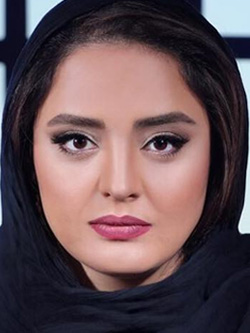
- Masoud Pezeshkian
- Background: The current President of Iran (elected in 2024), a reformist with a background as a heart surgeon and former parliamentarian. He has advocated for dialogue with the public and regional cooperation, emphasizing a less confrontational approach than his hardline predecessors.
- Why a Contender?: If the regime collapses but elements of the current system remain influential (e.g., reformist factions or moderate IRGC elements), Pezeshkian could transition into an interim role due to his existing legitimacy as an elected official. His reformist stance, including promises to repair Iran’s social contract and engage with regional neighbors like Saudi Arabia, could make him a compromise candidate acceptable to both domestic moderates and international actors. His election in 2024 reflects some public support for reformist ideals, despite low voter turnout.
- Challenges: Pezeshkian’s association with the current regime, even as a reformist, could taint his credibility among hardline opposition groups and protesters demanding total system change. His limited power under the Supreme Leader’s authority may also undermine his ability to project leadership in a post-regime scenario.
- Narges Mohammadi
- Background: A prominent human rights activist and Nobel Peace Prize laureate, currently imprisoned in Tehran’s Evin Prison since 2014. She has been a vocal critic of the regime, advocating for democracy, women’s rights, and an end to authoritarian rule.
- Why a Contender?: Mohammadi’s moral authority and international recognition make her a powerful symbol of resistance. Her 2025 op-ed, co-authored with other civil society figures, called for the resignation of the current leadership, signaling her potential to lead or inspire a transitional government. Her grassroots support, especially among women and youth inspired by the “Women, Life, Freedom” protests, could position her as a unifying figure for a broad coalition.
- Challenges: Her imprisonment limits her ability to organize, and her lack of a formal political structure could hinder her transition to a leadership role. Additionally, her focus on human rights over political strategy might make it difficult to navigate the complex factionalism of a post-regime Iran.
- Secular-Democratic Coalition
- Composition: This could include monarchists (led by Reza Pahlavi), reformists (e.g., figures aligned with Pezeshkian or former President Mohammad Khatami), and civil society activists (e.g., Narges Mohammadi). The coalition might also involve diaspora groups like the National Iranian American Council (NIAC) and secular intellectuals advocating for a non-theocratic state.
- Strengths: Broad appeal among urban middle classes, youth, and the diaspora. It could gain international support from Western governments and align with calls for normalization with Israel.
- Weaknesses: Internal divisions between monarchists and republicans, as seen in the collapse of the 2023 Alliance for Democracy and Freedom in Iran (ADFI), could undermine unity. Pahlavi’s leadership has been a point of contention, with figures like activist Hamed Esmaeilion distancing themselves from him.
- Ethnic and Regional Alliance
- Composition: Ethnic opposition groups, such as the Democratic Party of Iranian Kurdistan (PDKI), the Cooperation Center of Iranian Kurdistan Parties, and Baluchi or Ahwazi Arab groups, could form a federalist coalition. These groups might align with secular democrats to push for a decentralized Iran.
- Strengths: Strong regional support in Kurdish, Baluchi, and Arab areas, where distrust of Tehran is high. These groups have armed wings, like the PDKI’s Peshmerga, which could provide security during a transition.
- Weaknesses: Risk of fragmentation, as urban middle classes may oppose federalism to preserve national unity, especially if Israel or other foreign powers back secessionist movements. Analyst Ali Alfoneh notes that historical patterns show urban Iranians rallying against separatism during crises.
- Reformist-Moderate Continuity Coalition
- Composition: Elements of the current regime’s reformist wing (e.g., Pezeshkian, former President Hassan Rouhani) and moderate technocrats (e.g., Seyed Ali Madanizadeh, the new economy minister). This coalition might include pragmatic IRGC factions willing to negotiate a transition to retain influence.
- Strengths: Continuity with existing institutions could minimize chaos and maintain bureaucratic functionality. It might appeal to conservatives wary of radical change.
- Weaknesses: Likely to face resistance from hardline opposition groups and protesters who reject any remnants of the Islamic Republic. Low voter turnout in recent elections (e.g., 41% in 2024) indicates widespread distrust of reformists within the system.
- National Front of Iran: A nationalist, secular group with historical roots in Mohammad Mossadegh’s movement. It could provide ideological legitimacy for a democratic transition, though its influence inside Iran is limited.
- Council for Coordinating the Reforms Front: The main reformist coalition, including groups like the 2nd of Khordad Movement. Despite being sidelined by the Guardian Council, it could re-emerge to represent moderate voices.
- Democratic Party of Iranian Kurdistan (PDKI): A key ethnic opposition group with an armed wing, active in Kurdish regions. It has called for regime change and could secure regional stability.
- People’s Mujahedin Organization of Iran (MEK): A controversial exile group with a history of armed opposition. Despite its organizational capacity, its collaboration with Saddam Hussein during the Iran-Iraq War makes it widely unpopular domestically.
- Women, Life, Freedom Movement: Not a formal organization but a powerful grassroots movement sparked by Mahsa Amini’s death in 2022. It could influence the transition through civil society pressure and figures like Narges Mohammadi.
- Haft Aban Front (Solidarity for the Freedom of Iran): An exile-based coalition advocating for democratic change, potentially serving as a platform for diaspora involvement.
- Reza Pahlavi: Likely to form a monarchist or secular-democratic party, leveraging his diaspora support and international connections. His platform would emphasize national unity and secular governance, though he may struggle to overcome republican opposition.
- Narges Mohammadi: Could lead a human rights-focused party rooted in the “Women, Life, Freedom” movement, appealing to women, youth, and urban progressives. Her imprisonment might delay her involvement, but her moral authority would be a strong foundation.
- Hamed Esmaeilion: A Canada-based activist and former ADFI member, he could launch a secular-republican party. His focus on unity and his criticism of Pahlavi’s Israel trip suggest he would prioritize inclusivity over monarchist agendas.
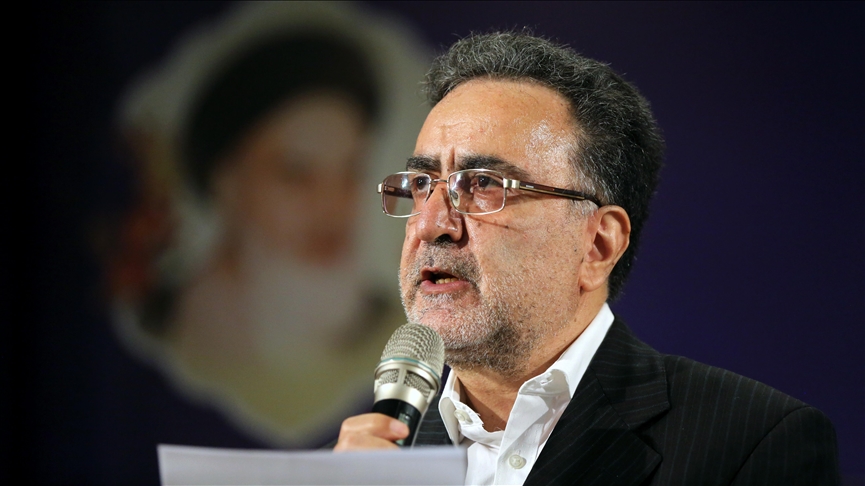
- Mostafa Tajzadeh: A former deputy minister under Khatami and a reformist currently imprisoned. If freed, he could lead a reformist party aiming to bridge moderate regime elements with opposition groups, though his regime ties might limit his appeal.
- Faezeh Hashemi: Daughter of former President Akbar Hashemi Rafsanjani and a former MP known for criticizing the Supreme Leader. She could form a reformist or women-led party, drawing on her political lineage and outspokenness.
- Fragmentation Risk: The Iranian opposition is notoriously divided, as seen in the ADFI’s collapse in 2023. Any coalition would need to overcome ideological divides (monarchist vs. republican, secular vs. reformist) and ethnic tensions to avoid civil conflict.
- Foreign Influence: External actors like Israel, the U.S., or Saudi Arabia could shape the transition, but their involvement risks backlash, as many Iranians are wary of foreign-backed regime change.
- IRGC’s Role: The IRGC’s reaction to a regime collapse would be pivotal. If it splinters, moderate factions might join a reformist coalition; if it remains unified, it could resist any transition.
- Public Sentiment: Low voter turnout (e.g., 41% in 2024) and mass protests (e.g., 2022) reflect deep disillusionment with the regime. Any interim government must address economic woes, human rights, and calls for systemic change to gain legitimacy.


- Mechanism: A “quick strike” could involve a combination of internal uprising and external pressure. The 2022 “Women, Life, Freedom” protests showed public discontent, but they lacked coordination. A targeted operation might include:
- Internal Defection: Encourage defections among mid-level IRGC commanders and technocrats, leveraging economic discontent (e.g., 40% inflation in 2024) and promises of amnesty for those who abandon Khamenei.
- External Support: Limited airstrikes or cyberattacks by a coalition (e.g., U.S., Israel) targeting regime strongholds (e.g., IRGC bases) could weaken Khamenei’s grip without a full invasion. Covert support for opposition groups like the PDKI or Haft Aban Front could amplify internal pressure.
- Exile Offer: Offer Khamenei safe passage to a neutral country (e.g., Qatar or Turkey) to avoid a prolonged fight. Historical precedent (e.g., Shah’s exile in 1979) suggests this could expedite collapse but risks backlash if perceived as leniency.
- Challenges:
- Iran’s terrain and IRGC’s loyalty make a quick strike complex. Unlike Iraq in 2003, Iran’s military is decentralized, with 150,000 IRGC members and 350,000 Basij militia.
- Foreign intervention risks uniting Iranians against external actors, as seen in anti-U.S. sentiment post-Soleimani assassination (2020).
- Ensuring Khamenei’s exile requires international guarantees, which may be undermined by hardliners demanding his prosecution.
- Mitigation:
- Frame the strike as a liberation led by Iranians, with foreign support secondary. Publicize defections to demoralize loyalists.
- Secure UN or regional (e.g., Saudi Arabia) backing for Khamenei’s exile to legitimize the deal.
- Use diaspora media (e.g., Iran International) to broadcast calls for unity and a non-violent transition.
- Proposed Leadership:
- Interim Prime Minister: Masoud Pezeshkian
- Rationale: As a reformist president elected in 2024, Pezeshkian has domestic legitimacy and a track record of advocating dialogue and economic reform. His role would reassure moderates and technocrats while signaling continuity.
- Role: Oversee day-to-day governance, economic stabilization, and coordination with international actors.
- Interim President: Reza Pahlavi
- Rationale: Pahlavi’s international recognition and secular-democratic rhetoric make him a symbolic figurehead. His presidency could rally diaspora support and counterbalance Pezeshkian’s regime ties.
- Role: Act as a unifying figure, engage with global leaders, and promote national reconciliation.
- Deputy Prime Minister: Narges Mohammadi
- Rationale: Her Nobel Peace Prize and leadership in the “Women, Life, Freedom” movement give her moral authority. She represents civil society and ensures women’s voices are central.
- Role: Lead human rights reforms, oversee transitional justice, and mobilize grassroots support.
- Cabinet Members: Hamed Esmaeilion (e.g., Foreign Affairs), Mostafa Tajzadeh (e.g., Interior), Faezeh Hashemi (e.g., Education or Women’s Affairs), plus representatives from ethnic groups (e.g., PDKI for Kurdish affairs).
- Rationale: Esmaeilion’s diaspora activism and Tajzadeh’s reformist credentials bridge external and internal opposition. Hashemi’s political lineage and gender advocacy add inclusivity. Ethnic representation prevents regional unrest.
- Feasibility:
- Strengths: The mix of reformists (Pezeshkian, Tajzadeh), activists (Mohammadi, Esmaeilion), and a monarchist (Pahlavi) reflects a broad coalition, addressing urban, rural, and diaspora demands. It aligns with your goal of inclusivity.
- Weaknesses: Pahlavi’s monarchist ties may alienate republicans, while Pezeshkian’s regime association could undermine trust among hardline opposition. Mohammadi’s imprisonment requires her immediate release, which may face IRGC resistance.
- Implementation:
- Form a transitional council within 30 days of regime collapse, with representatives from reformists, activists, ethnic groups, and diaspora.
- Announce the interim government via a public broadcast, emphasizing unity and a two-year timeline for elections.
- Secure international recognition (e.g., UN, EU) to bolster legitimacy and access reconstruction funds.
- Strategy:
- Immediate Dissolution: Declare the IRGC disbanded, seizing its assets (e.g., economic holdings like Khatam al-Anbia). Redirect funds to public services (e.g., healthcare, education).
- Security Transition: Retain the regular army (Artesh, ~400,000 personnel) to maintain order. Integrate vetted Basij members into police forces under civilian oversight.
- Amnesty and Reintegration: After a one-year cooling-off period, allow IRGC members without severe human rights violations to apply for army or police roles. Establish a vetting process led by an independent commission, including civil society figures like Mohammadi.
- Transitional Justice: Prosecute senior IRGC leaders for crimes (e.g., 1988 massacres, protest crackdowns) via a hybrid tribunal with international judges to ensure impartiality.
- Challenges:
- The IRGC’s economic dominance (estimated 20-40% of GDP) and armed strength make dissolution risky. Loyalists could form insurgencies, as seen with Ba’athists in Iraq.
- Vetting 150,000 IRGC members is logistically complex and may fuel resentment if perceived as unfair.
- Balancing justice and amnesty is delicate; hardline opposition may demand harsher purges.
- Mitigation:
- Offer economic incentives (e.g., pensions, retraining) to low-ranking IRGC members to discourage resistance.
- Deploy international peacekeepers (e.g., UN or neutral states like Oman) to support the army during the transition.
- Publicize the vetting process to build trust, using media to highlight reintegration success stories.
- Key Figures and Potential Parties:
- Reza Pahlavi: Likely to form a secular-democratic or monarchist party, appealing to nationalists and diaspora. Platform: national unity, free markets, secular governance.
- Narges Mohammadi: Could lead a progressive party rooted in human rights, focusing on women, youth, and social justice. Platform: gender equality, civil liberties, transitional justice.
- Hamed Esmaeilion: Might launch a republican party emphasizing inclusivity and diaspora engagement. Platform: democratic federalism, economic reform.
- Mostafa Tajzadeh: Could form a reformist party bridging moderates and opposition. Platform: gradual democratization, economic modernization.
- Faezeh Hashemi: Likely to lead a women-focused or reformist party. Platform: gender equity, education reform, social inclusion.
- Ethnic Leaders: PDKI or Baluchi figures could form regional parties advocating federalism or autonomy.
- Implementation:
- Legalize political parties within 90 days, with a low registration threshold to encourage participation.
- Provide state funding for new parties to level the playing field, modeled on post-apartheid South Africa.
- Host a national conference within six months, inviting all factions to draft a transitional charter outlining electoral rules.
- Challenges:
- Historical opposition divisions (e.g., 2023 ADFI collapse) could resurface, with monarchists, republicans, and ethnic groups clashing.
- Economic hardship (e.g., 30% unemployment in 2024) may fuel populist or extremist parties.
- Ensuring ethnic representation without stoking separatism requires careful constitutional design.
- Mitigation:
- Establish an electoral commission with diverse representation to oversee party formation and elections.
- Use public campaigns to promote pluralism, highlighting the interim government’s inclusivity.
- Engage regional powers (e.g., Turkey, Saudi Arabia) to discourage support for divisive factions.
- Timeline:
- Month 1-3: Stabilize security, dissolve IRGC, form interim government.
- Month 4-12: Implement economic reforms (e.g., subsidy restructuring), release political prisoners, legalize parties.
- Year 1-1.5: Conduct voter registration, establish electoral laws, and hold local elections to build democratic experience.
- Year 2: Elect a constituent assembly (e.g., 300-500 delegates) to draft the constitution within six months, followed by a referendum.
- Constitutional Principles:
- Secular governance with separation of powers.
- Protection of human rights, including gender equality and minority rights.
- Federal or decentralized structure to address ethnic demands without risking separatism.
- Civilian control of the military, with no role for ideological forces like the IRGC.
- Challenges:
- Low trust in elections (e.g., 41% turnout in 2024) requires robust voter education and transparency.
- Ethnic tensions may complicate federalism debates, as urban Persians often oppose decentralization.
- External interference (e.g., Israel pushing anti-Arab narratives) could polarize the process.
- Mitigation:
- Invite international observers (e.g., Carter Center) to monitor elections and ensure fairness.
- Hold public forums to debate constitutional principles, amplifying voices like Mohammadi’s.
- Secure IMF or World Bank support for economic stabilization to reduce public discontent during the transition.
- Lessons from Iraq and Afghanistan:
- Iraq (2003): Dismantling the Ba’ath Party and army fueled insurgency. Iran must retain the Artesh and bureaucracy while purging IRGC influence.
- Afghanistan (2021): Lack of inclusive governance led to Taliban resurgence. Iran’s interim government must include all major factions to avoid exclusion-driven conflict.
- Iran’s Advantage: Higher literacy (87%), urban population (76%), and historical democratic experiments (e.g., 1906 Constitution) make Iran more suited for democracy than Iraq or Afghanistan.
- Strategies:
- Preserve ministries (e.g., health, education) and employ existing civil servants to ensure functionality.
- Offer amnesty to low-ranking IRGC and Basij members to prevent insurgency, while prosecuting senior leaders to satisfy justice demands.
- Engage neighbors (e.g., Saudi Arabia, Turkey) in a stability pact to prevent proxy conflicts, leveraging 2023 Iran-Saudi normalization talks.
- Risks:
- IRGC remnants could wage asymmetric warfare, especially in border regions.
- Economic collapse could spark unrest, undermining the interim government.
- Foreign overreach (e.g., U.S. bases) risks nationalist backlash.
- Mitigation:
- Deploy rapid-response units from the army to secure key cities (Tehran, Isfahan, Tabriz).
- Secure emergency aid (e.g., $5 billion from China or EU) to stabilize the economy.
- Limit foreign military presence to advisors or peacekeepers under UN mandate.
- Speed and Coordination: A quick strike requires precise execution and defector buy-in. Missteps could prolong fighting, as seen in Syria (2011–).
- Inclusivity: The proposed interim government is diverse but risks factionalism. Pahlavi and Pezeshkian must publicly reconcile their visions to maintain unity.
- IRGC Management: Dismantling the IRGC while reintegrating its members is a delicate balance. A transparent vetting process is critical to avoid insurgency.
- International Support: Western backing could delegitimize the government if perceived as neocolonial. Regional actors (e.g., Qatar) should mediate.
- Public Trust: Economic hardship and regime propaganda have eroded trust. Immediate reforms (e.g., freeing prisoners, lifting internet bans) are essential to win public support.

Twitter Thread: A Vision for Iran’s Democratic Transition 🧵🇮🇷👇
— Paramendra Kumar Bhagat (@paramendra) June 19, 2025
1/ Imagine a free Iran: the regime falls, Khamenei is exiled, and a democratic transition begins. Here’s a plan to avoid chaos and build a stable, inclusive future. #IranTransition #FreeIran
— Paramendra Kumar Bhagat (@paramendra) June 19, 2025
3/ Step 2: Form an inclusive interim gov’t. Proposed leaders:
— Paramendra Kumar Bhagat (@paramendra) June 19, 2025
PM: Masoud Pezeshkian (@PezeshkianM) for reformist legitimacy
President: Reza Pahlavi (@PahlaviReza) for diaspora support
Deputy PM: Narges Mohammadi for human rights #WomenLifeFreedom
4/ Cabinet: Hamed Esmaeilion (@esmaeilion) for foreign affairs, Mostafa Tajzadeh for interior, Faezeh Hashemi for women’s issues. Include Kurdish, Baluchi reps to ensure unity. #InclusiveIran
— Paramendra Kumar Bhagat (@paramendra) June 19, 2025
5/ Step 3: Dismantle the IRGC completely. Seize its assets for public services. After 1 yr, let vetted members join army/police. Prosecute senior leaders for crimes via hybrid tribunal. #NoIRGC #TransitionalJustice
— Paramendra Kumar Bhagat (@paramendra) June 19, 2025
8/ Timeline:
— Paramendra Kumar Bhagat (@paramendra) June 19, 2025
Months 1-3: Stabilize, free prisoners
Months 4-12: Economic reforms, legalize parties
Year 1.5: Local elections
Year 2: Elect assembly, draft constitution #IranRoadmap
12/ This plan avoids Iraq’s mistakes: keep institutions, reintegrate vetted IRGC, include all factions. With global support, Iran can be a democratic beacon. What do you think? #FreeIran #IranFuture
— Paramendra Kumar Bhagat (@paramendra) June 19, 2025


