Pages

Thursday, June 19, 2025

A Path to Stability: Achieving Strategic Goals in Iran Without Total Collapse
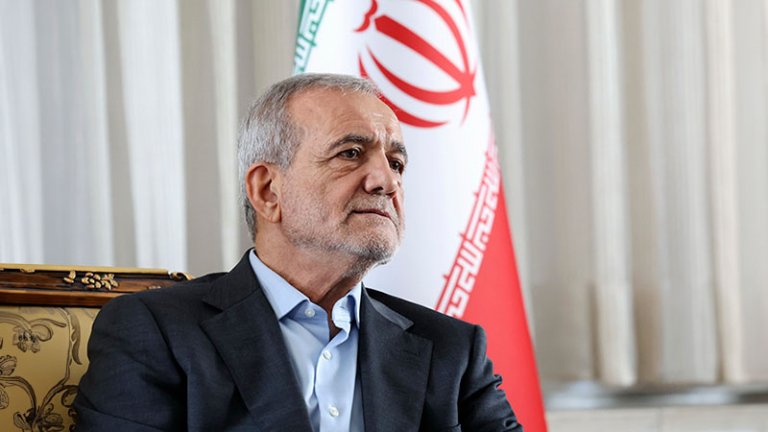


A Path to Stability: Achieving Strategic Goals in Iran Without Total Collapse

The United States and its allies have long grappled with how to address Iran’s role in the Middle East, balancing the need for strategic change with the risks of destabilization. An Iraq-style collapse, marked by chaos, sectarian violence, and a power vacuum, is not only undesirable but a nightmare scenario that could leave the U.S. footing a massive bill for reconstruction and stabilization. The goal, then, is to achieve meaningful change in Iran without plunging the country into anarchy. A carefully calibrated middle ground exists—one that could reshape Iran’s political landscape, neutralize its most destabilizing elements, and secure international interests without triggering a catastrophic implosion.
A Vision for Transition
The cornerstone of this approach is a negotiated transition that sees Iran’s Supreme Leader, the figurehead of the country’s theocratic system, agree to go into exile. This would mark a seismic shift, removing the ideological linchpin of the Islamic Republic’s governance without requiring a full dismantling of the state. In parallel, Iran’s president would step into the role of Interim Prime Minister, tasked with steering the country toward elections for a constituent assembly. This assembly would draft a new constitution, laying the foundation for a more inclusive and democratic system.
To ensure stability during this transition, the Islamic Revolutionary Guard Corps (IRGC), a powerful and often destabilizing force, must be dissolved immediately. However, to avoid alienating its members or sparking resistance, a one-year cooling-off period would allow former IRGC personnel to reintegrate into society, with options to join the national army or police forces under strict vetting. An interim cabinet, composed of diverse political and social factions, would govern during this period, ensuring representation and reducing the risk of factional conflict.
Denuclearization with Pragmatism
A critical component of this strategy is addressing Iran’s nuclear ambitions. Iran must agree to cease all uranium enrichment on its soil—a non-negotiable step to reassure the international community and prevent proliferation risks. However, to maintain Iran’s energy independence and avoid economic backlash, it could continue to develop nuclear energy using imported fuel. This compromise balances Iran’s sovereignty with global security concerns, offering a face-saving way for Tehran to step back from the brink of nuclear weaponization.
The Role of External Powers
For this plan to succeed, international cooperation is essential. Russia and China, both of which maintain significant influence over Iran, could play pivotal roles in applying diplomatic pressure to secure buy-in from Tehran’s leadership. Their involvement would lend legitimacy to the process and counter accusations of Western overreach. By framing the transition as a pragmatic step toward regional stability, rather than a capitulation to Western demands, Moscow and Beijing could persuade Iran’s elite to accept the deal.
Why This Matters
This middle-ground approach avoids the pitfalls of an Iraq-style collapse, which would likely result in sectarian strife, refugee flows, and a breeding ground for extremism—outcomes that serve no one’s interests, least of all the United States. By preserving Iran’s state institutions while dismantling its most problematic elements, the plan offers a path to a more stable, less confrontational Iran. It also reduces the financial and military burden on the U.S., which would otherwise face the daunting task of managing a post-collapse quagmire.
Challenges and Considerations
The road to this outcome is fraught with challenges. The Supreme Leader’s exile would require deft diplomacy and guarantees of safety, possibly brokered by neutral parties. The IRGC’s dissolution could face resistance, necessitating careful management to prevent rogue elements from destabilizing the transition. Moreover, Iran’s hardliners may view any concessions on nuclear enrichment as a betrayal, requiring assurances that the country’s energy needs will be met.
Yet, the alternative—a total collapse or prolonged confrontation—is far worse. A collapsed Iran would empower extremist groups, exacerbate regional tensions, and burden the U.S. with long-term costs. By contrast, a managed transition offers a chance to reshape Iran’s trajectory, align it with global norms, and reduce the risk of conflict.
A Call for Bold Diplomacy
Achieving strategic goals in Iran demands bold but pragmatic diplomacy. By leveraging international partnerships, offering Iran a viable path to reintegration, and avoiding the chaos of total collapse, the U.S. and its allies can secure a more stable Middle East. This middle ground—exile for the Supreme Leader, an interim government, IRGC dissolution, and a nuclear compromise—represents a rare opportunity to achieve transformative change without catastrophic costs. The time to act is now, before escalating tensions force less desirable outcomes.

This blog post reflects a hypothetical scenario based on strategic considerations. The views expressed are for discussion purposes and do not represent official policy or predictions.


The Issues With Calling for a Regime Change in Iran ....... Iran is not Syria, Libya, or Iraq. If President Trump joins the war on Iran and commits the United States to removing the Iranian regime, the results will likely be more catastrophic than the 2003 war on Iraq, which killed more than 1.2 million people, displaced more than nine million Iraqis, contributed to the emergence of the Islamic State, and cost the United States about $3 trillion. America’s wars in Iraq and Afghanistan also contributed significantly to the squandering of its unipolar moment and setting off the decline of the American century. .......... American analysts often underestimate the strength of the Iranian state, which is structured for survival. The Iranian military has a dual architecture designed to resist coups and invasions: Artesh, the regular armed forces of around 420,000 men across ground, naval, air, and air-defense forces, and the Islamic Revolutionary Guard Corps (IRGC), an elite, ideologically driven military with roughly 190,000 personnel across ground, naval, and air branches. Beyond them is the Basij, a vast paramilitary network with hundreds of thousands of members embedded in every corner of Iranian society—in the streets, in neighborhoods, in schools, and mosques. They aren’t just loyalists of Ayatollah but woven into a deeper idea of the state and committed to the independence of Iran. .......... Despite Israel’s extensive and quite successful campaign of assassinations targeting senior IRGC commanders, the core of this group has not been hollowed out but hardened. A younger generation of more ideologically rigid commanders has emerged. They came of age in a regional military power, see themselves as the stewards of an embattled regional order, and push for more aggressive postures toward the United States and Israel—stances their more pragmatic predecessors, shaped by the war with Iraq, often resisted. This new generation of Iranian military commanders has also been battle-hardened in close-quarter conflict in Syria and understand how wars of state collapse can unfold. .......... If this war morphs into a war of state collapse—and it very well might—then what comes next will likely not be surrender. The Revolutionary Guards’ Quds Force, which helped organize a patchwork of militias that bled American forces in Iraq for years, is well-positioned to do the same again. These networks—Lebanese, Iraqi, Syrian, Afghan—were built precisely to extend deterrence and sow instability in the event of direct conflict. Israel has deeply weakened Iran’s axis of non-state actors in the region, but Tehran retains the ability to foment militias to fight against American and Israeli troops and interests. ....... ....... Bombing campaigns could significantly destroy military and civilian infrastructure in Iran but to replace the Iranian regime, President Trump has to be prepared to fight not just a standing army but a system with decades of experience in asymmetric warfare. ......... Iran is not governed by a single man or clique that can be decapitated. The Iranian state is a competitive authoritarian system with institutions that have evolved over a century. Even amid crises, the system generates new leaders, factions, and power centers. Even the deaths of some influential figures would not bring the system down—it would renew it.......... Saddam owned the skies. He wielded nerve gas. He had Western and Soviet support. Still, Iran did not fall. ........ The war with Iraq scarred Iran, however it taught the country that survival does not require parity but endurance. In the decades since, the Iranian state has reorganized itself not for peace, but for siege. Its military doctrine is not built for conquest but for resistance. Iran won’t simply absorb aerial bombardment or shrug off sabotage. .......... Iran is a civilizational state. The identity binding many Iranians is not limited to a flag or a government but rooted in a deeper historical memory stretching back through empire, invasion, forced partitions, foreign coups, and colonial interludes. To be sure, the Islamic Republic has inflicted great suffering upon the Iranian people and enraged many Iranian protestors, but to mistake that rage for a longing to be “liberated” by foreign forces is to repeat the catastrophic delusions that defined the Iraq war in 2003. .......... Iran is four and a half times the size of Germany, with 92 million people. There are millions of Iranians who want an end to the Islamic Republic, but there are also millions who would fight any foreign attempt to decide what replaces it. ......... many in Iran’s security establishment are likely to believe that only nuclear deterrence can ensure regime survival. The lesson they are likely to draw from the past two decades is that surrender does not lead to safety. Saddam gave up his weapons. He was invaded. Gaddafi gave up his nuclear program. He was overthrown. ........... The irony is that the most ardent proponents of regime change in Iran may be accelerating the very nuclear program they claim to fear.

19: Barack Obama

Deported (novel)
Empty Country (novel)
Trump’s Default: The Mist Of Empire (novel)
The 20% Growth Revolution: Nepal’s Path to Prosperity Through Kalkiism
Rethinking Trade: A Blueprint for a Just and Thriving Global Economy
The $500 Billion Pivot: How the India-US Alliance Can Reshape Global Trade
Trump’s Trade War
Peace For Taiwan Is Possible
Formula For Peace In Ukraine
The Last Age of War, The First Age of Peace: Lord Kalki, Prophecies, and the Path to Global Redemption
AOC 2028: : The Future of American Progressivism

Deported (novel)
Empty Country (novel)
Trump’s Default: The Mist Of Empire (novel)
The 20% Growth Revolution: Nepal’s Path to Prosperity Through Kalkiism
Rethinking Trade: A Blueprint for a Just and Thriving Global Economy
The $500 Billion Pivot: How the India-US Alliance Can Reshape Global Trade
Trump’s Trade War
Peace For Taiwan Is Possible
Formula For Peace In Ukraine
The Last Age of War, The First Age of Peace: Lord Kalki, Prophecies, and the Path to Global Redemption
AOC 2028: : The Future of American Progressivism

Deported (novel)
Empty Country (novel)
Trump’s Default: The Mist Of Empire (novel)
The 20% Growth Revolution: Nepal’s Path to Prosperity Through Kalkiism
Rethinking Trade: A Blueprint for a Just and Thriving Global Economy
The $500 Billion Pivot: How the India-US Alliance Can Reshape Global Trade
Trump’s Trade War
Peace For Taiwan Is Possible
Formula For Peace In Ukraine
The Last Age of War, The First Age of Peace: Lord Kalki, Prophecies, and the Path to Global Redemption
AOC 2028: : The Future of American Progressivism

Deported (novel)
Empty Country (novel)
Trump’s Default: The Mist Of Empire (novel)
The 20% Growth Revolution: Nepal’s Path to Prosperity Through Kalkiism
Rethinking Trade: A Blueprint for a Just and Thriving Global Economy
The $500 Billion Pivot: How the India-US Alliance Can Reshape Global Trade
Trump’s Trade War
Peace For Taiwan Is Possible
Formula For Peace In Ukraine
The Last Age of War, The First Age of Peace: Lord Kalki, Prophecies, and the Path to Global Redemption
AOC 2028: : The Future of American Progressivism

Deported (novel)
Empty Country (novel)
Trump’s Default: The Mist Of Empire (novel)
The 20% Growth Revolution: Nepal’s Path to Prosperity Through Kalkiism
Rethinking Trade: A Blueprint for a Just and Thriving Global Economy
The $500 Billion Pivot: How the India-US Alliance Can Reshape Global Trade
Trump’s Trade War
Peace For Taiwan Is Possible
Formula For Peace In Ukraine
The Last Age of War, The First Age of Peace: Lord Kalki, Prophecies, and the Path to Global Redemption
AOC 2028: : The Future of American Progressivism

Deported (novel)
Empty Country (novel)
Trump’s Default: The Mist Of Empire (novel)
The 20% Growth Revolution: Nepal’s Path to Prosperity Through Kalkiism
Rethinking Trade: A Blueprint for a Just and Thriving Global Economy
The $500 Billion Pivot: How the India-US Alliance Can Reshape Global Trade
Trump’s Trade War
Peace For Taiwan Is Possible
Formula For Peace In Ukraine
The Last Age of War, The First Age of Peace: Lord Kalki, Prophecies, and the Path to Global Redemption
AOC 2028: : The Future of American Progressivism

19: Iran

We Can’t Bomb Our Way Out of This On Wednesday he declined to tell reporters whether he would involve the U.S. military in Israel’s campaign. “I may do it,” he said. “I may not do it. I mean, nobody knows what I’m going to do.” .......... Israel has destroyed facilities at Isfahan, a major nuclear research center, and might have disabled Iran’s largest enrichment plant, an underground installation at Natanz. However, it does not appear to have damaged a second underground enrichment plant, Fordo, which is probably too deeply buried for Israel to destroy on its own. It would need help from the United States, which possesses a bunker buster bomb that was designed to reach the facility, as well as planes big enough to carry the 30,000-pound behemoth of a weapon. ............ Bombing Fordo — and whatever might come after — might not set back Iran’s enrichment efforts by nearly as long. There are hundreds or more likely thousands of scientists and technicians employed in Iran’s enrichment program. Israel’s killing of leading scientists is intended to set back this effort, but Iran could almost certainly reconstitute its program within 10 or 15 years, even if the United States and Israel succeeded in destroying Fordo and Iran’s stockpiles of enriched uranium and centrifuge components. ........... And military action is unlikely to be so definitive. Destroying Fordo is relatively easy compared with destroying the cylinders in which highly enriched uranium is typically stored. These cylinders are roughly the same size and shape as scuba tanks. Before the attack in Iran, most of them were thought to be stored underground at Isfahan, where they were regularly inspected. They may well survive attack, if they are still there. It is possible Iran has already moved them, in which case, tracking them will be exceptionally difficult. .......... Destroying Iran’s stockpile of centrifuge components could be even more difficult. If they survive, Iran could assemble new centrifuges and continue to produce highly enriched uranium. The International Atomic Energy Agency lost the right to monitor centrifuge components, which are also small and easily moved, with the collapse of the Iran deal during Mr. Trump’s first term. Iran has almost certainly stored these components at multiple sites around the country, precisely so it could recover rapidly from an attack. ............ In his first administration, Mr. Trump also expressed concern that Iran might cheat on the nuclear deal by building secret facilities. Inspectors “don’t even have the unqualified right to inspect many important locations,” he complained in 2018 when he pulled out of the deal. (He was correct that the right to inspect was not unqualified, though the agreement did provide inspectors with unprecedented access and information that would be valuable in detecting any clandestine nuclear activities.) ............ If fears of undeclared facilities were a reason to ditch diplomacy, they constitute an even stronger argument against military action. The United States and Israel can’t target what they don’t know about. Iran may have secret facilities, as Mr. Trump feared; if so, it could reconstitute its program rapidly, perhaps within months. And if Iran follows through on its threat to curtail inspections — as is highly likely if the United States joins the war — the International Atomic Energy Agency’s ability to locate future clandestine facilities will be significantly reduced. ............ There is a clear double standard here. In the United States and particularly on Capitol Hill, diplomatic agreements are scrutinized. The weaknesses that inevitably result from compromise are highlighted, debated and assessed — and rightly so. But as America’s decisions to go to war in Vietnam, Afghanistan and Iraq attest, military options are routinely held to a much lower standard. That’s a very dangerous pattern, especially because

serious questions about the effectiveness of a U.S. attack on Iran abound.

............. How long could it take Iran to reconstitute its program? If Iran rebuilds, is the United States prepared to attack again? And again? Given that Iran could hide new facilities or bury them more deeply than Fordo, would future attacks have any chance of success? Could a U.S. attack push Iran to make the political decision to build a nuclear weapon? If the Iranian regime collapses as a result of a U.S. attack — as some advocates of military action want — is there any guarantee that a new government will abandon the country’s long-held nuclear ambitions? ............... even at this late stage, Iran has indicated a willingness to negotiate. Given its current weakness, Mr. Trump really might be able to secure a better deal than the previous one.

China floods Brazil with cheap EVs triggering backlash
The Entire Internet Is Reverting to Beta The AI takeover is changing everything about the web—and not necessarily for the better.

8 Experts on What Happens If the United States Bombs Iran As the U.S. weighs the option of heading back into a war in the Middle East, here are some ways the attack could play out.
Robotics: Physical AI Is Here, and It’s Coming for a $50 Trillion Market A technological breakthrough of this caliber has huge economic implications

Russia on brink of recession, says economy minister Maxim Reshetnikov says persistent inflation and central bank’s hawkish policy contribute to slowdown

Trump quietly shutters the only federal agency that investigates industrial chemical explosions Hazardous chemical accidents happen in the U.S. about every other day. Who will investigate them now?

Netanyahu speaks at Soroka Hospital following Iranian strike Israeli Prime Minister Benjamin Netanyahu says he and President Donald Trump are both committed to preventing Iran from having a nuclear weapon outside Soroka Hospital, which was damaged by an Iranian missile strike Thursday.

Israeli defense chief says Iran leader ‘cannot continue to exist’

Ali Khamenei: Backed into a corner, Iran’s ruthless leader faces fight for survival Over several decades in power, Iran’s Ayatollah Ali Khamenei has built up regional proxy forces and a formidable missile arsenal with the aim of deterring precisely the kind of direct assaults being carried out by Israel. With his allies defanged and Israeli planes controlling the skies over Tehran, Iran’s supreme leader is now fighting for his survival and that of his regime, with few options left. ........ In five days of bombardment, Israel has decapitated Iran’s top military brass, repeatedly struck its main nuclear sites, and killed many of Khamenei’s closest aides. It has also bombed other parts of the state and security apparatus as well as key energy infrastructure, triggering an exodus of Tehranis from the capital. ......... While Iran has responded with deadly strikes on Israeli cities, the mismatch in firepower has left Tehran at the mercy of the Israeli air force, facing the possibility of a US intervention on Israel’s side – and with no major allies to call upon. ......... Many Iranians will feel they have been there before. The Islamic Republic was just one year old in 1980 when it was dragged into a gruesome eight-year war by Iraqi dictator Saddam Hussein – who at the time enjoyed the backing of most Western and regional powers. ............ The enduring trauma of the Iran-Iraq war persuaded Khamenei to build a coalition of proxy forces in the region that would engage in asymmetrical warfare and, crucially, deter Iran’s foes from directly attacking its territory. For further deterrence, the Islamic Republic also rushed to build up its missile and drone manufacturing capability, acquiring what was believed to be the largest missile arsenal in the region. ............ Those deterrents have long allowed the hardline ruler to keep up his rhetoric of confrontation with the US and project an image of power to rival Israel’s, while keeping conflict away from Iran’s borders and giving the regime a free hand to crack down on dissent. .............. Since the October 7, 2023, attacks on Israel, however, Khamenei has looked on impotently as his key allies – Lebanon’s Hezbollah, Hamas in Gaza, Yemen’s Houthis and Syria’s Bashar al-Assad – have been defanged, diminished or toppled, one by one. The demise of the “Axis of Resistance” has effectively stripped Khamenei’s regime of its outer defences, allowing Israel to bring the fight directly to Tehran. ............ Iran's air defences took a first pummelling when the two bitter foes exchanged missile strikes last October.

With Israeli jets now in control of the Iranian air space, and free to track down Iranian missile launchers, it is unclear how long the Islamic Republic’s other key deterrent – its ballistic missiles arsenal – can sustain the fighting.

................ Netanyahu neither denied nor confirmed media reports that US President Donald Trump rejected an Israeli plan to assassinate Khamenei. .......... “It's not going to escalate the conflict, it's going to end the conflict,” Netanyahu insisted, adding that Israel was “doing what we need to do”. ............. The supreme leader has not left Iran since taking up the position and made his last foreign visit to North Korea in 1989 while still Iran’s president. His movements are subject to the tightest security and secrecy. ............ “We know exactly where the so-called ‘Supreme Leader’ is hiding,” the US president wrote. “He is an easy target, but is safe there – We are not going to take him out (kill!), at least not for now.” ............. Known for blending ideological rigidity with strategic pragmatism, Khamenei has shown a willingness to bend when the regime’s survival is at stake, including on the nuclear dossier. He notably offered guarded endorsement of Iran's 2015 nuclear deal with six world powers including the US, calculating that sanctions relief was necessary to stabilise the economy and cement his grip on power. .............. More than a decade earlier, amid the fallout from the 2003 Iraq invasion, Iran's supreme leader had issued a fatwa, or religious edict, condemning nuclear and chemical weapons – though critics have questioned its real worth. .............. “The irony is that Khamenei, through his indecision and his supposed fatwa, has been one of the factors in Iran for not developing nuclear weapons,” said Rouzbeh Parsi, a Middle East scholar and senior lecturer at Lund University in Sweden. “If he is removed, it will destroy all chances of resuming negotiations and guarantee that Iran goes for nuclear weapons.” ............ The mere fact that assassinating the Iranian leader is part of the conversation is a measure of how far Israel has pushed its paradigm shift for the Middle East, with at least the tacit support of the Trump administration. According to Parsi, it also reflects the lack of a clear strategic objective for Israel’s military operation. .............. “Ultimately, the political solution is either a negotiation with Tehran or a removal of the Islamic Republic,” he said. “The Israelis have made clear they don’t want any type of negotiation with the Iranian regime, but they also cannot bring about regime change without US help.” .............. He added:

“The US could indeed destroy the Islamic Republic, which begs the question that these wars never answer beforehand, nor explain afterwards, namely: what would replace it?”

............... In an interview with Fox News on Monday, Netanyahu suggested that “regime change” could be the outcome of the Israeli strikes, while insisting that it would be for the Iranian people to bring this about. He claimed that “80 percent of the people would throw these theological thugs out” once they had realised the regime's weakness. ............ Writing in Le Monde, Iran expert Farid Vahid said the “rupture between Iran’s people and the regime has grown so deep” the Islamic Republic can no longer count on patriotic sentiment to drum up support among the population. However, the Iranian opposition, both at home and in exile, remains riven by division, and while Persian-language television channels based abroad have broadcast images of groups shouting anti-Khamenei slogans, there have been no reports of mass protests. ................ “The idea that this ends in a popular uprising that changes the regime or gives power to someone in the Iranian opposition abroad has no basis in reality,” said Iran expert Arash Azizi, a senior fellow at Boston University, in an interview with AFP. .......... Iran watchers say a more plausible outcome would be for elements within the regime to seek to wrest control from Iran's ageing supreme leader. ............ “Khamenei is at the twilight of his rule, at the age of 86, and already much of the daily command of the regime is not up to him but to various factions who are vying for the future,” said Azizi. “This process was already underway, and the current war only accelerates it.”

Israel pounds Iran: Ayatollah on the brink - will Khamenei’s regime implode?
Ali Khamenei reportedly in a bunker in Lavizan — details emerge about where Iran’s supreme leader is hiding
Iran Supreme Leader Khamenei isolated, son rising, as inner circle falls to Israeli strikes

Tom Friedman on Israel, Iran and the War That Could Change Everything

A New Middle East Is Unfolding Before Our Eyes It might be difficult to discern through the black clouds billowing from bomb craters in Tehran, but Iran has spent most of the 21st century as the region’s rising power.......... Until recently, things had really been going its way. In Iraq, the U.S. toppled Saddam Hussein, then departed, having turned Iran’s largest and most dangerous neighbor from an enemy to a vassal even before Tehran’s militias rescued Baghdad from ISIS, and then stayed. The forces Iran sent to Syria did double duty, rescuing the Assad regime while opening an arms pipeline to Hezbollah, the Iran-backed militia fighting beside them. Based in Lebanon, Hezbollah was the crown jewel in the “Axis of Resistance” that Iran had arrayed against Israel. .......... Removal of the Jewish state from “Islamic lands” is core to the ideology of the 1979 Islamic Revolution, which casts Iran in the unlikely role of leader of the Muslim world. America is the Great Satan, but for Iran’s proxies in Baghdad, Lebanon, and Yemen, Israel is the target. So on the eve of Oct. 7, 2023, the leaders of Hamas, the only prominent Palestinian node in the axis, had reason to assume that after breaching Israeli defenses on the Gaza Strip and pouring into Israel by the thousands, they would not be fighting alone for long. ....... But the axis of resistance barely resisted at all. ......... The Gulf states aligned with Israel in large part out of a shared enmity for Iran. As home to Islam’s dominant Sunni branch, the kingdoms know Iran not only as radical, but as the nominal leaders of the minority Shi‘ite branch, and thus a rival. Saudi Arabia, custodian of Islam’s holy sites, has its own claim to leadership of the world’s Muslims. ......... As autocratic states, the Gulf kingdoms were also eager clients for an Israeli tech sector that had grown out of its military. Surveillance, not least of millions of Palestinians under occupation (and obliged to use Israeli phone systems), generated startups like the spyware firm NSO Group, which soon found clients in the Arab regimes. One, the United Arab Emirates, was the first nation to cement diplomatic ties with Israel under the Abraham Accords, the signal diplomatic achievement of the first Trump Administration. Three other Arab states followed, and the Saudis keep signaling their intention to do the same once the situation in Gaza permits. ................ But Gaza churns on, a war Israel had not expected, and has no plan to win, because at bottom it’s not a military affair. The Palestinian question—What to do about the people who claim the same land Jewish Israelis do?—will still be waiting when the shooting stops. The war on Iran, by contrast, is one Israel spent years planning for, and opened with the playbook of deception, decapitation, and precision strikes on missile sites that decimated Hezbollah in the space of a month last September, freeing Israelis from the dread of the militia’s 100,000 missiles, and exposing Iran to the Israeli offensive that began June 13. .............. That day, a shepherd posted cell phone footage of an Israeli C-130 low in the sky over Syria, sheep bells clanking over the roar of the engines. The Assad family had fled the country months earlier, helpless to keep rebels out of Damascus without Hezbollah. Iran sent a plane to evacuate its generals to Tehran. There, the question is how Israel will choose to define victory. Regime change did not go so well in Iraq. And the stated goal of demolishing Iran’s nuclear facilities appears impossible without U.S. airstrikes. .............. In 1945, the mere prospect of an Israeli state inspired a boycott by every Arab one, in the name of the Palestinians. Eighty years later, an Arab nation can declare outrage that 55,000 have been killed in Gaza, then dispatch jets to intercept Iranian missiles aimed at Tel Aviv, joining Israeli warplanes in the skies over a new Middle East.

Tariffs Claim First Major Victim as Auto Parts Giant Files for Bankruptcy

Wednesday, June 18, 2025

18: Iran-US

Deported (novel)
Empty Country (novel)
Trump’s Default: The Mist Of Empire (novel)
The 20% Growth Revolution: Nepal’s Path to Prosperity Through Kalkiism
Rethinking Trade: A Blueprint for a Just and Thriving Global Economy
The $500 Billion Pivot: How the India-US Alliance Can Reshape Global Trade
Trump’s Trade War
Peace For Taiwan Is Possible
Formula For Peace In Ukraine
The Last Age of War, The First Age of Peace: Lord Kalki, Prophecies, and the Path to Global Redemption
AOC 2028: : The Future of American Progressivism

Deported (novel)
Empty Country (novel)
Trump’s Default: The Mist Of Empire (novel)
The 20% Growth Revolution: Nepal’s Path to Prosperity Through Kalkiism
Rethinking Trade: A Blueprint for a Just and Thriving Global Economy
The $500 Billion Pivot: How the India-US Alliance Can Reshape Global Trade
Trump’s Trade War
Peace For Taiwan Is Possible
Formula For Peace In Ukraine
The Last Age of War, The First Age of Peace: Lord Kalki, Prophecies, and the Path to Global Redemption
AOC 2028: : The Future of American Progressivism

Deported (novel)
Empty Country (novel)
Trump’s Default: The Mist Of Empire (novel)
The 20% Growth Revolution: Nepal’s Path to Prosperity Through Kalkiism
Rethinking Trade: A Blueprint for a Just and Thriving Global Economy
The $500 Billion Pivot: How the India-US Alliance Can Reshape Global Trade
Trump’s Trade War
Peace For Taiwan Is Possible
Formula For Peace In Ukraine
The Last Age of War, The First Age of Peace: Lord Kalki, Prophecies, and the Path to Global Redemption
AOC 2028: : The Future of American Progressivism

Deported (novel)
Empty Country (novel)
Trump’s Default: The Mist Of Empire (novel)
The 20% Growth Revolution: Nepal’s Path to Prosperity Through Kalkiism
Rethinking Trade: A Blueprint for a Just and Thriving Global Economy
The $500 Billion Pivot: How the India-US Alliance Can Reshape Global Trade
Trump’s Trade War
Peace For Taiwan Is Possible
Formula For Peace In Ukraine
The Last Age of War, The First Age of Peace: Lord Kalki, Prophecies, and the Path to Global Redemption
AOC 2028: : The Future of American Progressivism

Deported (novel)
Empty Country (novel)
Trump’s Default: The Mist Of Empire (novel)
The 20% Growth Revolution: Nepal’s Path to Prosperity Through Kalkiism
Rethinking Trade: A Blueprint for a Just and Thriving Global Economy
The $500 Billion Pivot: How the India-US Alliance Can Reshape Global Trade
Trump’s Trade War
Peace For Taiwan Is Possible
Formula For Peace In Ukraine
The Last Age of War, The First Age of Peace: Lord Kalki, Prophecies, and the Path to Global Redemption
AOC 2028: : The Future of American Progressivism

Deported (novel)
Empty Country (novel)
Trump’s Default: The Mist Of Empire (novel)
The 20% Growth Revolution: Nepal’s Path to Prosperity Through Kalkiism
Rethinking Trade: A Blueprint for a Just and Thriving Global Economy
The $500 Billion Pivot: How the India-US Alliance Can Reshape Global Trade
Trump’s Trade War
Peace For Taiwan Is Possible
Formula For Peace In Ukraine
The Last Age of War, The First Age of Peace: Lord Kalki, Prophecies, and the Path to Global Redemption
AOC 2028: : The Future of American Progressivism

Deported (novel)
Empty Country (novel)
Trump’s Default: The Mist Of Empire (novel)
The 20% Growth Revolution: Nepal’s Path to Prosperity Through Kalkiism
Rethinking Trade: A Blueprint for a Just and Thriving Global Economy
The $500 Billion Pivot: How the India-US Alliance Can Reshape Global Trade
Trump’s Trade War
Peace For Taiwan Is Possible
Formula For Peace In Ukraine
The Last Age of War, The First Age of Peace: Lord Kalki, Prophecies, and the Path to Global Redemption
AOC 2028: : The Future of American Progressivism