

The Strategic Calculus: Iran’s Geography, the Limits of Force, and the Case for Negotiation
In international conflict, maps often matter more than manifestos. Before ideology, before rhetoric, before weapons systems, there is terrain. And few countries demonstrate this truth more starkly than Iran.
As tensions in the Middle East persist into 2026, the debate over how to deal with Iran—containment, coercion, or confrontation—often drifts toward military abstractions. Yet Iran is not an abstraction. It is a vast, rugged, populous country whose physical scale and geography impose hard limits on the usefulness of force. Understanding this reality clarifies why negotiations, however imperfect, remain the most rational path forward.
Iran’s Scale: A Country the Size of Consequence
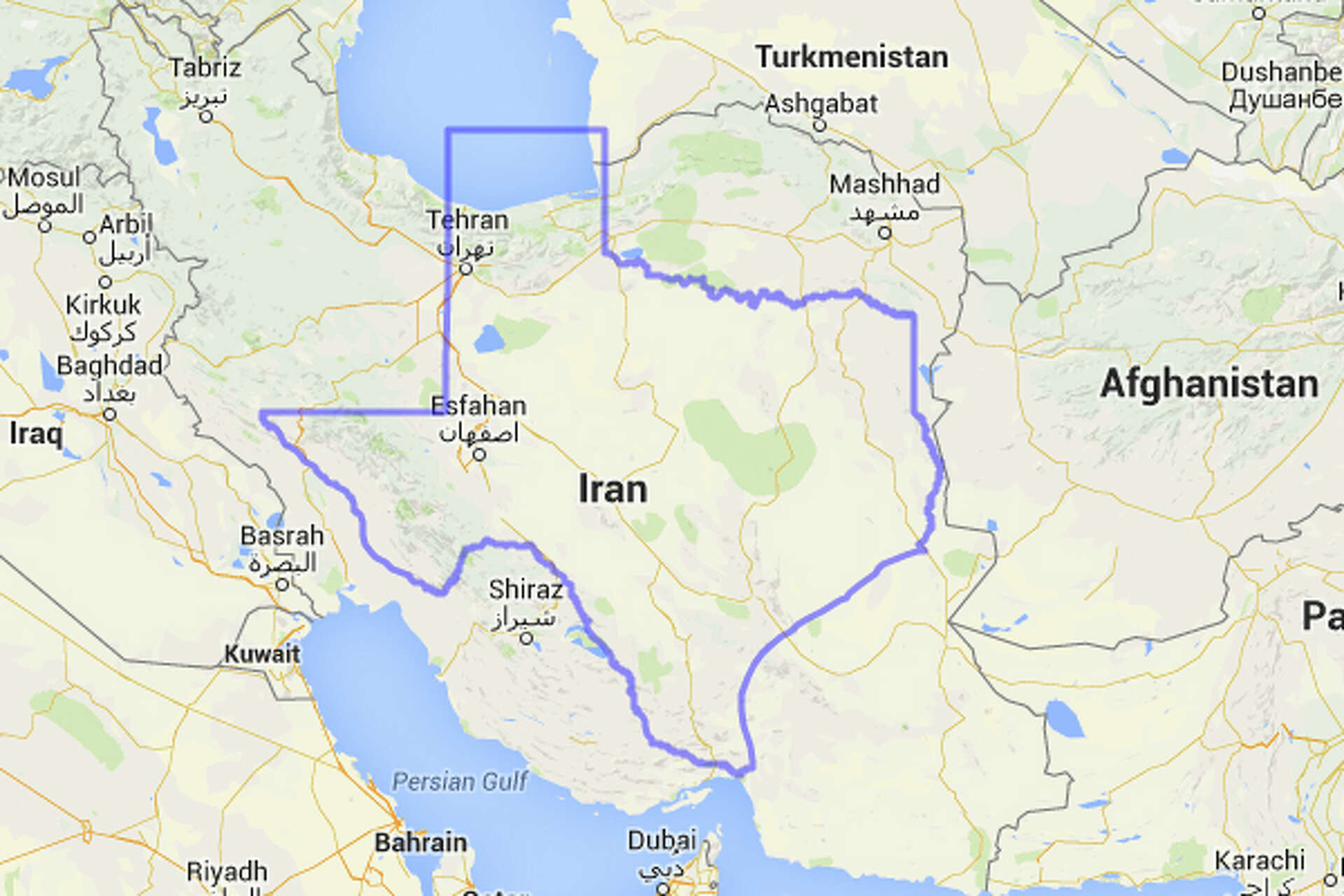
Iran covers roughly 1.65 million square kilometers, making it the 17th largest country in the world. For American readers, the most intuitive comparison is Alaska. Iran is slightly larger—about 11% bigger—but far more densely populated and politically mobilized.
Imagine attempting to control a territory stretching from Alaska’s frozen North Slope to its jagged southeastern panhandle—except instead of sparse wilderness, you face cities, mountains, deserts, and nearly 92 million people with a strong sense of national identity. This is the baseline reality any military planner must confront.
But Iran’s challenge is not just its size. It is the shape and texture of the land itself.
A Natural Fortress Built Over Millennia
Iran’s geography reads like a defensive blueprint written by history.
The Zagros Mountains run north to south along Iran’s western flank, forming a natural wall against Iraq and Turkey. These mountains frustrated Iraqi advances during the Iran–Iraq War and remain ideal terrain for ambush, attrition, and defensive warfare.
The Alborz Mountains rise abruptly along the northern edge near the Caspian Sea, shielding Tehran and Iran’s political heartland.
The eastern frontiers, bordering Afghanistan and Pakistan, consist of harsh uplands and deserts that defy easy movement or sustained occupation.
At the center lies the Iranian Plateau, home to the Dasht-e Kavir and Lut Desert—some of the hottest, driest, and most unforgiving landscapes on Earth. These are not empty spaces; they are logistical nightmares.
Historically, Iran has functioned less like an open plain and more like a mountain citadel. Invaders can enter—but rarely with speed, comfort, or certainty of exit. Even Alexander the Great’s army nearly perished retreating through Iran’s eastern deserts, undone not by enemy swords but by thirst and terrain.
Modern armies, despite satellites and drones, remain bound by the same constraints: fuel, water, supply lines, and morale.
Why War with Iran Would Be Strategically Self-Defeating
A military campaign against Iran would dwarf recent conflicts in Iraq or Afghanistan. Iran is larger than Iraq and Afghanistan combined, and its population is more than double either at the height of those wars.
Airpower—often cited as a clean alternative—loses effectiveness in mountainous terrain, where concealment is abundant and targets are fleeting. Precision weapons excel over flat deserts, not folded landscapes riddled with tunnels, hardened sites, and civilian proximity.
Iran’s own military doctrine compounds these challenges. Tehran has long prepared not for conventional victory but for asymmetric endurance:
Missile forces capable of regional strikes
Naval swarms that can disrupt shipping in the Persian Gulf
Proxy militias across Lebanon, Syria, Iraq, and Yemen
Cyber and infrastructure targeting capabilities
Even a limited conflict risks cascading escalation. Iran’s ability to threaten the Strait of Hormuz, through which a substantial share of global oil flows, gives it leverage that extends far beyond the battlefield. Energy markets, inflation, and global growth would all feel the shockwaves.
History suggests the likely outcome of war would not be decisive victory but protracted insurgency, regional destabilization, and strategic exhaustion—an Afghanistan-style quagmire multiplied by scale, nationalism, and geography.
Negotiation as Strategic Realism, Not Weakness
Against this backdrop, diplomacy is not naïveté; it is realism.
Negotiations offer what war cannot: control over escalation, verifiable constraints, and reversible outcomes. They allow adversaries to trade leverage instead of lives.
Since 2025, renewed U.S.–Iran talks—initiated amid economic pressure, domestic unrest in Iran, and shifting regional dynamics—have focused on nuclear enrichment limits in exchange for sanctions relief. While fragile and contentious, these discussions reflect a mutual recognition: the alternatives are worse.
The 2015 JCPOA demonstrated that diplomacy can place meaningful, inspectable limits on Iran’s nuclear program. Its collapse after U.S. withdrawal in 2018 did not erase that lesson—it reinforced it. Sanctions alone hardened positions. Military threats accelerated nuclear hedging.
A new framework, broader than the JCPOA and addressing missiles and regional behavior, may prove more durable precisely because it reflects the strategic lessons of the past decade.
For Iran, economic normalization and international legitimacy remain powerful incentives. For the United States and its allies, de-escalation reduces the risk of regional war, refugee crises, energy shocks, and uncontrolled proliferation.
Even regional rivals—Gulf states and Israel—have strong interests in predictability over permanent brinkmanship.
Geography’s Verdict: Talk or Bleed
Iran’s geography delivers a quiet but uncompromising verdict. This is not a country that can be bombed into submission or occupied into compliance. Its mountains absorb force. Its deserts drain momentum. Its population transforms invasion into resistance.
In this sense, Iran resembles a stone fortress surrounded by sandstorms: visible, imposing, and punishing to those who mistake access for control.
Negotiations do not guarantee peace. But they offer something far rarer in geopolitics: a path that limits catastrophe.
In an era of interconnected security, fragile energy markets, and rising multipolar tensions, diplomacy with Iran is not a concession—it is an acknowledgment of reality. Geography has already cast its vote. The only question is whether policymakers will listen.
The path forward lies not in domination, but in dialogue.


No comments:
Post a Comment