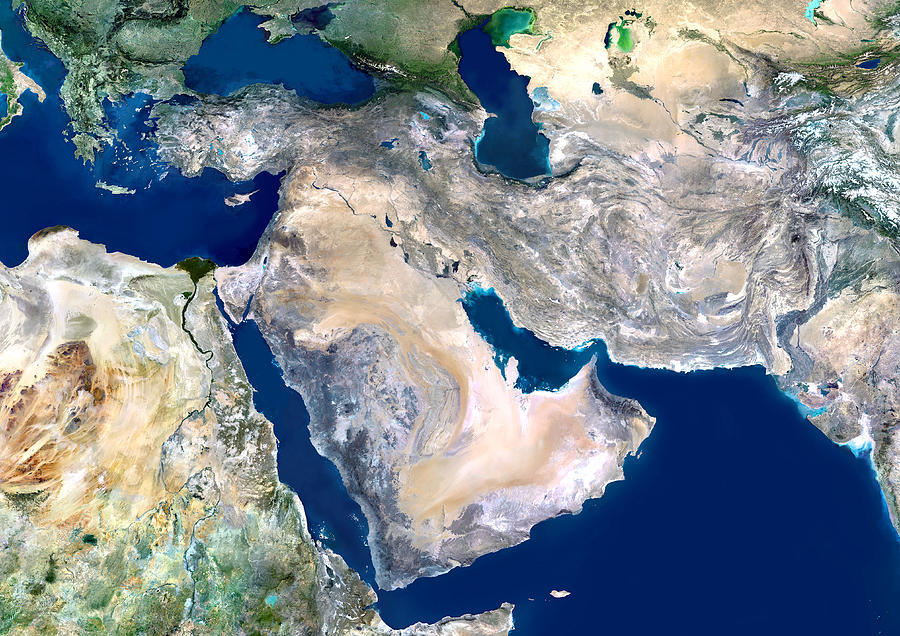
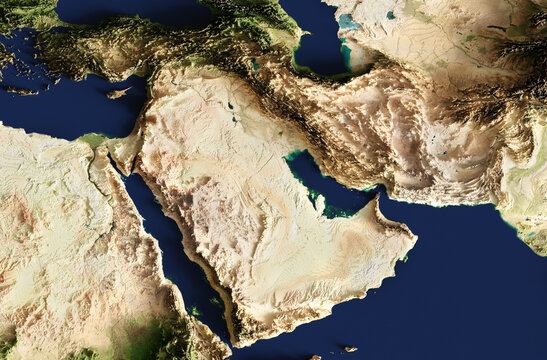
Putin's messages to Iran and Israel as conflict boils over
Senate Republicans move to prevent Trump's kingly ambitions: report The provision in question "would restrict the ability of any court, including the Supreme Court, to enforce compliance with its orders by holding people in contempt." ......... According to HuffPost, "Contempt citations are an essential tool for the courts" because "they allow judges to threaten fines, sanctions or even jail if people disobey their orders." ........ Senate Minority Leader Chuck Schumer (D-N.Y.) told HuffPost that the contempt provision Republicans slipped into the massive spending bill was "a naked attempt to shield members of the Trump administration from court orders," essentially allowing them to operate with impunity, much like royalty. ......... "Not only does this provision appear to violate the constitutional separation of powers, it also violates Senate rules," wrote reporter Jennifer Bendery. "Republicans are relying on a fast-track legislative process known as budget reconciliation to move the bill, which means everything in it must be related to budget matters. Restricting judges’ abilities to hand down contempt orders has nothing to do with budgets."
Marelli goes bankrupt; Blame Trump's tariffs
Deported (novel)
Empty Country (novel)
Trump’s Default: The Mist Of Empire (novel)
The 20% Growth Revolution: Nepal’s Path to Prosperity Through Kalkiism
Rethinking Trade: A Blueprint for a Just and Thriving Global Economy
The $500 Billion Pivot: How the India-US Alliance Can Reshape Global Trade
Trump’s Trade War
Peace For Taiwan Is Possible
Formula For Peace In Ukraine
The Last Age of War, The First Age of Peace: Lord Kalki, Prophecies, and the Path to Global Redemption
AOC 2028: : The Future of American Progressivism
It’s a huge outwards traffic jam from Tehran, stretching nearly 140 km towards Qazvin.
— حسن سجواني 🇦🇪 Hassan Sajwani (@HSajwanization) June 15, 2025
Why are so many people leaving Tehran at 1:30 am https://t.co/pNZL3jz1rW pic.twitter.com/Z9rYmUrFQa
Deported https://t.co/OgbTVVmuFB Get your copy today!
— Paramendra Kumar Bhagat (@paramendra) June 14, 2025
Deported (novel)
Empty Country (novel)
Trump’s Default: The Mist Of Empire (novel)
The 20% Growth Revolution: Nepal’s Path to Prosperity Through Kalkiism
Rethinking Trade: A Blueprint for a Just and Thriving Global Economy
The $500 Billion Pivot: How the India-US Alliance Can Reshape Global Trade
Trump’s Trade War
Peace For Taiwan Is Possible
Formula For Peace In Ukraine
The Last Age of War, The First Age of Peace: Lord Kalki, Prophecies, and the Path to Global Redemption
AOC 2028: : The Future of American Progressivism
Israel threatens to make Tehran 'burn' after Iranian retaliatory strikes
Israel Gets the War It Wanted After living in fear of Hezbollah for 20 years, Israel decimated it in the space of a month. Then turned to Iran........... “We can’t leave these threats for the next generation,” Netanyahu said. “If we don’t act now, there won’t be a next generation.” ......... Israel released footage of what it said were its own commandos on the ground in Iran, with a drone base prepositioned. It said it killed most of the leadership of Iran’s air force, after luring them to a meeting. ........ Like the cascading campaign against Hezbollah, it was the war Israel has been preparing for. ............ The elimination of Israel is their common ground, and Hamas’ attack of Oct. 7 was intended to ignite. After overwhelming Israel with its strike out of Gaza in the south, its planners’ hope was that Hezbollah would unleash the assault Israelis had long feared from the north, and the “Zionist entity” would collapse. ............. Instead, Iran instructed Hezbollah to hold back. For the next year, as tens of thousands of Israelis fled their homes near the border, Tehran played the military equivalent of chess, sending a few missiles a day over the border in tit-for-tat exchanges that signaled no change, status quo. As if this could go on forever.
Trump's tariffs and tax bill look like a 'Greek tragedy' that could tank the economy and stocks, former IMF official warns
Trump's Military Crackdown Is Starting To Dent His Poll Numbers
Trump's in trouble: Even republicans are jumping ship
Maddow Blog | Trump’s effort to reclaim international respect is failing spectacularly in his second term This has been a rhetorical staple for the Republican for quite a while. In fact, on the campaign trail last year, he told a Pennsylvania audience, referring to his White House tenure: “We were the most respected country in the world. We were the most respected that we were ever respected. We were never more respected than we were four years ago.” ........ This was, by any objective measure, utterly bonkers. But now that the president has returned to power, it’s suddenly even worse. The Pew Research Center this week released the results of international surveys measuring Trump’s support in 24 nations across the globe. As the Pew report made clear, the results were awful: ....... Not only does much of the world hold Trump in low regard, but his unpopularity is tarnishing the stature of the United States, too, with favorable ratings of the U.S. dropping by double digits in several countries. .......... George W. Bush unpopular abroad, while Barack Obama’s support soared. After the Democrat left the White House, Trump’s numbers in his first term were awful, and the data bounced back under Joe Biden. ......... The United States was an international laughingstock for decades, Trump has long argued, but thanks to how awesome his awesomeness is, he singlehandedly restored the nation’s global stature. It was a ridiculous idea he brought up constantly, seeing it as one of his most important accomplishments. ........... Even in his strange farewell address, delivered on the final full day of his first term, Trump found it necessary, one last time, to tell Americans, “The world respects us again.” The Republican added, in an apparent message for his Democratic successor, “Please don’t lose that respect.” ............ None of this made any sense. A Pew Research Center analysis from September 2020 noted, “In several countries, the share of the public with a favorable view of the U.S. is as low as it has been at any point since the Center began polling on this topic nearly two decades ago.” ........... Trump wrote: “Our Nation is staging one if the greatest and fastest comebacks in history. In just 4 short months, we are respected again, respected like never before.” He similarly added in February, just a couple of weeks after his second inaugural, “We are respected all over the world, like never before.”
New report reveals Tesla turmoil over Musk's handling of crucial project: 'Made no sense' The internal tension comes as Tesla faces mounting sales challenges. The company posted its first annual vehicle sales decline in 2024, with a small 1.1% drop from 2023, but sales dropped 13% in the first quarter of 2025 year over year. Meanwhile, competitors like BYD are gaining ground with more affordable EVs — BYD's entry-level Seagull hatchback starts under $10,000 in China.
1/
— Paramendra Kumar Bhagat (@paramendra) June 14, 2025
What happens to a man with no name, no voice, no passport—
When every country on Earth tries to deport him?
They fail.
And something extraordinary begins.
This is the story of Keir.
🧵👇 @dwarkesh_sp @lexfridman @joerogan @JoeBiden @JoelOsteen
Nation Braces For Trump’s Military Parade—And Nationwide ‘No Kings’ Protests (Live Updates) https://t.co/VDtKnZMbg2 pic.twitter.com/cfNkdhCwfP
— Forbes (@Forbes) June 14, 2025
Deported (novel)
Empty Country (novel)
Trump’s Default: The Mist Of Empire (novel)
The 20% Growth Revolution: Nepal’s Path to Prosperity Through Kalkiism
Rethinking Trade: A Blueprint for a Just and Thriving Global Economy
The $500 Billion Pivot: How the India-US Alliance Can Reshape Global Trade
Trump’s Trade War
Peace For Taiwan Is Possible
Formula For Peace In Ukraine
The Last Age of War, The First Age of Peace: Lord Kalki, Prophecies, and the Path to Global Redemption
AOC 2028: : The Future of American Progressivism
Do you want it. New Huawei gadget. https://t.co/MnulLKHgeC
— Ambassador Chen Song (@PRCAmbNepal) June 14, 2025
This is for the spy movies.
— Paramendra Kumar Bhagat (@paramendra) June 14, 2025
Forcible removal of US Sen. Alex Padilla signals a dangerous shift in American democracy https://t.co/ABx8ttyzjv
— The Conversation U.S. (@ConversationUS) June 14, 2025
Deported (novel)
Empty Country (novel)
Trump’s Default: The Mist Of Empire (novel)
The 20% Growth Revolution: Nepal’s Path to Prosperity Through Kalkiism
Rethinking Trade: A Blueprint for a Just and Thriving Global Economy
The $500 Billion Pivot: How the India-US Alliance Can Reshape Global Trade
Trump’s Trade War
Peace For Taiwan Is Possible
Formula For Peace In Ukraine
The Last Age of War, The First Age of Peace: Lord Kalki, Prophecies, and the Path to Global Redemption
AOC 2028: : The Future of American Progressivism
Deported (novel)
Empty Country (novel)
Trump’s Default: The Mist Of Empire (novel)
The 20% Growth Revolution: Nepal’s Path to Prosperity Through Kalkiism
Rethinking Trade: A Blueprint for a Just and Thriving Global Economy
The $500 Billion Pivot: How the India-US Alliance Can Reshape Global Trade
Trump’s Trade War
Peace For Taiwan Is Possible
Formula For Peace In Ukraine
The Last Age of War, The First Age of Peace: Lord Kalki, Prophecies, and the Path to Global Redemption
AOC 2028: : The Future of American Progressivism
— Paramendra Kumar Bhagat (@paramendra) June 13, 2025
But the prayer Thy Kingdom Come is addressed not to Jesus (taught by Jesus) but to Lord God the Holy Father.
— Paramendra Kumar Bhagat (@paramendra) June 13, 2025
2/In every church on earth every Sunday they pray this prayer: God, come become king of earth. Which is to say the Christians are waiting for the exact same person the Jews are waiting for.
— Paramendra Kumar Bhagat (@paramendra) June 13, 2025
It is 100 times easier to prove God exists than that the earth is round. And yet the logic does not penetrate. Because The Devil is an active spiritual force. Spiritual above mental and physical. Does not even compare.
— Paramendra Kumar Bhagat (@paramendra) June 13, 2025
The IAEA declared just yesterday that Iran was in violation and had repeatedly breached their non proliferation obligations. Diplomacy and treaties don’t work if one party is determined to violate any agreement. https://t.co/gF4XKsPykT
— dimitri sirota (@dimitrisirota) June 13, 2025
Deported (novel)
Empty Country (novel)
Trump’s Default: The Mist Of Empire (novel)
The 20% Growth Revolution: Nepal’s Path to Prosperity Through Kalkiism
Rethinking Trade: A Blueprint for a Just and Thriving Global Economy
The $500 Billion Pivot: How the India-US Alliance Can Reshape Global Trade
Trump’s Trade War
Peace For Taiwan Is Possible
Formula For Peace In Ukraine
The Last Age of War, The First Age of Peace: Lord Kalki, Prophecies, and the Path to Global Redemption
AOC 2028: : The Future of American Progressivism