Pages

Monday, June 08, 2015

Bihar Is Now 55-45

For Nitish and Laloo to come together and for Laloo to agree to declaring Nitish the chief ministerial candidate: these two developments have boosted Nitish' prospects, but it might still not be enough to take him past the finish line. This prevents a total wipeout like in the 2014 Lok Sabha elections. But if the BJP manages to rope in both Jitan and Pappu, both of whom are opposed to Nitish, it suddenly starts looking 60-40 or better for the BJP.

The wild card here is not who will ally with whom but respecting that all elections are about the future. What will Nitish do over the next five years? If he goes on the Give Me My Wages tangent like in 2014, he will lose, possibly decisively.

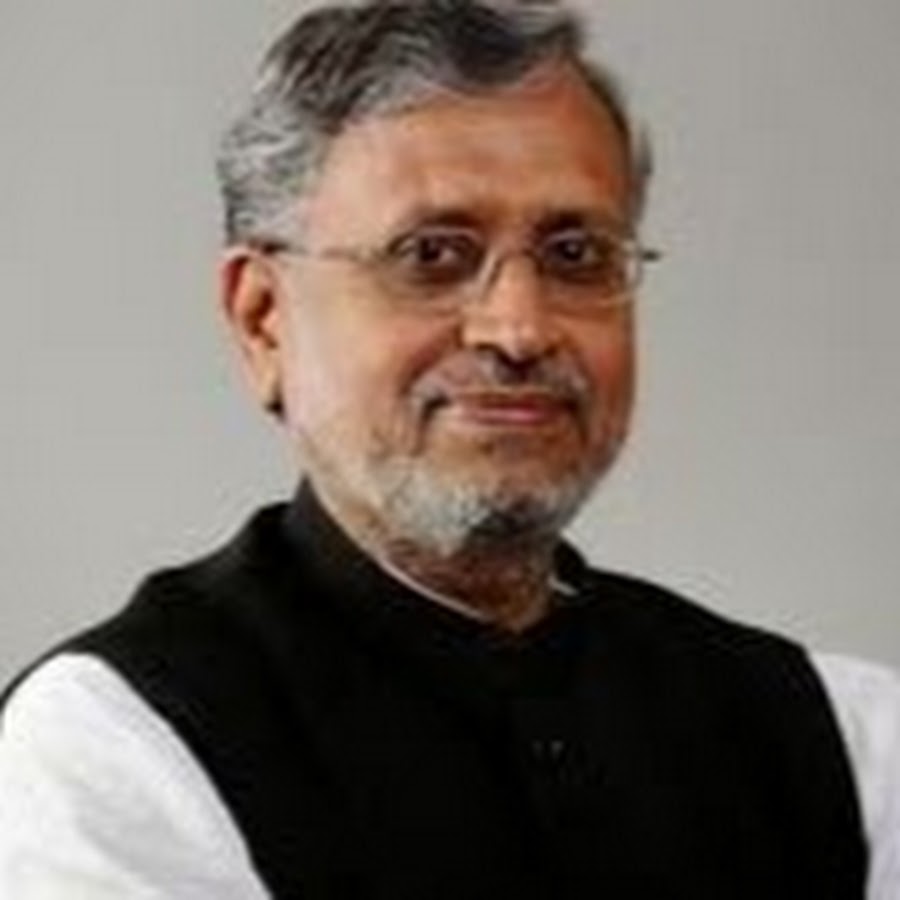
Nitish is more charismatic than Sushil Modi who still acts like he is trying to get away from under Nitish' shadow. Otherwise SuMo has a legitimate claim that he was crucial - indispensable - to Nitish giving seven excellent years as Chief Minister. It was the BJP that administered the road and health departments which showed some of the best work.

Sushil Modi should tell the people of Bihar what he will do over the next five years.

One of these two will become Chief Minister, the other will be Opposition Leader.

Another wild card is PM Modi. If he makes enough campaign stops, he will make a bad situation worse for Nitish. A victory in Bihar gives NaMo greater leg room in the Rajya Sabha, gives him a political boost nationally as he starts his second year, and brightens his prospects for Uttar Pradesh, a twice big a prize, and one that would cure all his Upper House woes. It is like NaMo needs the Bihar victory more than SuMo does. So expect him to campaign hard and make life miserable for Nitish.

Saturday, June 06, 2015

बिहार के उभरते चेहरे

The M-Pesa Concept Applied To Voting

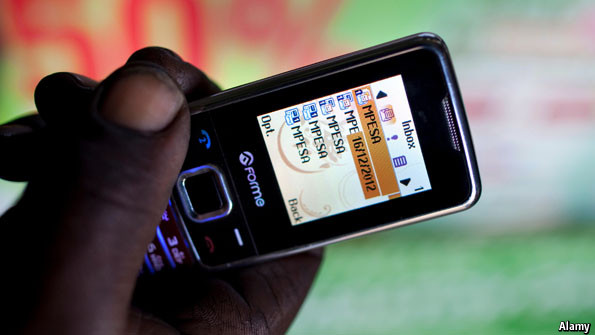
Just like the blockchain technology can be used for bitcoins but also for many other things, I believe the basic technology and promise behind the wonderful m-pesa can be leveraged for the cause of democracy in the developing world.

You should be able to vote through SMS. You should be able to participate in internal voting inside political parties. You should be able to use this for what is often called electronic voting. You would reply to a SMS, send 1 for candidate A, send 2 for candidate B and so on.

Mobile phones that do voice calls and text messages are pretty widespread by now. Almost everyone has one.

I believe SMS can also have ecommerce applications.


Why does Kenya lead the world in mobile money?
Paying for a taxi ride using your mobile phone is easier in Nairobi than it is in New York ...... now used by over 17m Kenyans, equivalent to more than two-thirds of the adult population; around 25% of the country’s gross national product flows through it. M-PESA lets people transfer cash using their phones, and is by far the most successful scheme of its type on earth. Why does Kenya lead the world in mobile money? ...... Once you have signed up, you pay money into the system by handing cash to one of Safaricom’s 40,000 agents (typically in a corner shop selling airtime), who credits the money to your M-PESA account. You withdraw money by visiting another agent, who checks that you have sufficient funds before debiting your account and handing over the cash. You can also transfer money to others using a menu on your phone. Cash can thus be sent one place to another more quickly, safely and easily than taking bundles of money in person, or asking others to carry it for you. This is particularly useful in a country where many workers in cities send money back home to their families in rural villages. Electronic transfers save people time, freeing them to do other, more productive things instead. ........ M-PESA has since been extended to offer loans and savings products, and can also be used to disburse salaries or pay bills, which saves users further time and money (because they do not need to waste hours queuing up at the bank). One study found that in rural Kenyan households that adopted M-PESA, incomes increased by 5-30%. In addition, the availability of a reliable mobile-payments platform has spawned a host of start-ups in Nairobi, whose business models build on M-PESA’s foundations. Mobile-money schemes in other countries, meanwhile, have been held up by opposition from banks and regulators and concerns over money-laundering.