Pages

Saturday, June 07, 2025

Is BlackRock Behind The Housing Crisis?

The computer program used by BlackRock is called Aladdin, which stands for Asset, Liability, and Debt and Derivative Investment Network. It is a portfolio management software developed by BlackRock Solutions, the risk management division of BlackRock, Inc. Aladdin integrates risk analytics, portfolio management, trading, and operations tools into a single platform, enabling real-time management of investments. It analyzes global economic data, stock market prices, and other factors like government changes or weather conditions to support risk management and informed decision-making. Initially created in 1988 to handle BlackRock’s internal business, it has since been offered to clients and now manages trillions in assets, with estimates of $21.6 trillion as of 2020.


Aladdin, which stands for Asset, Liability, and Debt and Derivative Investment Network, is a portfolio management software developed by BlackRock Solutions, the risk management division of BlackRock, Inc. It manages over $20 trillion in assets by providing a comprehensive, unified platform that integrates sophisticated risk analytics, portfolio management, trading, and operations tools. Here’s how it achieves this scale:
  1. Comprehensive Platform: Aladdin combines tools for portfolio management, risk assessment, trading, and operational workflows into a single system. It allows users—such as asset managers, banks, insurers, pension funds, and other institutional investors—to monitor investments, assess risks, and execute trades efficiently in real time.
  2. Risk Analytics: The software uses advanced models, including Monte Carlo simulations, to analyze historical data and generate statistical scenarios for equities, bonds, and other assets. This helps clients stress-test portfolios against potential events like economic downturns, pandemics, or market crises, enabling better risk management across vast asset pools.
  3. Scalability and Adoption: Initially built in 1988 for BlackRock’s internal use, Aladdin’s capabilities attracted external clients after the 2008 financial crisis, when risk management became critical. It now serves over 1,000 organizations, including major firms like CalPERS ($260 billion in assets), Deutsche Bank (€900 billion), and Prudential ($700 billion), managing a combined $21.6 trillion as of 2020.
  4. Data and Technology: Aladdin operates on a network of approximately 5,000 to 6,000 computers, with data centers like the one in Wenatchee, Washington, processing global economic data, stock market prices, and factors like government policies or weather. This allows it to handle massive, diverse portfolios across asset classes—stocks, bonds, derivatives, real estate, and more.
  5. Client Base Expansion: BlackRock rents Aladdin to a wide range of clients, including banks, hedge funds, and governments. For example, after the 2008 crisis, the U.S. Treasury Department tapped BlackRock Solutions to analyze and manage $130 billion in toxic assets from Bear Stearns and AIG. It also valued mortgage-backed securities for Fannie Mae and Freddie Mac, and managed $1.25 trillion in repurchasing for the Federal Reserve.
  6. Continuous Innovation: BlackRock enhances Aladdin with acquisitions like eFront (2019), integrating private market data for a “whole portfolio view,” and by incorporating AI, machine learning, and ESG (Environmental, Social, Governance) data. This keeps it relevant for clients managing trillions in public and private assets.

By unifying data, providing real-time insights, and scaling to meet the needs of global financial institutions, Aladdin grew from managing BlackRock’s $4.1 trillion in 2013 to overseeing $21.6 trillion by 2020, equivalent to roughly 10% of global stocks and bonds. Its ability to process and analyze enormous datasets while connecting the financial ecosystem drives its dominance.


Aladdin, developed by BlackRock Solutions, is a portfolio management software, not a direct participant in the U.S. housing market in the sense of buying or renting properties. It’s a tool used by BlackRock and its clients—such as asset managers, banks, insurers, and pension funds—to manage investments, assess risks, and streamline operations. Here’s a breakdown addressing your questions:
Aladdin’s Role in the U.S. Housing Market
  • Purpose and Function: Aladdin (Asset, Liability, and Debt and Derivative Investment Network) is a technology platform that integrates risk analytics, portfolio management, trading, and operational tools. It processes vast amounts of data—economic indicators, stock prices, interest rates, and more—to help clients make informed investment decisions.
  • Connection to Housing: Aladdin doesn’t directly buy or manage physical real estate like houses. Instead, it supports BlackRock and other institutional investors in managing financial assets, including mortgage-backed securities (MBS). These are bundles of home loans packaged into investments, which BlackRock invests in on behalf of clients. By analyzing these securities, Aladdin helps provide capital to the mortgage market, indirectly facilitating home loans for individuals.
  • Scale: As of 2020, Aladdin managed risk for over $21.6 trillion in assets, a portion of which includes mortgage-related investments. This doesn’t mean Aladdin owns houses, but it plays a role in the financial ecosystem that funds home purchases.
Has Aladdin Bought Houses and Rented Them Out?
  • No Direct Purchases: Aladdin is software, not an entity that can buy or own property. BlackRock, the company behind Aladdin, also does not directly buy single-family homes for rental purposes. Confusion often arises from misperceptions or conflation with other firms, like Blackstone, a separate entity with a history of real estate investment.
  • BlackRock’s Real Estate Involvement: BlackRock is an active investor in the U.S. real estate market, but its focus isn’t on buying individual houses to compete with homebuyers. Instead:
    • Mortgage Securities: BlackRock invests in MBS, providing liquidity to the mortgage market, which helps banks lend to homebuyers.
    • New Construction for Rent: BlackRock has invested in programs to finance new housing, including purpose-built single-family rental developments. These add to the housing supply, addressing demand for rentals, but don’t involve buying existing homes from potential buyers.
    • Scale of Ownership: BlackRock does not own single-family homes directly. It has stakes in companies like Invitation Homes (owning 6.7% as of recent reports, valued at about $872 million), which manages roughly 80,000 rental homes. However, this is a small fraction of the U.S.’s 140 million housing units, with only about 300,000 single-family rentals owned by all institutional investors combined (less than 2% of the 15 million single-family rentals).
  • Not Outbidding Buyers: There’s no evidence BlackRock or Aladdin buys existing homes to rent out, blocking potential buyers. Claims of this nature often stem from a 2021 social media narrative misattributing actions to BlackRock. In reality:
    • Institutional investors like Blackstone, not BlackRock, bought foreclosed homes post-2008 financial crisis, often in bulk, to convert to rentals. Blackstone exited much of this market by 2019, selling its stake in Invitation Homes, and later bought Home Partners of America in 2021 for $6 billion, focusing on a rent-to-own model.
    • Investors target distressed or new properties, not typically competing with individual buyers for move-in-ready homes. Data from John Burns Research & Consulting shows institutional investors (owning 1,000+ homes) hold just 0.4% of U.S. single-family housing stock.
Context of the Housing Market
  • Housing Challenges: The U.S. faces a housing shortage—estimated at nearly 4 million homes—driven by high demand, low inventory, and construction constraints from local zoning and regulations. This, not institutional buying, is the primary driver of rising prices and competition.
  • Institutional Impact: While investors like Blackstone or others buy homes (often less than 3% of single-family rentals), their role is small compared to the broader market. They don’t “steal” homes from buyers; rather, they add rental options, sometimes for those unable to buy due to high prices or credit issues.
Conclusion
Aladdin itself has not bought houses or rented them out—it’s a tool, not a buyer. BlackRock, its creator, doesn’t purchase single-family homes to outbid potential buyers either. Its investments focus on mortgage securities and new rental housing construction, a minor part of the market. Claims of widespread home-buying by BlackRock to rent out properties are largely inaccurate, often confusing BlackRock with Blackstone or exaggerating the scale of institutional involvement. The housing crisis stems more from supply shortages than from actions tied to Aladdin or BlackRock.


The claim that BlackRock has bought houses and significantly impacted the U.S. housing market requires careful examination, as there’s a mix of fact, misconception, and nuance involved. Let’s break it down:
Has BlackRock Bought Houses?
  • Clarification on Direct Purchases: BlackRock, the world’s largest asset manager, has explicitly stated it does not directly buy single-family homes in the U.S. for the purpose of turning them into rentals or holding them. Instead, its real estate investments focus on other areas, such as mortgage-backed securities (MBS), multifamily properties (e.g., apartment complexes), and financing new construction for rental housing.
  • Indirect Involvement: BlackRock does invest in companies or funds that own or manage real estate. For example, it holds a 6.7% stake in American Homes 4 Rent, a real estate investment trust (REIT) that owned about 59,000 single-family rental homes as of December 2023. However, this is an investment in a separate entity, not BlackRock directly purchasing or managing houses.
  • Confusion with Blackstone: Much of the narrative around BlackRock buying houses stems from confusion with Blackstone, a different firm. Blackstone, a private equity giant, has been active in the single-family rental market. It founded Invitation Homes in 2012, buying tens of thousands of homes post-2008 financial crisis, often distressed properties, and later sold its stake for $7 billion in 2019. In 2021, Blackstone acquired Home Partners of America, which owned 17,000 rental homes, for $6 billion. These actions are separate from BlackRock’s activities.
Impact on the Housing Market
  • Scale of Institutional Investors: Institutional investors—firms owning 1,000+ properties—do buy single-family homes, but their overall market share is small. According to John Burns Research & Consulting, these investors accounted for just 0.4% of U.S. home purchases in Q2 2023, down from a peak of 2.4% in late 2021. Even at their height, all investors (including smaller “mom-and-pop” buyers, flippers, and second-home purchasers) made up about 25% of sales in 2023, not 44% as some claims suggested. BlackRock’s direct role is negligible, as it doesn’t buy homes outright.
  • Price Influence: Institutional investors can influence local markets, particularly in specific regions like the Sun Belt (e.g., Atlanta, Phoenix, Tampa), where firms like Invitation Homes bought heavily—e.g., 90% of homes for sale in some Atlanta ZIP codes in the early 2010s. This can drive up prices in targeted areas by outbidding individuals, often with all-cash offers. However, experts like Paul Fiorilla from Yardi Matrix note that their small national market share (e.g., 3% of single-family rentals per Moody’s Analytics) means they aren’t a primary driver of widespread price increases.
  • Broader Market Forces: The housing market’s challenges—rising prices, low inventory, and affordability issues—stem more from structural issues:
    • Supply Shortage: The U.S. has a shortage of nearly 4 million homes, driven by decades of underbuilding after the 2008 crash, restrictive zoning, and NIMBY (Not In My Backyard) resistance to new construction, especially in states like California.
    • Demand Pressure: High demand from millennials entering homebuying age, low mortgage rates in the 2010s and early 2020s, and population shifts to growing metro areas have pushed prices up.
    • Interest Rates: The Federal Reserve’s rate hikes since 2022, pushing mortgage rates above 6.5%, have cooled investor activity and made homebuying harder for individuals, exacerbating affordability.
  • Rental Market Effects: Firms like Blackstone, not BlackRock, have turned homes into rentals, increasing rental supply in some areas. This can ease rent pressure in theory, but in practice, institutional landlords have been criticized for steep rent hikes, high fees, and poor maintenance, per reports from Reuters and The Atlantic. Still, their impact on national rent inflation is limited compared to supply-demand imbalances.
The Narrative and Reality
  • Misconceptions: Claims that BlackRock is “buying every single-family house” or owned 44% of homes in 2023 are inaccurate. The 44% figure, spread via social media and a Medium article, misrepresents data, likely conflating all investors (individuals, small firms, and institutions) with BlackRock alone. BlackRock’s real estate assets, valued at $60 billion in 2020, are a tiny fraction of the $36 trillion U.S. housing market.
  • Impact Assessment: While institutional investors like Blackstone have influenced specific markets, the broader housing crisis is driven by supply constraints, not corporate buying. BlackRock’s role is indirect and minimal, focused on financing and investments in securities or rental-focused projects, not outbidding families for homes.
Conclusion
BlackRock has not bought houses directly in a way that meaningfully impacts the U.S. housing market. Its investments in mortgage securities and rental housing firms play a small, indirect role, but the narrative of BlackRock driving up prices or locking out buyers is largely a misconception, often confused with Blackstone’s actions. The real culprits behind high home prices are a chronic lack of supply, strong demand, and rising interest rates, not a single firm like BlackRock. If you’re concerned about local impacts, focus on regions with heavy institutional buying (e.g., Atlanta, Charlotte), but nationally, their footprint remains small.


7: World War II

Trump’s Default: The Mist Of Empire (novel)
The 20% Growth Revolution: Nepal’s Path to Prosperity Through Kalkiism
Rethinking Trade: A Blueprint for a Just and Thriving Global Economy
The $500 Billion Pivot: How the India-US Alliance Can Reshape Global Trade
Trump’s Trade War
Peace For Taiwan Is Possible
Formula For Peace In Ukraine
The Last Age of War, The First Age of Peace: Lord Kalki, Prophecies, and the Path to Global Redemption
AOC 2028: : The Future of American Progressivism

Trump’s Default: The Mist Of Empire (novel)
The 20% Growth Revolution: Nepal’s Path to Prosperity Through Kalkiism
Rethinking Trade: A Blueprint for a Just and Thriving Global Economy
The $500 Billion Pivot: How the India-US Alliance Can Reshape Global Trade
Trump’s Trade War
Peace For Taiwan Is Possible
Formula For Peace In Ukraine
The Last Age of War, The First Age of Peace: Lord Kalki, Prophecies, and the Path to Global Redemption
AOC 2028: : The Future of American Progressivism

Trump’s Default: The Mist Of Empire (novel)
The 20% Growth Revolution: Nepal’s Path to Prosperity Through Kalkiism
Rethinking Trade: A Blueprint for a Just and Thriving Global Economy
The $500 Billion Pivot: How the India-US Alliance Can Reshape Global Trade
Trump’s Trade War
Peace For Taiwan Is Possible
Formula For Peace In Ukraine
The Last Age of War, The First Age of Peace: Lord Kalki, Prophecies, and the Path to Global Redemption
AOC 2028: : The Future of American Progressivism

Trump’s Default: The Mist Of Empire (novel)
The 20% Growth Revolution: Nepal’s Path to Prosperity Through Kalkiism
Rethinking Trade: A Blueprint for a Just and Thriving Global Economy
The $500 Billion Pivot: How the India-US Alliance Can Reshape Global Trade
Trump’s Trade War
Peace For Taiwan Is Possible
Formula For Peace In Ukraine
The Last Age of War, The First Age of Peace: Lord Kalki, Prophecies, and the Path to Global Redemption
AOC 2028: : The Future of American Progressivism

Palantir founder, Trump ally Peter Thiel talks Antichrist, coming 'totalitarian' system in resurfaced interview
Gen. Flynn: The Deep State Is Boxing Trump in, Pushing US Toward 'Final Military Conflict' While most of America remains blissfully uninformed by our establishment media, the world's two greatest superpowers are being manipulated by dark forces inside and outside our government into a major military confrontation that no country wants, and no sane person would ever want. ......... and my recommendations for how our nation and the West can avoid a major military confrontation with Russia. ......... despite the lies told by our Deep State, Russia is not the Soviet Union, and Putin is not Stalin. .......... The establishment media, deeply influenced and even sometimes controlled by our Deep State, labeled President Trump and those who work for him "Putin's Puppets" to goad him into taking unwarranted and aggressive steps against Russia. These voices from the establishment media reflect the views of the Deep State, not the American people, and not the MAGA movement, and should be completely disregarded, if not mocked. .......... During almost all of the post-World War II period, and certainly since the establishment of the CIA in 1947, these unelected dark establishment forces have acted to destabilize the world, bringing death, famine, assassinations, violence, coups, riots, revolutions, and destruction to our planet. ............

Currently, these forces are working to provoke Russia into a major --- perhaps a final --- military conflict with the West.

.............. Since Russian and American strategic bombers are generally required by agreement to be visible to satellite surveillance, never before has anyone engaged in an attack on these visible targets. ........... it is my view that the Deep State is now acting outside of the control of the elected leadership of our nation. I believe that these persons in our Deep State are engaged in a deliberate effort to provoke Russia into a major confrontation with the West, including the United States. ............ The time is now to take aggressive action against those who abuse their authority as government employees to manipulate the elected leadership of our nation. ............ In 1961, Kennedy found himself manipulated by earlier versions of these same Deep State forces when they attempted to manipulate him to launch Air Force planes to attack Cuba after the failed invasion, resulting in an open conflict with both Cuba and the Soviet Union. .......... In Kennedy's June 1963 speech at American University, declaring his vision of peace with the Soviet Union, he declared himself to be an enemy of this Deep State, which, by all indications, then retaliated by participating in his assassination five months later in Dallas. ......... The American Deep State is not only a threat to peace, but a threat to the president. .......... President Trump has already faced at least two assassination attempts. .......... After the shooting in Butler, Pennsylvania last July, Trump displayed the type of personal courage that those of us who have served in the military deeply admire. .......... Once President Kennedy realized he was being manipulated and opposed because he sought peace, he removed Allen Dulles as Director of Central Intelligence, along with several of his assistants. I urge President Trump to immediately clean house of any in government who had prior knowledge of, or participated in any way, in the Ukrainian attack on the Russian Federation's strategic bombers, and to go further by immediately declaring an end to any support for the Ukraine War. ......... I urge him to recall all open and covert military and other government personnel from Ukraine. I urge him to have all those personnel removed and interrogated by the FBI or the military to learn of their possible participation in unauthorized military activities. ....... I urge President Trump to also distance himself from demonstrated war mongers in our own government, chief among whom is U.S. Sen. Lindsay Graham of South Carolina. ....... Peace is not the normal state of man. Freedom requires a price to be paid by every generation. It is time to recommit our nation to both peace and freedom.

Trump’s Default: The Mist Of Empire (novel)
The 20% Growth Revolution: Nepal’s Path to Prosperity Through Kalkiism
Rethinking Trade: A Blueprint for a Just and Thriving Global Economy
The $500 Billion Pivot: How the India-US Alliance Can Reshape Global Trade
Trump’s Trade War
Peace For Taiwan Is Possible
Formula For Peace In Ukraine
The Last Age of War, The First Age of Peace: Lord Kalki, Prophecies, and the Path to Global Redemption
AOC 2028: : The Future of American Progressivism

Trump’s Default: The Mist Of Empire (novel)
The 20% Growth Revolution: Nepal’s Path to Prosperity Through Kalkiism
Rethinking Trade: A Blueprint for a Just and Thriving Global Economy
The $500 Billion Pivot: How the India-US Alliance Can Reshape Global Trade
Trump’s Trade War
Peace For Taiwan Is Possible
Formula For Peace In Ukraine
The Last Age of War, The First Age of Peace: Lord Kalki, Prophecies, and the Path to Global Redemption
AOC 2028: : The Future of American Progressivism

Trump’s Default: The Mist Of Empire (novel)
The 20% Growth Revolution: Nepal’s Path to Prosperity Through Kalkiism
Rethinking Trade: A Blueprint for a Just and Thriving Global Economy
The $500 Billion Pivot: How the India-US Alliance Can Reshape Global Trade
Trump’s Trade War
Peace For Taiwan Is Possible
Formula For Peace In Ukraine
The Last Age of War, The First Age of Peace: Lord Kalki, Prophecies, and the Path to Global Redemption
AOC 2028: : The Future of American Progressivism

Trump’s Default: The Mist Of Empire (novel)
The 20% Growth Revolution: Nepal’s Path to Prosperity Through Kalkiism
Rethinking Trade: A Blueprint for a Just and Thriving Global Economy
The $500 Billion Pivot: How the India-US Alliance Can Reshape Global Trade
Trump’s Trade War
Peace For Taiwan Is Possible
Formula For Peace In Ukraine
The Last Age of War, The First Age of Peace: Lord Kalki, Prophecies, and the Path to Global Redemption
AOC 2028: : The Future of American Progressivism

Trump’s Default: The Mist Of Empire (novel)
The 20% Growth Revolution: Nepal’s Path to Prosperity Through Kalkiism
Rethinking Trade: A Blueprint for a Just and Thriving Global Economy
The $500 Billion Pivot: How the India-US Alliance Can Reshape Global Trade
Trump’s Trade War
Peace For Taiwan Is Possible
Formula For Peace In Ukraine
The Last Age of War, The First Age of Peace: Lord Kalki, Prophecies, and the Path to Global Redemption
AOC 2028: : The Future of American Progressivism

Trump’s Default: The Mist Of Empire (novel)
The 20% Growth Revolution: Nepal’s Path to Prosperity Through Kalkiism
Rethinking Trade: A Blueprint for a Just and Thriving Global Economy
The $500 Billion Pivot: How the India-US Alliance Can Reshape Global Trade
Trump’s Trade War
Peace For Taiwan Is Possible
Formula For Peace In Ukraine
The Last Age of War, The First Age of Peace: Lord Kalki, Prophecies, and the Path to Global Redemption
AOC 2028: : The Future of American Progressivism

Trump’s Default: The Mist Of Empire (novel)
The 20% Growth Revolution: Nepal’s Path to Prosperity Through Kalkiism
Rethinking Trade: A Blueprint for a Just and Thriving Global Economy
The $500 Billion Pivot: How the India-US Alliance Can Reshape Global Trade
Trump’s Trade War
Peace For Taiwan Is Possible
Formula For Peace In Ukraine
The Last Age of War, The First Age of Peace: Lord Kalki, Prophecies, and the Path to Global Redemption
AOC 2028: : The Future of American Progressivism

Why India Must Be the New Britain—But on Equal Terms

The 20% Growth Revolution: Nepal’s Path to Prosperity Through Kalkiism
Rethinking Trade: A Blueprint for a Just and Thriving Global Economy
The $500 Billion Pivot: How the India-US Alliance Can Reshape Global Trade

Kash Patel On The Fentanyl Crisis
Kash Patel's Agroterrorism Accusations Against The CCP


Why India Must Be the New Britain—But on Equal Terms

In the 20th century, Britain was America’s closest ally—a political, military, and economic partner bound by shared values and strategic interests. As we move deeper into the 21st century, the global power axis is shifting. And now, India is poised to take on the mantle of America’s most consequential ally. But this partnership must be forged not out of nostalgia or geopolitical convenience, but with a clear-eyed understanding of economics, equity, and long-term opportunity.

A Partnership of Equals, Not Echoes

The US-India relationship cannot mirror the transatlantic alliance of the past. Britain, at the time of its special relationship with the U.S., was a wealthy post-imperial power with a comparable per capita income and advanced infrastructure. India, while on a trajectory of unprecedented growth, still grapples with vast income disparity. Its per capita income remains far below that of the U.S., and acknowledging this is not an act of inferiority—it’s a call to action.

This new alliance must operate on the principle of mutual upliftment. India brings youth, scale, talent, and geopolitical weight. The U.S. brings capital, technology, and institutional strength. Together, they can build the most powerful democratic partnership of the 21st century—but only if it's not patronizing, extractive, or one-sided.

The Case for Strategic FDI

One of the most effective ways to bridge the per capita income gap is through focused, strategic foreign direct investment (FDI). The U.S. and its allies must see India not just as a market, but as a manufacturing powerhouse in the making—a future factory of the free world.

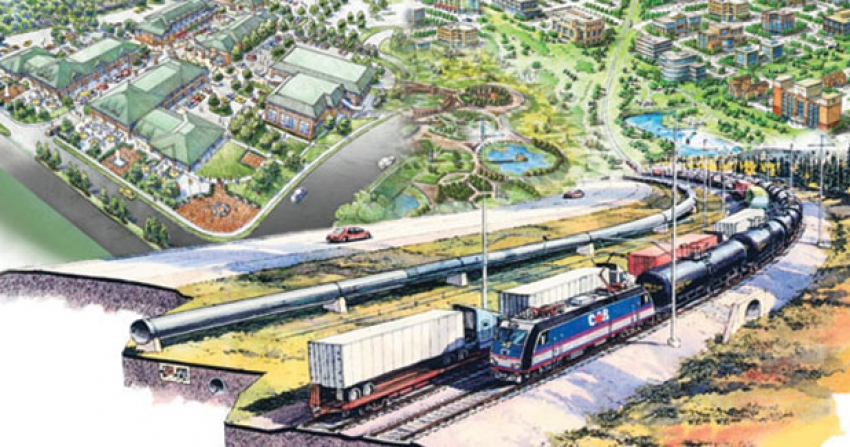
Industrial corridors such as the Delhi-Mumbai Industrial Corridor (DMIC) are already designed with this ambition. With advanced logistics, modern urban centers, and connectivity built for scale, these corridors are ideal sites for American and global capital to flow into. But they need a deliberate push—an FDI Marshall Plan for India, if you will.

This is not charity. It’s smart strategy. Diversifying supply chains out of China is a geopolitical imperative. India, with its democratic institutions, rule of law, and massive labor pool, is the only viable alternative at scale. American capital has a chance to get in early, build strong roots, and co-develop the next wave of global production.

Investing in Infrastructure, Skilling, and Innovation

To make this work, investment must go beyond factories. It must target digital infrastructure, skilling programs, AI and semiconductor research, and clean energy ecosystems. India’s tech-savvy youth are a latent superpower waiting to be activated. A dollar invested today in India’s human capital will yield strategic and economic dividends for decades.

A New Strategic Blueprint

This is more than just business—it’s about building a new world order rooted in shared democratic values and mutual economic gain. A stronger India makes for a stronger Indo-Pacific. A wealthier Indian middle class becomes a global consumer base. An India that builds alongside the U.S., not below it, is a stabilizing force in an increasingly fragmented world.

If India is to be the new Britain, it must be with full sovereignty of vision and dignity of partnership. For America, this is not just about containing rivals—it’s about choosing the right friends, and backing them with purpose.

Now is the moment to go big. The future of the global economy might just be written in the industrial corridors between Delhi and Mumbai.


The Deep State: Myth, Reality, or a Bit of Both?


The Deep State: Myth, Reality, or a Bit of Both?

The term “Deep State” evokes shadowy images of unelected bureaucrats pulling strings behind the scenes, beyond the reach of voters, presidents, or the Constitution. For some, it’s a dangerous conspiracy theory used to delegitimize legitimate institutions. For others, it’s a shorthand for something real and troubling: the persistent, unaccountable influence of entrenched power—governmental and corporate—regardless of who’s elected. So which is it? Let’s dig deeper.


What Is the Deep State, Really?

At its most basic, the Deep State refers to networks within the permanent government—the military, intelligence agencies, federal bureaucracies, and their corporate allies—that allegedly operate autonomously, or even contrary to the will of elected officials. The term has its origins in political science (notably in the context of Turkey and Pakistan), where militaries and security services have historically undermined democratic governments. In the U.S. context, it’s more controversial.

There are two broad ways to understand the Deep State:

  • The Conspiratorial Version: A cabal of intelligence officers, military leaders, and bureaucrats working behind the scenes to subvert elected leaders.

  • The Institutional Version: A self-preserving bureaucracy and ecosystem of agencies and contractors that exert consistent policy influence—regardless of who is in power—not through secret meetings, but through inertia, expertise, legal leeway, and sheer scale.


Is It Real or Just a Conspiracy Theory?

Answer: Both.

The idea of a conspiracy-minded Deep State pulling levers in smoky rooms has little evidence behind it. But the structure of a complex, massive government machine that sometimes frustrates democratic accountability is undeniably real.

Ask any president: The bureaucracy is difficult to control. The Department of Defense has a larger budget and more staff than many countries. The CIA can withhold intelligence even from its own oversight committees. Whistleblowers have described internal resistance to presidential directives. This isn’t QAnon-level cloak-and-dagger fantasy—this is systemic inertia, sometimes coupled with ideological resistance.


Is the President Not in Charge?

Legally, yes. The President is the head of the executive branch. He nominates agency heads, can issue executive orders, and has authority over the federal workforce.

Practically, not always. Once appointed, agency heads are often hemmed in by internal culture, laws, career staff, inspector generals, and congressional oversight. Moreover, presidents can’t easily remove career civil servants protected by rules and unions. A new president inherits a sprawling machine—and turning it requires more than flicking a switch.


What Agencies Get Singled Out?

In the U.S., certain departments draw more suspicion in Deep State discussions:

  • CIA / NSA / FBI – Because of secrecy, surveillance powers, and historical abuses (e.g., COINTELPRO, warrantless wiretapping).

  • Department of Defense – Because of its size, global footprint, and ties to the defense industry.

  • State Department – Occasionally accused of being ideologically entrenched.

  • Justice Department – Especially when prosecutorial decisions are seen as political.

These agencies are not rogue, but they do wield substantial power—often with minimal transparency.


How Does the Military-Industrial Complex Fit In?

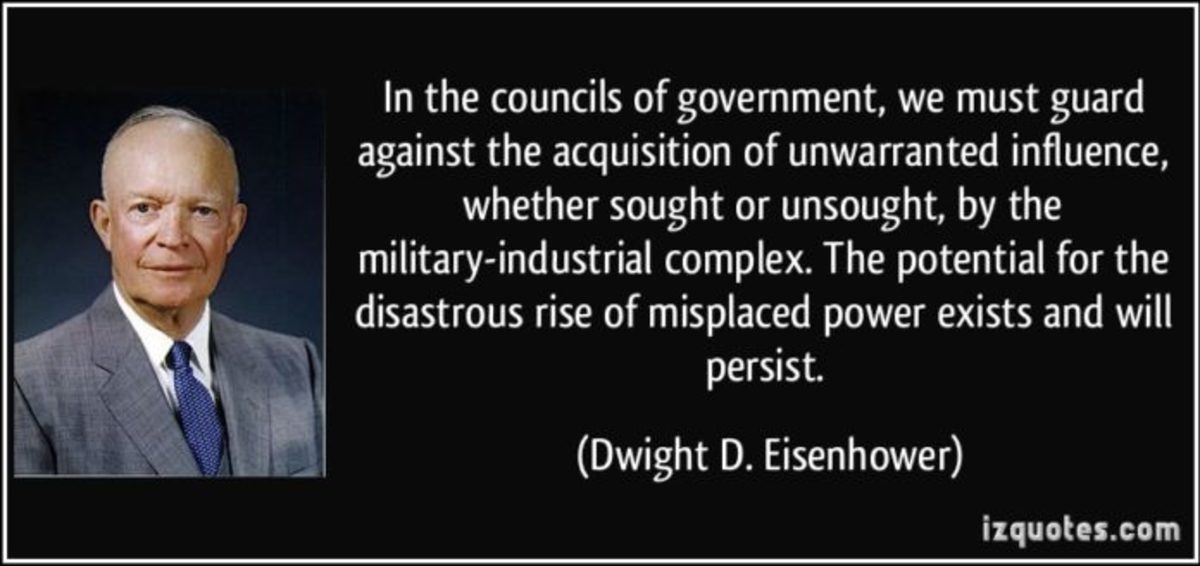
Dwight D. Eisenhower coined the term “military-industrial complex” in 1961 to warn of an alignment between the armed forces, defense contractors, and politicians. This triangle fosters a cycle: lobbying for war budgets, funding think tanks, and pushing hawkish policies. The Deep State idea often overlaps with this concern: decisions that maintain military presence abroad or favor defense spending are hard to undo, regardless of public opinion or elections.

So yes, the military-industrial complex is part of the institutional Deep State—not because of secret plots, but because of structural interdependence between government and corporate power.


What About Corporate Interests More Broadly?

Here's the paradox: the biggest threats to democratic accountability may not even be “deep.” Corporate lobbyists write legislation. Campaign financing distorts priorities. Regulatory capture (when agencies serve the industries they’re meant to regulate) is rampant. All this is overt, not covert. Exxon, Amazon, Lockheed Martin, and Google don’t need to be in the shadows—they operate in full daylight.

In this sense, corporate power is a parallel force, deeply entangled with government policy but not necessarily “state.” Still, corporate influence sustains and amplifies Deep State-like dynamics, especially in sectors like surveillance tech, energy, defense, and finance.


So Who Really Governs?

Formally: Congress, the President, the courts.

Informally: A combination of:

  • Long-tenured bureaucrats

  • Intelligence communities

  • Military leaders

  • Industry lobbyists

  • Media influencers

  • Tech and defense contractors

The checks and balances exist, but they don’t always work as intended. Inertia, secrecy, and entrenched networks complicate accountability. The “Deep State,” in this sense, is not a singular conspiracy—it’s an emergent property of a massive, complex system.


Why Does This Matter?

Because it challenges assumptions about democracy. If elections don’t change certain outcomes—foreign wars, surveillance policies, Wall Street bailouts—then voters rightly ask, Who’s actually in charge? That cynicism, if left unaddressed, can be weaponized by demagogues or conspiracy theorists. But the solution is not denial—it’s reform.


Conclusion:

The Deep State is less of a puppet master and more of a bureaucratic coral reef—vast, layered, partially opaque, hard to dismantle. It's not fiction, but neither is it omnipotent. The real risk isn’t some rogue cabal—it’s a system that drifts away from democratic oversight through sheer complexity and inertia, aided by powerful corporate alliances.

Democracy doesn’t end when you vote. It requires ongoing scrutiny—not only of the visible players but of the hidden scaffolding behind them. The Deep State is real, but its cure isn’t paranoia—it’s transparency, reform, and civic vigilance.


7: John Lennox: AI

Trump’s Default: The Mist Of Empire (novel)
The 20% Growth Revolution: Nepal’s Path to Prosperity Through Kalkiism
Rethinking Trade: A Blueprint for a Just and Thriving Global Economy
The $500 Billion Pivot: How the India-US Alliance Can Reshape Global Trade
Trump’s Trade War
Peace For Taiwan Is Possible
Formula For Peace In Ukraine
The Last Age of War, The First Age of Peace: Lord Kalki, Prophecies, and the Path to Global Redemption
AOC 2028: : The Future of American Progressivism

........ — had more than 200,000 views. By the next day, it had more than 11 million. ....... Mr. Musk imagined that his revenue program would support creators while incentivizing high-quality content that kept users engaged on X. What resulted instead was an explosive new industry for professional attention-getters, who started posting constantly and stoking fury to earn more money. ......... Mr. McGee complained to Mr. Musk that he still wasn’t being paid. Mr. Musk replied: “Will fix.” Mr. McGee has collected about $16,000 since.

Trump’s Default: The Mist Of Empire (novel)
The 20% Growth Revolution: Nepal’s Path to Prosperity Through Kalkiism
Rethinking Trade: A Blueprint for a Just and Thriving Global Economy
The $500 Billion Pivot: How the India-US Alliance Can Reshape Global Trade
Trump’s Trade War
Peace For Taiwan Is Possible
Formula For Peace In Ukraine
The Last Age of War, The First Age of Peace: Lord Kalki, Prophecies, and the Path to Global Redemption
AOC 2028: : The Future of American Progressivism

Trump’s Default: The Mist Of Empire (novel)
The 20% Growth Revolution: Nepal’s Path to Prosperity Through Kalkiism
Rethinking Trade: A Blueprint for a Just and Thriving Global Economy
The $500 Billion Pivot: How the India-US Alliance Can Reshape Global Trade
Trump’s Trade War
Peace For Taiwan Is Possible
Formula For Peace In Ukraine
The Last Age of War, The First Age of Peace: Lord Kalki, Prophecies, and the Path to Global Redemption
AOC 2028: : The Future of American Progressivism