Raising $1M for Solara, an AI platform that turns a single prompt into a full multi‑channel user‑acquisition campaign for startups without growth teams.
Working people have been left behind in New York. In the wealthiest city in the world, one in five can't afford $2.90 for the train or bus. As I told Trump today— it’s time to put those people right back at the heart of our politics. pic.twitter.com/PUVQfuT38s
Green flags in a founder: 1/ tinkered with cool projects at an early age 2/ genuinely cares about what they’re building 3/ can explain their product in one line 4/ constantly comes up with good ideas to work on 5/ crazy grit, won’t give up 6/ goes out and talks to users 7/ finds…
"Do the best founders really need @boardyai's help fundraising?" - random VC, 100x per day
I got this text last night from a founder who sold his last company for over $500M. He's starting his next thing and asked if Boardy can help him raise his seed round.
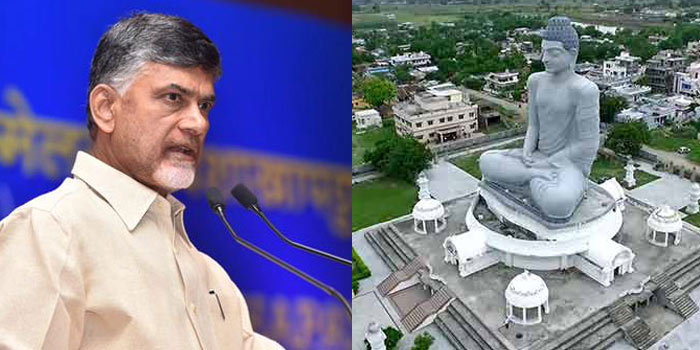
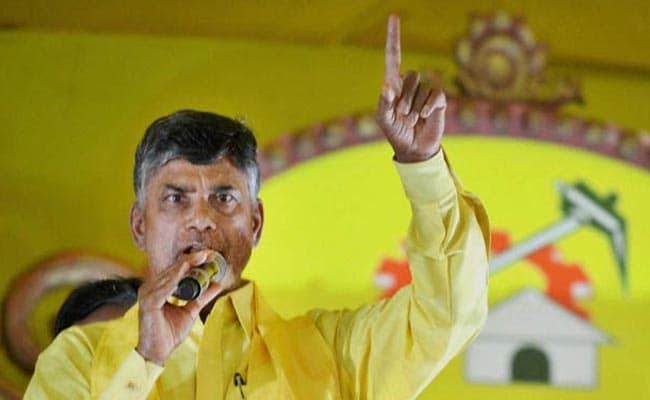
Chandrababu Naidu: The Technocrat King Who Rewired Indian Politics
Few political figures in modern India embody the collision of silicon and soil, satellites and seed, spreadsheets and scripture quite like Nara Chandrababu Naidu. Often described as the “CEO of Andhra Pradesh”, Naidu is more than a politician — he is a systems architect of governance, a futurist draped in khadi, a man who tried to code destiny into public policy.
Born in 1950 in the agrarian heartland of Chittoor district, Naidu rose from the red soil of Rayalaseema to become one of India’s most technologically imaginative and administratively consequential leaders. His life is a case study in political evolution — from Congress foot soldier to Telugu Desam revolutionary, from regional strongman to global technocrat, from fallen titan to phoenix king.
His story is not merely political history. It is a parable of modern India itself: how a nation sought to leap from bullock carts to broadband in a single generation.
From Dynasty Rebellion to Digital Governance
Naidu’s early political career in the 1970s under the Indian National Congress saw him rise rapidly through ministerial ranks. But history pivoted dramatically in 1995 when he orchestrated a daring internal revolt against his father-in-law, the legendary actor-turned-politician N.T. Rama Rao (NTR), founder of the Telugu Desam Party (TDP). It was a political coup straight out of Shakespeare — filial loyalty sacrificed at the altar of perceived inefficiency.
When Naidu assumed power as Chief Minister of united Andhra Pradesh, he brought with him a radically different vocabulary of leadership: performance indicators, real-time data, global investor roadshows, and e-governance dashboards. Indian politics had rarely seen a leader who spoke more fluently in PowerPoints than in populist poetry.
Cyberabad: When Silicon Met Sanskrit
The 1990s were Naidu’s renaissance years. While most Indian politicians spoke of subsidies, Naidu spoke of server farms.
He envisioned Hyderabad as Asia’s rising tech capital and rechristened its future identity as Cyberabad — a digital republic rising from Deccan basalt. He personally courted multinational technology firms, persuading Microsoft to establish its first development center outside the U.S. in Hyderabad in 1998, a move that sent seismic signals through India’s IT ecosystem.
Hi-Tech City became the crucible of this vision — luring IBM, Oracle, Google, and Deloitte. Meanwhile, Naidu pioneered e-Seva (now Mee Seva), digitizing government services long before “Digital India” entered national lexicon.
A defining moment came in 1999 when Naidu presented Andhra’s IT blueprint to U.S. President Bill Clinton using a laptop and PowerPoint — a first for an Indian leader in such a setting. It was an act symbolic of a new age: a Chief Minister speaking the language of Silicon Valley in the chambers of global power.
By 2004, Andhra Pradesh recorded annual growth exceeding 9%, its tech corridors glowing like fiber-optic arteries supplying oxygen to a rising economy.
The Double-Edged Sword of Modernity
Yet, like Icarus flying too close to the sun of innovation, Naidu’s hyper-focus on urban modernization sowed seeds of rural estrangement.
By 2019, the very technological grandiosity that once crowned him visionary alienated vast stretches of agrarian voters. The Amaravati project — a planned smart capital city — was seen by many as a futuristic mirage prioritizing skylines over sowing lines.
Farm distress, drought, irrigation neglect, and uneven welfare delivery formed a narrative that Jagan Mohan Reddy’s populism effectively weaponized. The result: a historic collapse — 23 seats out of 175, a near-political extinction.
Naidu later confessed that his obsession with metrics and international praise had distanced him from the pulse of the rural electorate. The technocrat had outpaced the tribal drumbeat of democracy.
The Phoenix Rises: 2024 and the Redemption Arc
Politics, however, loves resurrection.
In 2024, Naidu returned spectacularly. His TDP-led alliance swept 164 seats, unseating Jagan’s government and restoring Naidu as Chief Minister for a fourth time. At 75, he re-entered not as a wounded veteran but as a recalibrated strategist, positioning himself as a crucial ally within the NDA and a national kingmaker.
This time, the pitch was more textured: technology with tenderness, innovation with inclusion, growth with grounding. His narrative evolved from “smart state” to “smart & just state.”
Amaravati: The City as Manifest Destiny
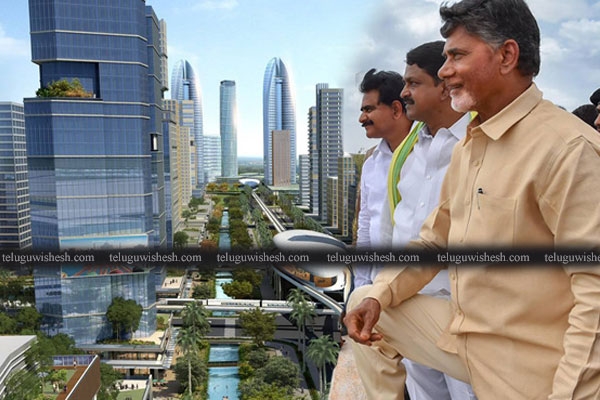
Amaravati is not merely a capital city — it is Naidu’s Sistine Chapel, his political Tag Mahal, his ideological blueprint in concrete and glass.
Designed by global maestros such as Foster + Partners, the city is envisioned as an eco-smart urban utopia featuring nine themed districts, green corridors, AI governance grids, and climate-resilient infrastructure. The land pooling from 30,000 farmers was hailed as the world’s largest consensual urban land reform.
Stalled under the previous regime’s three-capital proposal, Amaravati has been revived with renewed ferocity. It now stands poised to be a global benchmark in sustainable urban design — a model for the 21st-century postcolonial metropolis.
Swarna Andhra @2047: The Long Game
Naidu’s long-term vision is sci-fi in scale and civilizational in ambition. Under “Swarna Andhra @2047”, he envisions:
$2.4 trillion GSDP
$42,000 per capita income
15% sustained growth
20 million new jobs
500 GW renewable energy target
One entrepreneur per household
His strategy spans AI-led agriculture, quantum research hubs, drone logistics corridors, MSME parks, port-led industrialization, and female workforce amplification. It is governance as grand engineering project, civilization as startup.
Today’s Obsessions: AI, Quantum, Space, Green Energy
Naidu now speaks not just of IT but of:
Quantum Valleys
Drone Cities
Space Innovation Zones
AI Education Grids
Green Megaparks
Recent initiatives include:
$500 billion investment pipeline
Google’s AI data center campus
Reliance’s solar-powered AI facilities
Mana Mitra App delivering 751 services
Escrow-based transparency frameworks
This is no longer governance as ritual — it is governance as algorithm.
The Man and the Machine
True to his creed, Naidu lives his philosophy. From carrying laptops in the 90s to real-time decision dashboards integrated into daily routines today, he embodies the cyber-sannyasi: a monk of metrics, a yogi of YAML files.
Farmers meet him holding smartphones. Bureaucrats brief him with data visualization. Ministers answer to performance analytics.
He does not merely govern through technology — he governs as technology made flesh.
Legacy and Paradox
Naidu remains one of the most intellectually disruptive forces in Indian politics — a man who dared to make governance futuristic when the nation still walked barefoot on tradition.
He is simultaneously:
Visionary and vulnerable
Globalist and grassroots
Engineer and emperor
Innovator and institutionalist
Like a Renaissance prince ruling a digital republic, he is proof that politics, when infused with imagination and execution, can transcend cynicism and rewrite geography.
Conclusion: The Architect of Andhra’s Tomorrow
Chandrababu Naidu’s life is not just a political biography — it is a saga of transformation, hubris, humility, and resurrection. From Cyberabad to Amaravati, from collapse to coronation, his journey mirrors that of India’s own struggle to straddle tradition and technology.
In the grand tapestry of Indian democracy, Naidu stands as the rare figure who dared to imagine governance as a futuristic enterprise — and lived long enough to rule again in the age he foresaw.
The technocrat king has returned.
And Andhra, once again, hums to the sound of servers and soil in harmony.
चंद्रबाबू नायडू: वह टेक्नोक्रैट सम्राट जिसने भारतीय राजनीति को रीवायर कर दिया
आधुनिक भारत की राजनीति में बहुत कम ऐसे नेता हुए हैं जिन्होंने मिट्टी और सिलिकॉन, बीज और सैटेलाइट, धर्मग्रंथ और डैशबोर्ड को एक ही सांस में समेटा हो — और उनमें सबसे प्रमुख नाम है एन. चंद्रबाबू नायडू।
उन्हें अक्सर “आंध्र प्रदेश का CEO” कहा जाता है, पर वस्तुतः वे उससे कहीं अधिक हैं — वे शासन के शिल्पकार, भविष्य के वास्तुकार और खादी में लिपटा एक टेक-दार्शनिक हैं।
1950 में चित्तूर जिले के एक साधारण कृषक परिवार में जन्मे नायडू ने लाल मिट्टी से लेकर ग्लोबल मंचों तक की यात्रा तय की। उनका जीवन भारतीय राजनीति के विकास का जीवंत मानचित्र है — कांग्रेस कार्यकर्ता से तेलुगु देशम क्रांति तक, क्षेत्रीय नेता से राष्ट्रीय रणनीतिकार तक, और पतन से पुनर्जन्म तक।
यह सिर्फ एक राजनीतिक यात्रा नहीं — यह उस भारत की कथा है जिसने बैलगाड़ी से ब्रॉडबैंड तक छलांग लगाने का सपना देखा।
वंश विद्रोह से डिजिटल शासन तक
1970 के दशक में कांग्रेस से राजनीतिक जीवन आरंभ करने वाले नायडू ने शीघ्र ही प्रशासनिक दक्षता का परिचय दिया। किंतु 1995 में उन्होंने अपने ससुर, टी. एन. रामाराव (NTR) के विरुद्ध साहसिक राजनीतिक विद्रोह किया — मानो शेक्सपीयर का कोई नाट्य दृश्य जीवंत हो उठा हो।
मुख्यमंत्री बनने के बाद उन्होंने राजनीति की शब्दावली ही बदल दी: प्रदर्शन संकेतक, रीयल-टाइम डेटा, वैश्विक निवेश रोडशो और ई-गवर्नेंस डैशबोर्ड। भारतीय राजनीति ने पहली बार किसी नेता को पोस्टर की जगह पावरपॉइंट की भाषा बोलते देखा।
साइबराबाद: जब संस्कृत से मिला सिलिकॉन
1990 का दशक नायडू का स्वर्णकाल था। जब देश के नेता अनुदानों की बात कर रहे थे, नायडू सर्वर फार्म की योजना बना रहे थे।
उन्होंने हैदराबाद को एशिया के आईटी केंद्र के रूप में विकसित किया और इसे नाम दिया — साइबराबाद। 1998 में माइक्रोसॉफ्ट को अमेरिका के बाहर पहला विकास केंद्र खोलने के लिए उन्होंने राज़ी किया। यह एक ऐतिहासिक मोड़ था।
Hi-Tech City बनी नई अर्थव्यवस्था की प्रयोगशाला। IBM, Oracle, Google जैसे दिग्गजों का आगमन हुआ।
इ-सेवा (अब मी-सेवा) जैसे डिजिटल प्लेटफ़ॉर्म्स ने नौकरशाही और भ्रष्टाचार को तकनीक से चुनौती दी।
1999 में राष्ट्रपति बिल क्लिंटन के समक्ष नायडू का लैपटॉप पावरपॉइंट प्रस्तुतीकरण भारतीय कूटनीतिक इतिहास में एक नया अध्याय था — एक मुख्यमंत्री जो भविष्य की भाषा में संवाद कर रहा था।
आधुनिकता की दोधारी तलवार
लेकिन जैसे इकारस सूर्य के निकट उड़ते-उड़ते जल गया, वैसे ही नायडू की अति-टेक्नो नीति ने ग्रामीण जनता से दूरी बना दी।
2019 में अमरावती स्मार्ट सिटी परियोजना को कई लोगों ने भविष्य का सपना नहीं, वर्तमान की उपेक्षा माना। किसान संकट, सिंचाई विफलता और सब्सिडी की अनदेखी ने जगन मोहन रेड्डी की जनकल्याणकारी राजनीति को अवसर दिया।
परिणाम: 175 में सिर्फ 23 सीटें — राजनीतिक धराशायीकरण।
फीनिक्स की तरह पुनर्जन्म: 2024
लेकिन राजनीति पुनर्जीवन की भी कथा है।
2024 में नायडू ने भाजपा और जनसेना के साथ मिलकर ऐतिहासिक वापसी की और 164 सीटें हासिल कर पुनः मुख्यमंत्री बने। यह पुनरागमन नहीं — पुनर्रचना थी।
इस बार उनका स्वर बदला हुआ था — तकनीक के साथ करुणा, विकास के साथ समावेशन।
अमरावती: एक विचार का नगर
अमरावती नायडू के लिए राजधानी नहीं — दर्शन है।
फोस्टर + पार्टनर्स जैसे वैश्विक वास्तुविदों द्वारा डिज़ाइन की गई यह स्मार्ट सिटी AI, हरित तकनीक और जलवायु अनुकूल ढाँचे की प्रयोगशाला है।
30,000 किसानों द्वारा भूमि पूलिंग को विश्व की सबसे बड़ी सहमतिपूर्ण शहरी सुधार परियोजना माना जाता है।
स्वर्ण आंध्र @2047: भविष्य का घोषणापत्र
नायडू का लक्ष्य है:
$2.4 ट्रिलियन GSDP
$42,000 प्रति व्यक्ति आय
15% वार्षिक वृद्धि
20 मिलियन रोजगार
500 GW नवीकरणीय ऊर्जा
हर परिवार में एक उद्यमी
AI आधारित कृषि, क्वांटम रिसर्च, ड्रोन लॉजिस्टिक्स और महिला कार्यबल विस्तार — यह सब मिलकर आंध्र को 21वीं सदी की टेक सुपरपावर बनाने का विज़न रचते हैं।
आज की तकनीकी दीवानगी
आज नायडू की दृष्टि AI, क्वांटम कंप्यूटिंग, ड्रोन और ग्रीन एनर्जी पर केंद्रित है:
ड्रोन सिटी
क्वांटम वैली
स्पेस इनोवेशन ज़ोन
मना मित्रा ऐप: 751 सेवाएँ
₹500 बिलियन निवेश आकर्षण
यह शासन अब अनुष्ठान नहीं — एल्गोरिद्म आधारित दर्शन है।
मनुष्य और मशीन का संगम
नायडू सिर्फ तकनीक के प्रचारक नहीं — उसके प्रतीक हैं।
90 के दशक में लैपटॉप लेकर चलने वाले वे पहले भारतीय मुख्यमंत्री थे। आज उनका दिन डैशबोर्ड एनालिटिक्स से प्रारंभ होता है।
विरासत और विरोधाभास
वे हैं—
दूरदर्शी और तापीय
अभिजात और जनमूल
वैज्ञानिक और संत
सम्राट और साधक
वे उस भारत का चेहरा हैं जो परंपरा और नवाचार के बीच पुल बनाना चाहता है।
निष्कर्ष: आंध्र का भविष्य निर्माता
चंद्रबाबू नायडू केवल नेता नहीं, युग निर्माता हैं।
उनकी यात्रा — पतन से पुनरुत्थान तक — इस बात का प्रमाण है कि जब कल्पना को प्रशासन से जोड़ा जाए, तो राजनीति पुनराविष्कार बन जाती है।
टेक्नोक्रैट सम्राट लौट आया है।
और आंध्र अब फिर से मिट्टी और मशीन की संयुक्त ध्वनि में गूंज रहा है।
Swarna Andhra @2047: The Grand Alchemy of a Golden Future
Swarna Andhra @2047 is not merely a government program. It is a civilizational blueprint, a long-horizon manifesto, and an audacious act of collective imagination. Unveiled by Andhra Pradesh Chief Minister N. Chandrababu Naidu, the vision seeks to transform the state into one of the world’s most dynamic and prosperous regions by the centenary of India’s Independence in 2047.
If Viksit Bharat @2047 is the national symphony, Swarna Andhra is the coastal crescendo — a region tuning its soil, sea, skills, and silicon to the frequency of the future. The promise is nothing less than a “wealthy, healthy, and happy Andhra Pradesh,” where growth is not just fast, but fair; not just intelligent, but compassionate.
From Vision 2020 to Vision 2047: The Evolution of an Idea
Swarna Andhra builds upon Naidu’s earlier experiments in developmental futurism. In the 1990s, Vision 2020 promised “one IT professional per family.” Today, that dream has matured into “one family, one entrepreneur” — signaling a shift from employment to enterprise, from job-seeking to job-creating, from survival economics to prosperity architecture.
What distinguishes this vision is its scale and method. It is not designed in ivory towers but forged through 1.8 million citizen consultations across villages, towns, diaspora forums, universities, and industry councils. This is governance as conversation — democracy practiced not merely as election, but as continuous dialogue.
The Architecture of a Transformation
Formally launched in November 2024 in the Andhra Pradesh Assembly, Swarna Andhra @2047 is anchored by a Task Force co-chaired by Tata Sons Chairman N. Chandrasekaran, with strategic support from the Confederation of Indian Industry and a constellation of sectoral experts. The Task Force report, unveiled in New Delhi in July 2025, articulates policy recalibrations, infrastructure strategies, investment models, and governance reforms.
At its heart lies the P-4 Model — Public-Private-People Partnership — a living triangle of governance that reframes citizens not as passive beneficiaries but as co-creators of development. This is democracy evolving from representation to participation.
Economic Aspirations: Turning a State into a Super-Economy
The numerical ambitions are staggering, and deliberately so:
GSDP to grow from ₹14.22 lakh crore (2023–24) to ₹308 lakh crore ($2.4 trillion) by 2047
Sustained 15% annual growth rate over two decades
Per capita income rising from ₹2.66 lakh to ₹55 lakh ($42,000+)
Andhra poised as India’s leading economy per capita
These numbers are not mere targets; they are coordinates on a map of transformation — a declaration that Andhra Pradesh intends to leapfrog from middle-income reality to high-of-the-world prosperity.
A New Social Contract: Prosperity with Purpose
Economic power, in Swarna Andhra, is inseparable from social dignity. The vision commits to:
Zero Poverty: Uplifting 2.2 million people out of deprivation
100% Literacy and universal digital fluency
Life expectancy rising to 85 years
Female labour force participation reaching 80%
Urbanization balanced at 60%
Unemployment below 2%
By 2029, every household is promised:
24x7 electricity • Clean drinking water • Sanitation • LPG • Internet • Housing • Solar rooftops
If the 20th century promise was survival, Swarna Andhra imagines the 21st as flourishing.
The Padi Sutralu: Ten Pillars of the Future
Like the Ten Commandments of a sustainable civilization, Swarna Andhra rests on the Padi Sutralu — guiding philosophies that fuse economics with ethics:
Zero Poverty
Skilling, Employment & MSME Growth
Population Management & Human Development
Water Sovereignty
Agri-Tech Empowerment
Global Logistics Leadership
Energy Efficiency & Climate Responsibility
Product Excellence & Innovation
Swachh Andhra & Livability
Deep Tech Integration Across Life
These are not bureaucratic bullet points. They are moral coordinates for a development model anchored in dignity.
Sectoral Renaissance: A Multi-Dimensional Uprising
🌾 Agriculture as AI-driven Abundance
From drone-based crop monitoring to IoT irrigation and natural farming collectives, agriculture is reimagined as precision science, high-value export chain, and farmer-led entrepreneurship.
🏭 Industry and MSMEs
175 industrial parks, coastal economic corridors, manufacturing zones, and sectoral clusters will create half a million jobs, with farmers becoming equity stakeholders.
🎓 Education & Skill Revolution
Integrated curricula, skill passports, remote learning centers, and employability-linked training aim at zero dropouts and a generation fluent in both logic and livelihood.
🏥 Healthcare: AI Meets Ayurveda
Digital Nerve Centres will deliver virtual consultations and predictive healthcare. Ayurveda hubs in Araku and Tirupati blend ancient wisdom with modern diagnostics.
🚀 Technology & Innovation
Drone Cities. Quantum Valleys. Space Innovation Zones. Andhra’s cities are envisioned as living laboratories of the future economy.
🌱 Environmental Stewardship
Green hydrogen hubs, net-zero ambitions, blue economy strategies, and climate resilience redefine sustainability as strategy, not sentiment.
Governing the Dream: Execution as Discipline
Implementation is decentralized yet synchronized:
District Vision Management Units track progress
MLAs lead constituency visions
Theme-specific task forces monitor execution
Real-time dashboards ensure transparency
Citizen satisfaction becomes a KPI
This is governance treated as a living algorithm, responsive, reflective, evolving.
Bridging Gaps, Bridging Futures
Backward districts and coastal-rural imbalances are directly addressed with adaptive policy corridors, green finance, and knowledge cluster decentralization. Swarna Andhra does not erase inequity by ignoring it — it outpaces inequity by redesigning opportunity.
Conclusion: A Golden Arc Across Time
Swarna Andhra @2047 is not a file in a ministry cabinet. It is a promise crystallized into policy, hope engineered into infrastructure, and imagination translated into measurable destiny.
Under Naidu’s stewardship, Andhra Pradesh is charting a path where:
The farmer becomes a technologist.
The village becomes a startup.
The coastline becomes a launchpad.
And prosperity becomes a shared inheritance.
In the long river of history, Swarna Andhra is a deliberate turn — not drifting toward the future, but steering it.
By 2047, Andhra does not seek to merely exist in the developed world.
It seeks to define it.
यह रहा आपके लेख का परिष्कृत, साहित्यिक और विचारोत्तेजक शैली में पूर्ण हिन्दी अनुवाद:
स्वर्ण आंध्र @2047: एक स्वर्णिम भविष्य की महागाथा
स्वर्ण आंध्र @2047 केवल एक सरकारी योजना नहीं है। यह एक सभ्यतागत दृष्टिपत्र, दीर्घकालिक घोषणापत्र और सामूहिक कल्पना का साहसिक संकल्प है। आंध्र प्रदेश के मुख्यमंत्री एन. चंद्रबाबू नायडू द्वारा प्रस्तुत यह दृष्टि 2047 तक — भारत की स्वतंत्रता की शताब्दी पर — राज्य को विश्व के सबसे गतिशील और समृद्ध क्षेत्रों में परिवर्तित करने का लक्ष्य रखती है।
यदि विकसित भारत @2047 राष्ट्रीय सिम्फनी है, तो स्वर्ण आंध्र उसकी तटीय आरोह है — जहाँ मिट्टी, समुद्र, कौशल और सिलिकॉन भविष्य की आवृत्ति पर सामंजस्य बैठा रहे हैं। यह केवल समृद्ध आंध्र नहीं, बल्कि एक “धनी, स्वस्थ और प्रसन्न आंध्र प्रदेश” का संकल्प है — जहाँ विकास तेज़ ही नहीं, न्यायपूर्ण भी हो; बुद्धिमान ही नहीं, संवेदनशील भी हो।
विज़न 2020 से विज़न 2047 तक: एक विचार का विकास
स्वर्ण आंध्र नायडू की पूर्व विकासवादी पहलों का परिपक्व संस्करण है। 1990 के दशक में विज़न 2020 का लक्ष्य था — “हर परिवार में एक आईटी प्रोफेशनल।” आज यह रूपांतरित होकर बन गया है — “एक परिवार, एक उद्यमी” — जो जीविका आधारित समाज से उद्यमशील समाज की ओर संक्रमण का प्रतीक है।
इस दृष्टि की विशेषता इसका विशाल पैमाना और इसकी लोकतांत्रिक प्रक्रिया है। यह किसी बंद कार्यालय में नहीं, बल्कि 18 लाख नागरिक संवादों के माध्यम से गढ़ा गया — गाँवों, कस्बों, प्रवासियों, विश्वविद्यालयों और उद्योग परिषदों के साथ। यह शासन है — केवल चुनाव नहीं, बल्कि सतत सहभागिता।
परिवर्तन की संरचना
नवंबर 2024 में आंध्र प्रदेश विधानसभा में औपचारिक रूप से प्रस्तुत इस योजना की आधारशिला है एक टास्क फोर्स, जिसके सह-अध्यक्ष हैं टाटा संस के चेयरमैन एन. चंद्रशेखरन। इसमें Confederation of Indian Industry (CII) और अनेक क्षेत्रीय विशेषज्ञ भी जुड़े हैं। जुलाई 2025 में दिल्ली में प्रस्तुत इस टास्क फोर्स रिपोर्ट ने बुनियादी ढाँचा, नीति सुधार और निवेश मॉडल की रूपरेखा तैयार की।
इस योजना की आत्मा है —
P-4 मॉडल: Public-Private-People Partnership
जो नागरिकों को केवल लाभार्थी नहीं, बल्कि विकास के सह-निर्माता के रूप में स्थापित करता है।
आर्थिक लक्ष्य: एक राज्य से महासत्ता तक
स्वर्ण आंध्र के आर्थिक लक्ष्य अभूतपूर्व हैं:
GSDP ₹14.22 लाख करोड़ से बढ़कर ₹308 लाख करोड़ ($2.4 ट्रिलियन)
15% वार्षिक विकास दर
प्रति व्यक्ति आय ₹2.66 लाख से ₹55 लाख ($42,000+)
भारत में सर्वाधिक समृद्ध राज्य बनना
ये मात्र आँकड़े नहीं, बल्कि भविष्य का मानचित्र हैं — यह घोषणा है कि आंध्र प्रदेश वैश्विक स्तर पर नेतृत्व की ओर अग्रसर है।
एक नई सामाजिक संधि: समावेशी समृद्धि
आर्थिक विकास के साथ सामाजिक गरिमा भी:
शून्य गरीबी: 22 लाख लोगों का उत्थान
100% साक्षरता
औसत आयु 85 वर्ष
महिला श्रम भागीदारी 80%
शहरीकरण 60%
बेरोज़गारी 2% से कम
2029 तक प्रत्येक परिवार को:
24x7 बिजली, स्वच्छ जल, शौचालय, एलपीजी, इंटरनेट, आवास और सोलर रूफटॉप
पादी सूत्रालु: भविष्य के दस स्तंभ
स्वर्ण आंध्र की नींव दस मार्गदर्शक तत्वों पर है:
शून्य गरीबी
कौशल विकास एवं रोजगार
जनसंख्या प्रबंधन
जल सुरक्षा
कृषि तकनीकी नवाचार
विश्वस्तरीय लॉजिस्टिक्स
ऊर्जा दक्षता
उत्पाद उत्कृष्टता
स्वच्छ आंध्र
गहन तकनीकी समावेशन
ये केवल प्रशासनिक लक्ष्य नहीं, बल्कि एक नैतिक विकास की आधारशिला हैं।
क्षेत्रीय पुनर्जागरण
🌾 कृषि: AI से समृद्धि
ड्रोन निगरानी, स्मार्ट सिंचाई, प्राकृतिक खेती और निर्यात श्रृंखला।
🏭 उद्योग एवं MSME
175 औद्योगिक पार्क, तटीय आर्थिक गलियारे और 5 लाख रोजगार।
🎓 शिक्षा एवं कौशल
शून्य ड्रॉपआउट, स्किल पासपोर्ट और डिजिटल साक्षरता।
🏥 स्वास्थ्य
Digital Nerve Centres से AI आधारित चिकित्सा और आयुर्वेदिक केंद्र।
🚀 प्रौद्योगिकी
Drone City, Quantum Valley और Space Innovation Zones।
🌱 पर्यावरण
हरित ऊर्जा, जलवायु पुनर्संरेखण और नेट-ज़ीरो लक्ष्य।
शासन का सुपर-संरचना
जिला विज़न यूनिट्स
MLA-नेतृत्व में क्षेत्रीय स्पष्टीकरण
रीयल-टाइम डैशबोर्ड
नागरिक संतुष्टि KPI
यह प्रशासन नहीं — एक जीवित प्रणाली है।
समान अवसरों की नई परिभाषा
पिछड़े ज़िलों के लिए विशेष नीति, ग्रीन फाइनेंस और डिजिटल विकेंद्रीकरण के माध्यम से अवसरों का पुनर्वितरण।
निष्कर्ष: स्वर्णिम आकांक्षा की पूर्णता
स्वर्ण आंध्र @2047 एक नीति नहीं, बल्कि आकांक्षा है — एक वादा जिसे इंफ्रास्ट्रक्चर में ढाला गया है, एक विचार जिसे शासन ने मूर्त रूप दिया है।
जहाँ किसान तकनीकज्ञ बनता है।
जहाँ गाँव स्टार्टअप बनते हैं।
जहाँ समुद्र तट लॉन्चपैड बनते हैं।
और समृद्धि साझा विरासत होती है।
2047 तक आंध्र सिर्फ विकसित राष्ट्रों में शामिल नहीं होगा —
वह विकास की परिभाषा लिखेगा।
Viksit Bharat 2047: India’s Grand Ascent Toward a Civilizational Renaissance
An Idea Larger Than a Policy
Viksit Bharat 2047 is not merely an administrative program or a technocratic checklist. It is a national meditation on destiny — a long, luminous arc drawn across a century of independence, from the midnight sigh of 1947 to the sunrise of 2047. Conceived under the leadership of Prime Minister Narendra Modi, this vision imagines India not simply as a developed nation, but as a confident civilization reclaiming its role as a moral, technological, and economic axis of the world.
If the 20th century was India’s struggle for voice, the 21st is envisioned as its great symphony — where steel and silicon, scripture and satellite, village well and quantum computer resonate in choreographed harmony. Viksit Bharat stands as the architectural language of this aspiration: a blueprint where policy meets poetry, GDP metrics coexist with cultural memory, and progress is measured not solely in numbers, but in dignity.
Rooted in the concept of Amrit Kaal — the 25-year nectar period from 2022 to 2047 — the initiative signals a historic transition: from Swatantra Bharat (Independent India) to Samriddha Bharat (Prosperous India). It fuses Atmanirbhar Bharat (self-reliance) with strategic global engagement, crafting a model where sovereignty and interdependence co-exist like twin currents in a monsoon river.
The Vision: A Prosperous, Inclusive, and Sustainable Republic
At its core, Viksit Bharat 2047 imagines India as:
A high-income economy powered by advanced manufacturing and global services
A nation with universal access to education, healthcare, housing, and digital connectivity
A society where poverty is statistically insignificant and opportunity is structurally guaranteed
A global steward of climate action and renewable energy innovation
Its unofficial ethos — "Bold Vision. Brighter Future." — is not just a slogan but a civilizational compass, pointing toward a future where technological ascendancy coexists with cultural rootedness, and where drones and dharmic ethics share the same skyline.
The vision is articulated across five grand themes:
Empowered Indians – health, education, women, culture, social security
Thriving & Sustainable Economy – industry, infrastructure, green transition
Innovation, Science & Technology – startups, R&D, digital transformation
Good Governance & Security – rule of law, streamlined institutions, national safety
India in the World – diplomacy, global influence, leadership in multilateral forums
Central to this architecture is Jan Bhagidari — participatory citizenship. Over one million citizens have shaped this vision via digital consultations, making governance less a decree and more a dialogue.
Economic Horizon: From Aspiration to Ascension
Viksit Bharat charts an audacious economic trajectory:
GDP projected to reach $30–40 trillion
Per capita income soaring from $2,600 to $15,000–18,000
Annual growth target of 7–10% sustained for two decades
India shall not merely grow — it shall structurally transform, becoming a hub for global manufacturing, digital exports, innovation clusters, clean tech, and knowledge services. This is economics not as survival, but as expression.
By 2047, the ambition is for India to rise decisively into the league of high-income nations while preserving its social pluralism and democratic spine.
Social Justice as National Infrastructure
Viksit Bharat does not sacrifice equity at the altar of efficiency. Instead, it redefines development as a moral ecosystem.
Targeted social outcomes include:
100% literacy
Life expectancy over 80 years
Poverty rate below 5%
Female workforce participation above 70%
Universal internet and health coverage
The idea of prosperity here transcends wealth — it becomes the capacity of every citizen to imagine, access, and shape opportunity.
The Four Foundational Pillars
Viksit Bharat rests on the empowerment of four core demographics:
Yuva (Youth) – the demographic dividend and creative engine
Garib (The Poor) – the moral measure of progress
Mahilayen (Women) – economic and social catalysts
Annadata (Farmers) – guardians of food sovereignty
Around them revolve six strategic expansions: green leadership, industrial revival, tourism growth, Indian knowledge system resurgence, global market presence, and inclusive diplomacy.
Sectoral Symphony: Progress in Motion
🏭 Economy & Industry
PLI schemes, MSME expansion, and PM Gati Shakti seek to convert India into the workshop of the world.
🎓 Education & Skills
NEP 2020, digital learning, skilling missions, and innovation labs are engineering a generation fluent in both tradition and tomorrow.
🏥 Healthcare
Ayushman Bharat, telemedicine, AI diagnostics, and child nutrition initiatives strive toward compassionate universal access.
🚀 Innovation
From Chandrayaan-3 to Bharat AI Shakti, India is scripting its space-age epic, redefining what postcolonial nations can achieve.
🌱 Sustainability
Green hydrogen, biofuels, solar dominance, and net-zero strategies intertwine environment with enterprise.
⚖ Governance
Over 41,000 compliances scrapped, UPI/GST modernization, and legal reforms architect a transparent state.
Governance as a Living System
Implementation is collaborative and multiscalar:
NITI Aayog oversees strategy
State governments align execution
Citizens participate via MyGov
Youth leadership programs nurture involvement
Private enterprises co-create innovation
This is governance as an ecosystem, not a hierarchy — as choreography, not command.
Facing the Frictions
Regional inequality, infrastructural lags, and socio-political complexities remain. Yet targeted missions and district-specific strategies aim to dissolve inequity through opportunity, not appeasement.
The Metaphor of a Nation
Viksit Bharat 2047 invites India to look at itself not just as a nation-state, but as a narrative of resilience — from the Vedas to the blockchain, from the spinning wheel to the satellite launchpad.
In this grand design:
The village becomes a node of innovation
The youth becomes architect of the epoch
The diaspora becomes ambassador of aspiration
India does not merely build roads — it builds continuity between centuries.
Conclusion: The Future as Inheritance
Viksit Bharat 2047 is not a policy alone — it is a national vow written in both ambition and accountability. It calls upon every generation to contribute a stanza to the epic of progress.
By 2047, India seeks not only to be developed — but to redefine what development truly means.
Not just a nation among giants.
But a giant among nations.
A civilization reborn — not by accident of history, but by choreography of will.
विकसित भारत 2047: एक सभ्यतागत पुनर्जागरण की ओर भारत की महायात्रा
नीति से कहीं बड़ा एक विचार
विकसित भारत 2047 केवल एक सरकारी कार्यक्रम या तकनीकी चेकलिस्ट नहीं है। यह राष्ट्र की नियति पर किया गया एक गहन ध्यान है — स्वतंत्रता के सौ वर्षों में फैली एक दीप्तिमान चाप, जो 1947 की आधी रात की आह से 2047 के सूर्योदय तक जाती है। प्रधानमंत्री नरेन्द्र मोदी के नेतृत्व में परिकल्पित यह दृष्टि भारत को केवल एक विकसित राष्ट्र ही नहीं, बल्कि विश्व का नैतिक, तकनीकी और आर्थिक ध्रुव बनने वाला आत्मविश्वासी सभ्यतागत केंद्र कल्पित करती है।
यदि 20वीं सदी भारत की आवाज़ की खोज थी, तो 21वीं सदी उसकी महान सिम्फनी बनने की आकांक्षा है — जहाँ इस्पात और सिलिकॉन, शास्त्र और उपग्रह, ग्राम्य कुआँ और क्वांटम कंप्यूटर एक समरस राग में नाद करते हैं। विकसित भारत इसी आकांक्षा की स्थापत्य भाषा है: एक ऐसा खाका जहाँ नीति और कविता मिलती हैं, GDP के आँकड़े सांस्कृतिक स्मृति के साथ सह-अस्तित्व रखते हैं, और प्रगति का मापन केवल संख्याओं से नहीं, बल्कि गरिमा से होता है।
अमृत काल की अवधारणा — 2022 से 2047 का 25-वर्षीय कालखण्ड — इस ऐतिहासिक संक्रमण का संकेत देती है: स्वतंत्र भारत से समृद्ध भारत की ओर। यह आत्मनिर्भर भारत को वैश्विक सहभागिता के साथ जोड़ती है, जहाँ संप्रभुता और परस्परावलंबन मानसूनी नदी की दो धाराओं की तरह साथ बहते हैं।
दृष्टिकोण: समृद्ध, समावेशी और सतत गणराज्य
विकसित भारत 2047 भारत की कल्पना करता है:
उन्नत विनिर्माण और वैश्विक सेवाओं से संचालित उच्च-आय अर्थव्यवस्था के रूप में
सार्वभौमिक शिक्षा, स्वास्थ्य, आवास और डिजिटल कनेक्टिविटी से युक्त राष्ट्र के रूप में
ऐसी समाज व्यवस्था जहाँ गरीबी सांख्यिकीय रूप से नगण्य हो और अवसर संरचनात्मक रूप से सुनिश्चित हों
जलवायु कार्रवाई और नवीकरणीय ऊर्जा नवाचार के वैश्विक संरक्षक के रूप में
इसका अनौपचारिक सूत्र — "सशक्त दृष्टि, उज्ज्वल भविष्य" — केवल नारा नहीं, बल्कि सभ्यतागत दिशा-सूचक है, जहाँ तकनीकी उत्कर्ष सांस्कृतिक जड़ों के साथ सहजीवन करता है, और ड्रोन तथा धर्मिक नैतिकता एक ही क्षितिज साझा करते हैं।
यह दृष्टि पाँच व्यापक विषयों में अभिव्यक्त होती है:
सशक्त नागरिक – स्वास्थ्य, शिक्षा, महिला सशक्तिकरण, संस्कृति, सामाजिक सुरक्षा
समृद्ध व सतत अर्थव्यवस्था – उद्योग, आधारभूत संरचना, हरित संक्रमण
नवाचार, विज्ञान व प्रौद्योगिकी – स्टार्टअप, अनुसंधान, डिजिटल परिवर्तन
सुशासन एवं सुरक्षा – विधि का शासन, सुव्यवस्थित संस्थाएँ, राष्ट्रीय सुरक्षा
विश्व में भारत – कूटनीति, वैश्विक प्रभाव, बहुपक्षीय नेतृत्व
इस संरचना का हृदय है जन भागीदारी — सहभागी नागरिकता। दस लाख से अधिक नागरिकों ने डिजिटल परामर्शों के माध्यम से इस दृष्टि को आकार दिया है, जिससे शासन आदेश से अधिक संवाद बन गया है।
आर्थिक क्षितिज: आकांक्षा से आरोहण तक
विकसित भारत एक साहसिक आर्थिक यात्रा का मानचित्र खींचता है:
GDP का अनुमानित आकार 30–40 ट्रिलियन डॉलर
प्रति व्यक्ति आय 2,600 डॉलर से बढ़कर 15,000–18,000 डॉलर
दो दशकों तक 7–10% की सतत वार्षिक वृद्धि
भारत केवल बढ़ेगा ही नहीं — वह संरचनात्मक रूप से रूपांतरित होगा, वैश्विक विनिर्माण, डिजिटल निर्यात, नवाचार क्लस्टर, स्वच्छ तकनीक और ज्ञान-आधारित सेवाओं का केंद्र बनेगा। यह अर्थव्यवस्था अब केवल जीविका का साधन नहीं, बल्कि अभिव्यक्ति का माध्यम होगी।
2047 तक भारत का लक्ष्य उच्च-आय राष्ट्रों की श्रेणी में निर्णायक रूप से प्रवेश करना है, अपनी सामाजिक बहुलता और लोकतांत्रिक रीढ़ को अक्षुण्ण रखते हुए।
सामाजिक न्याय: राष्ट्रीय आधारभूत संरचना
विकसित भारत समानता को दक्षता के वेदी पर बलि नहीं चढ़ाता; बल्कि विकास को नैतिक पारिस्थितिकी के रूप में पुनर्परिभाषित करता है।
लक्षित सामाजिक परिणाम:
100% साक्षरता
औसत आयु 80 वर्ष से अधिक
गरीबी दर 5% से कम
महिला कार्यबल भागीदारी 70% से अधिक
सार्वभौमिक इंटरनेट व स्वास्थ्य कवरेज
यहाँ समृद्धि का अर्थ केवल संपन्नता नहीं, बल्कि प्रत्येक नागरिक की वह क्षमता है जिससे वह अवसर की कल्पना, पहुँच और सृजन कर सके।
चार आधार स्तम्भ
विकसित भारत चार मूल वर्गों के सशक्तीकरण पर टिका है:
युवा – जनसांख्यिकीय लाभांश और सृजनात्मक इंजन
गरीब – प्रगति का नैतिक मापदण्ड
महिलाएँ – आर्थिक व सामाजिक उत्प्रेरक
अन्नदाता – खाद्य संप्रभुता के संरक्षक
इनके इर्द-गिर्द छह रणनीतिक विस्तार हैं: हरित नेतृत्व, औद्योगिक पुनरुत्थान, पर्यटन विस्तार, भारतीय ज्ञान प्रणालियों का पुनर्जागरण, वैश्विक बाज़ार उपस्थिति और समावेशी कूटनीति।
क्षेत्रीय सिम्फनी: गतिमान प्रगति
🏭 अर्थव्यवस्था व उद्योग
PLI योजनाएँ, MSME विस्तार और पीएम गति शक्ति भारत को विश्व की कार्यशाला में रूपांतरित करने का प्रयत्न करती हैं।
🎓 शिक्षा व कौशल
NEP 2020, डिजिटल शिक्षण, कौशल मिशन और नवाचार प्रयोगशालाएँ परंपरा और भविष्य में निपुण पीढ़ी का निर्माण कर रही हैं।
🏥 स्वास्थ्य
आयुष्मान भारत, टेलीमेडिसिन, AI-निदान और बाल-पोषण पहलें करुणामय सार्वभौमिक पहुँच की दिशा में अग्रसर हैं।
🚀 नवाचार
चंद्रयान-3 से भारत AI शक्ति तक, भारत अपना अंतरिक्ष-युग महाकाव्य रच रहा है।
🌱 सततता
हरित हाइड्रोजन, जैव ईंधन, सौर प्रभुत्व और नेट-ज़ीरो रणनीतियाँ पर्यावरण को उद्यम के साथ गूँथती हैं।
⚖ शासन
41,000 से अधिक अनुपालन समाप्त, UPI/GST आधुनिकीकरण और विधिक सुधार पारदर्शी राज्य की रूपरेखा बनाते हैं।
शासन: एक जीवित प्रणाली
कार्यान्वयन बहु-स्तरीय सहयोग से होता है:
नीति आयोग रणनीति की निगरानी करता है
राज्य सरकारें क्रियान्वयन समन्वय करती हैं
नागरिक MyGov के माध्यम से भागीदारी करते हैं
युवा नेतृत्व कार्यक्रम सहभागिता को पोषित करते हैं
निजी क्षेत्र नवाचार सह-निर्मित करता है
यह शासन पदानुक्रम नहीं, बल्कि पारिस्थितिकी है — आदेश नहीं, बल्कि कोरियोग्राफी।
चुनौतियों का सामना
क्षेत्रीय असमानता, बुनियादी ढाँचागत अंतराल और सामाजिक-राजनीतिक जटिलताएँ बनी रहती हैं। परंतु लक्षित मिशन और जनपद-विशिष्ट रणनीतियाँ तुष्टिकरण से नहीं, अवसर के पुनर्रचना से विषमता का समाधान करती हैं।
राष्ट्र का रूपक
विकसित भारत 2047 भारत को केवल राष्ट्र-राज्य नहीं, बल्कि लचीलेपन की कथा के रूप में देखने का आमंत्रण देता है — वेदों से ब्लॉकचेन तक, चरखे से उपग्रह प्रक्षेपण तक।
इस महायोजना में:
गाँव नवाचार का नोड बनता है
युवा युग का शिल्पकार बनता है
प्रवासी आकांक्षा का राजदूत बनता है
भारत केवल सड़कें नहीं बनाता — वह सदियों के बीच निरंतरता रचता है।
निष्कर्ष: भविष्य एक उत्तराधिकार
विकसित भारत 2047 केवल नीति नहीं — यह महत्वाकांक्षा और उत्तरदायित्व में लिखा राष्ट्रीय व्रत है। यह हर पीढ़ी से प्रगति के महाकाव्य में अपना पद जोड़ने का आह्वान करता है।
2047 तक भारत का लक्ष्य केवल विकसित होना नहीं — बल्कि यह पुनर्परिभाषित करना है कि विकास का अर्थ क्या है।
सिर्फ महान राष्ट्रों में एक राष्ट्र नहीं।
बल्कि राष्ट्रों में एक महान राष्ट्र।
इतिहास की आकस्मिकता से नहीं —
इच्छाशक्ति की सुव्यवस्थित कोरियोग्राफी से पुनर्जन्म लेती सभ्यता।
Chandrababu Naidu built Hyderabad. He lost it to the bifurcation. Hyderabad is now in Telangana. He is now building Amravati from scratch. He claims it will be among the top five cities in the world "by every parameter."
He has had financial issues. He has been pestering the government in Delhi for additional funds.
I think he should go to global financial markets.
He acquired land for the city through land pooling. That is a beautiful concept. Similar out of the box thinking could take care of the cash crunches that the building of the city might bring forth.
Amravati should not only be the capital of Andra Pradesh. It should also be a knowledge city that hosts the industries of tomorrow. And it should create and sell bonds and raise money in the global financial markets perhaps at 5% interest rates. A knowledge city should be able to generate enough revenue to pay the interest on the bonds for the near future.
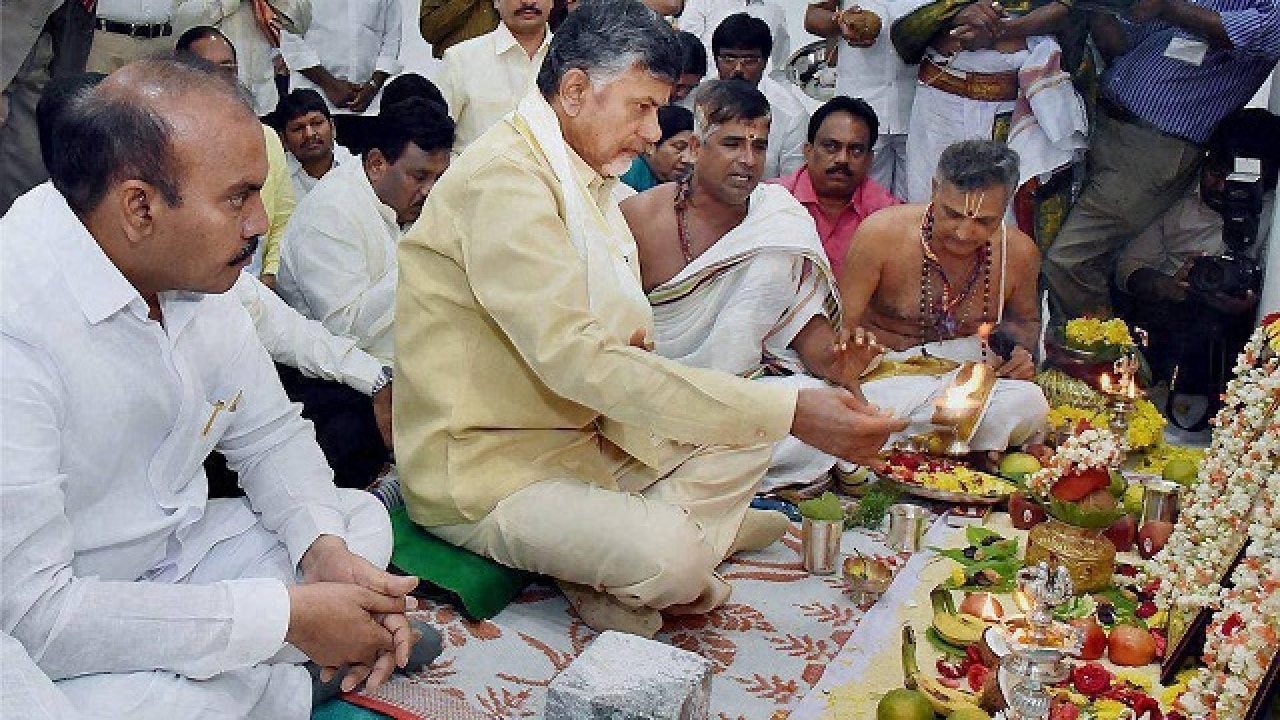
Investor’s faith in Amaravati bonds reflects trust in AP: Naidu Former Britain PM Tony Blair visits Amaravati, praises Naidu's Real Time Governance Naidu plans mother of all B-schools in Amaravati. He built the global IT hub of Hyderabad from the ground up, but lost it after Andhra Pradesh split. Not one to wallow over losses, Andhra Pradesh chief minister N Chandrababu Naidu is back to doing what he does best – building world-class institutions like the Indian School of Business (ISB), Hyderabad. ...... is busy drawing up a blueprint to set up a premier institute of excellence in the public private partnership mode to outshine ISB. ....... The institution is proposed to be set up in the Amaravati capital region over nearly 100 acres at a cost of 500 crore. For this, he plans to rope in the best of the best of the global academic world like the London School of Economics, Harvard Kennedy School, National University of Singapore as well as the University of Birmingham as well as the who’s who of the global corporate world. Various UN agencies, the World Bank, ADB and Bill & Melinda Gates Foundation are some of the other intended global partners for the project. ....... The idea is that each of the 10 or more industry partners would contribute 50 crore under their CSR head and would be part of the governing board ....... And Naidu has found the man for the job – Pramath Raj Sinha, founding dean of ISB and co-founder of Ashoka University. ....... The institution of global scale would offer very refined MBAs with specializations in niche segments. “The institute will be an independent, non-partisan and non-profit organisation. It shall perform functions of consulting, primary and applied research, global annual discussion and learning forums, performance evaluation and monitoring and education that provides management skills to the government work force ....... “The CM wanted a world class think-tank in our state to cater to the knowledge needs of governments and businesses of the country and that it should welcome some of the finest academicians and thinkers from across the globe.” ........ The institute’s activities would be in accordance with the State’s Sunrise Vision 2029 framework to transform AP into “a happy, inclusive and globally competitive society”. Amaravati Bonds Listed on BSE: What This Means for Andhra Pradesh It Is Japan Government's Responsibility To Build Amaravati: Chandrababu Naidu "Your (Japan's) Maki and Associates is designing our capital buildings. So it is Japan government's responsibility to build Amaravati. It should be next to Tokyo," Mr Naidu remarked, inaugurating a two-day Andhra Pradesh-Japan Public-Private joint conference in Vijayawada today. ...... In the near future, we should have a direct flight between Amaravati and Tokyo...... Pointing out that 15 Japanese companies were currently doing business in Andhra Pradesh, the chief minister wanted the number to increase ten-fold to 150 in a year. ...... "AP is an innovative state. People here are creative. We are strong in knowledge economy. ....... About 80 delegates from Japanese majors like Mitsubishi, Mitsui, Fuji, Nippon, Toyota, NEC, Toshiba, Sumitomo besides representatives of Japan External Trade Organisation are attending the event, organised by the Andhra Pradesh Economic Development Board. Chandra Babu Naidu lays foundation stone for grand Venkateswara temple in Amaravati Spread across 25 acres of land on the banks of river Krishna, the mega temple will be equipped with all the modern day facilities. According to state officials, Venkateswara Swami Temple will be designed as per Agama and Vastu Shastra where makers are planning to showcase the rich architectural values from the ancient kingdoms like Pallava, Chola, Chalukya, and Vijayanagar. ‘Amaravati Bond 2018 listed on BSE today A 21st century Indian city Shamshabad will not just be an ordinary airport, Naidu told me. It was to be a hub airport, like Singapore and Dubai. “Singapore and Dubai airports are getting overcrowded. Hyderabad is bang in the middle, between them. It can be a new hub airport, not just for national and international transit passengers but for cargo, aircraft maintenance, export-oriented business, international conferences and exhibitions,” said Naidu. ...... China began building Zhengzhou as an aerotropolis a decade after Naidu thought of Shamshabad-Cyberabad as an aerotropolis of a kind. But then, in 2004, Naidu was voted out of office. ...... Naidu’s planned aerotropolis project remains half done. A very Indian outcome to a very non-Indian idea at the time....... In building Amaravati, the new capital of the new state of AP, he wants a Singapore in India! There is enough talent in coastal Andhra and the globalised Andhra community to make this possible. Naidu’s “Act East” policy of seeking inspiration and capital from Singapore, Japan and China is laudable....... some analysts have charged the land-pooling scheme of being “anti-farmer, anti-poor and socially unjust”, favouring absentee landowners (at the cost of poorer tenant farmers) and speculators, all belonging to favoured castes. ....... Amaravati can become India’s best city of the 21st century — which means a modern, humane, energetic, green and clean, and liveable city with public spaces, facilities and transport. If Naidu delivers, he would earn his place in history.
BBC News हिंदी - जेडीयू ने आख़िरी चरण में बदली रणनीति, बीजेपी असहज? : पांच बड़ी ख़बरें https://t.co/0pepOTJHfE
— Paramendra Kumar Bhagat (@paramendra) May 16, 2019
This turn by Nitish Kumar is meaningful. He has not said anything new, but his party's declaration that Bihar, Andhra Pradesh and Orissa qualify for a Special Category status by the center is meaningful. There are rumors the BJP is getting less than a majority in Uttar Pradesh and Bihar. If that ends up being true, that will be a sure indication the BJP might not come back to power. If those three states gang up and say we will support whoever gives us Special Category status, that would be a game changer. Because that would torpedo the BJP's chances of forming a government even if they are near 250.
Nitish surely is not worried about Bihar. The RJD would be glad to step in should the BJP walk out.
If this is the thought process then that might be an early indication that as Nitish Kumar sees it, the BJP is not getting the majority of seats in UP and Bihar. It has long been said in Indian politics that there never has been an instance when a party lost UP and still formed the government in Delhi.
If the BJP-led NDA is closer to something like 230, it is possible an expanded NDA might demand a non-BJP PM.
— Paramendra Kumar Bhagat (@paramendra) May 13, 2019
the BJP may end up winning 190-210 seats, and the NDA in its current form bagging 220-240 seats....... “This may mean the NDA will have to sign up at least four large regional parties in post-poll alliance to form the government,” the brokerage said.
...... There is a big question mark on what happens to UP ....... “Depending on whom you speak to, you get a range between 20 and 60 seats for the BJP. It really is not very clear.” ...... BJP political party workers on the ground say the Mayawati-led Bahujan Samaj Party (BSP) joining the BJP in a post-poll alliance cannot be ruled out. ...... the BJP has proven to be more adept in making new alliances and keeping old ones, compared with the Congress. ....... despite not being officially part of the UPA, a number of strong regional parties seem ideologically committed towards a non-BJP election outcome
N. Chandrababu Naidu: The maker of tomorrowland Naidu is looking to transform Andhra Pradesh from an agrarian to a tech-driven economy. ...... chief minister of united Andhra Pradesh from 1995 to 2004 was the catalyst that made Hyderabad the wonder that it is today, still clocks 16 hours at work. ...... In 2000, Time magazine named Naidu South Asian of the Year for turning Hyderabad, which it described as “an impoverished, rural backwater place”, into “India’s new information-technology hub”. ...... Amaravati, the capital city of the new state, is being built from scratch on the southern banks of the Krishna river ...... He believes Andhra Pradesh can become the No. 1 state by 2029 in every economic parameter ...... in the past five years his state has achieved an average GDP growth rate of 10.52% ...... Naidu’s vision is to convert a largely agrarian state into a future-focussed, technology driven economy in tune with the needs of the 21st century. ....... he is talking specifically about big data, which lies at the heart of governance in the state. “If one has the right historical and current data, one can predict and execute things much better for individuals and the community because outcomes will be closer to expectations,’’ he says. ...... Real Time Governance Society monitoring centre housed in building No. 1 of the government secretariat in Amaravati. The monitoring centre is straight out of a Hollywood sci-fi film. On one side are giant screens, or dashboards, with constantly flashing images, videos, and data monitored by a few dozen people. These dashboards provide real-time data on the status of government welfare schemes and important government projects; road traffic; deaths, marriages and births in households; first information reports filed at various police stations; and even files signed by officials and ministers. Similar centres are present across the state. ......... “We have linked all the 240 government schemes across 30 departments and created 560,000 combinations, which help us resolve issues and grievances of people on a real-time basis. It is our way of breaking down the silos of various departments and bringing everyone together on the basis of data” ....... On March 1 the government had full data on its 44.9 million citizens across 123 parameters; it had 2,000 video cameras tracking vehicles and traffic violations, 2,000 government officials conversing with 3 million people in the state to solve their grievances and issues. Babu says the government has got 18 million complaints over the past four years. .......... the tech-savvy Naidu ...... Naidu wants the 217 sq. km. Amaravati to set the standards for smart cities in India—a truly global city that will draw top global firms to set up base there. Roads and water supply will be like in Amsterdam; power supply as in Germany and the U.S.; and the “green-blue” city—called so for the 51% green cover and 10% water bodies it will boast—will have storm water management matching that in the U.K. and Malaysia. ........ To overcome the challenge of land acquisition for building Amaravati, the state went in for land pooling. Farmers who gave up their land were offered a 10-year annuity package. “We have made farmers shareholders in the development process in the new capital, without evicting them from their habitations,” says Naidu. The annuity amount will not only increase 10% every year, but farmers will also get back a part—nearly one-third—of the developed land, which they can sell in the next 10 years.......Within two-and-a-half years, land which was selling at ₹10 lakh an acre has begun to fetch ₹2 crore. “So if the farmer decides to sell the developed plot, he can make a lot of money...... “Today 20% to 30% of all mobile phones are being manufactured in AP, I want it to go up to 50% to 60%,” says Naidu. Reliance Industries has announced an electronics park for making mobiles and televisions in Tirupati; electronics manufacturers Foxconn, and TCL Corporation, too, have plans to invest there....... Further south from the banks of the Krishna river are 13 urban plazas, signifying the 13 districts in the state. Means of transport in the city will run on electricity. There will be water-taxis, dedicated tracks for cyclists and well-shaded pavements, encouraging people to walk. The green pockets in the city are modelled on New York’s Central Park and Lutyens’ Delhi....... Amaravati is expected to be built by 2025 and the AP Capital Region, which comprises parts of Guntur, Vijayawada, and Tenali, by 2028.
Mamata Banerjee will play key role, says Chandrababu Naidu On Ms. Banerjee’s request, Mr. Naidu addressed the crowd in Telugu to loud cheers. ...... Kharagpur, which houses the oldest IIT in the country and serves as important hub of South Eastern Railways, has a Telugu population of about 30%
In a scenario where the BJP-led NDA ends up with 220-230 seats, the Congress-led UPA hovers around 140-150 seats, and the rest of the parties collectively bag about 270-280 seats, it might make sense for that Federal Front to get the pick for Prime Minister, and in that crowd Chandrababu Naidu might be the most capable candidate. That he is not in the running makes it even more attractive. A Federal Front with outside support from the Congress-led UPA might be stable enough.
There seems to be a growing chorus that these are the kinds of numbers India might be looking at. The truth is nobody knows.
Naidu Prime Minister, Mayawati Defense Minister.
In case there is a fractured mandate, many member parties of the NDA and the UPA might ditch those alliances.
But should the NDA end up with something like 230, it will be in a fairly good position to make a mad dash for a few big regional parties like Naveen Patnayak in Orissa, perhaps even Mayawati. Maybe Mayawati wants to become Deputy Prime Minister. Heck, it might even rope in a once NDA partner Chandrababu Naidu, who is focused on staying Chief Minister.
— Paramendra Kumar Bhagat (@paramendra) May 14, 2019
Should the BJP-led NDA end up with something like 220, that would create a scenario where some non-BJP person could rise to the helm. And the best way to elect that person is to follow the simple democratic process. All the MPs would form a pool. And that pool of MPs would engage in two rounds of votes. The highest two vote-getters would go into a second round. And the one who garners a majority of votes would naturally be the leader. That person could be from a party with only 20 MPs. Why not?
The most qualified person would be Naidu. Somebody like Rahul Gandhi would be best as Convenor of the coalition: UPA-4. On this side of the aisle, Naidu is best positioned to give India a double-digit growth rate.
Rahul Gandhi a good leader, will reach consensus on PM candidate after tallying results: Chandrababu Naiduhttps://t.co/lpcT3FhWpc
— Paramendra Kumar Bhagat (@paramendra) May 14, 2019
The last two come together to form UPA-4. Pool of MPs: 325.
Election for Parliamentary Leader:
First round of votes: Rahul Gandhi: 140 votes, Chandrababu Naidu: 185 votes.
Rahul Gandhi: Convenor of UPA-4
Chandrababu Naidu: Prime Minister of India
Rahul Gandhi and Mamata Banerjee can not see eye to eye. But Naidu can talk to both.
The problem is in the process. Instead of a few leaders saying we will sit together and decide, the steps have to be (1) form the coalition, (2) pool together all MPs of the coalition, and (3) organize an election for parliamentary leader for the coalition with every MP in the pool voting.











.JPG/220px-Nitish_Kumar_(cropped).JPG)


